

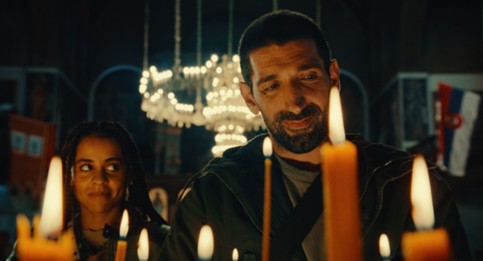
Writer and Director: Thea Gajic
Surviving Earth is a lovely film. Although also profoundly sad, Thea Gajic’s portrait of her late father is realistic, loving and somehow hopeful.
It follows a few months in the life of Vlad, a harmonica player from Serbia who works at a drug counselling centre in Bristol . He has formed a band with two friends from work, and has ambitions to make it big in the music world. Bigger, at any rate, than their current status as occasional openers for other, better known, bands. There are innumerable films about celebrated musicians from humble beginnings – the recent M Aznavour for example. At some point money gets made. Lucky breaks happen – Edith Piaf hears you sing. In real life, unlucky breaks are more common. There are enough allusions in the film to give an idea of what Vlad’s life has been up till now – coming of age into the Balkan Wars, possible PTSD, experience of substance abuse, failed business ventures, a broken relationship – all of which contribute to an uneasy connection with his beloved daughter Maria. If life is a game of Snakes and Ladders, Vlad Gajic gets more than his fair share of snakes.
Although it opens, like a drama, in a bedroom, with Vlad waking up , noticeably late – clocks seem to be a motif – the film feels like a documentary. We’re taken into a club. The camera moves from band to audience, picking up what seems like incidental conversation. In fact, it’s hard at first to work out who everyone is. There is one strangely stilted conversation which seems only there to demonstrate Vlad’s sense of isolation, but mostly Gajic’s dialogue is so natural it doesn’t feel written at all . Similarly the actors don’t seem to be performing. As Maria, devoted, generous but often exasperated, Olive Gray is utterly credible, while Slavko Sobin makes Vlad entirely sympathetic despite his unquestionable flaws. In some ways he is the annoying dad every young adult will recognise, questioning Maria’s choice of boyfriend ( who seems pretty decent), and insisting on paying a human in Sainsbury’s. Unfortunately he is easily enraged, flinging out four-letter words and angry gestures . Maria eventually demands : “Do you know how scary it is… not knowing what… you’re going to do next?” A band mate calls him “a self-sabotaging bastard,” and he reaches the point of almost whimpering , “I fucked up.” He did, but it’s not all his fault.
What stands out in Surviving Earth is humankind’s capacity for kindness. Vlad himself often embodies it. He has a courtly exchange with the assistant in Sainsbury’s and a proper conversation with homeless Mikey, as he slips him some money he can’t really afford. He is an empathetic counselor. You can’t help noticing that he’s at his best when in a position – if not of authority then at least of dignity. Which is probably true of all of us. Vlad suffers many reversals, but many people are good to him. Even the persistent lady from the Council , whom he persistently ignores, is not hostile, just determined to inform. Maria’s mother, his former partner, is firm but not mean. The repair shop man lets him off most of a deposit ; band mates are constantly supportive. So is the woman he is counselling, who recognises the wild look in his eyes . He tries to suggest that caring about him is not her problem, but she says it’s “what human beings should do” – they help one another to survive earth.
The city of Bristol, seen through Olan Collardy’s lens, is a poignant, often beautiful, background. The night-time lights on the river are like jewels; a daytime shot of jauntily coloured houses conceals a tragedy happening indoors. Brijs’ s moving soundtrack includes some of Vlad’s own songs. At one point the band faces the thrilling prospect of playing for “four hundred people.” At least , through this film , they should reach a much wider audience.
Surviving Earth is in UK cinemas from 24 April backed by BFI and Film4.
