

Writer: Peter Arnott
Director: Hannah Bradley Croall
The interrogation of Sir Roger Casement by an official, as depicted in this play, can be viewed as a microcosm of the conflict between Irish nationalists and the British Empire, on the brink of the Easter Rising in 1916.
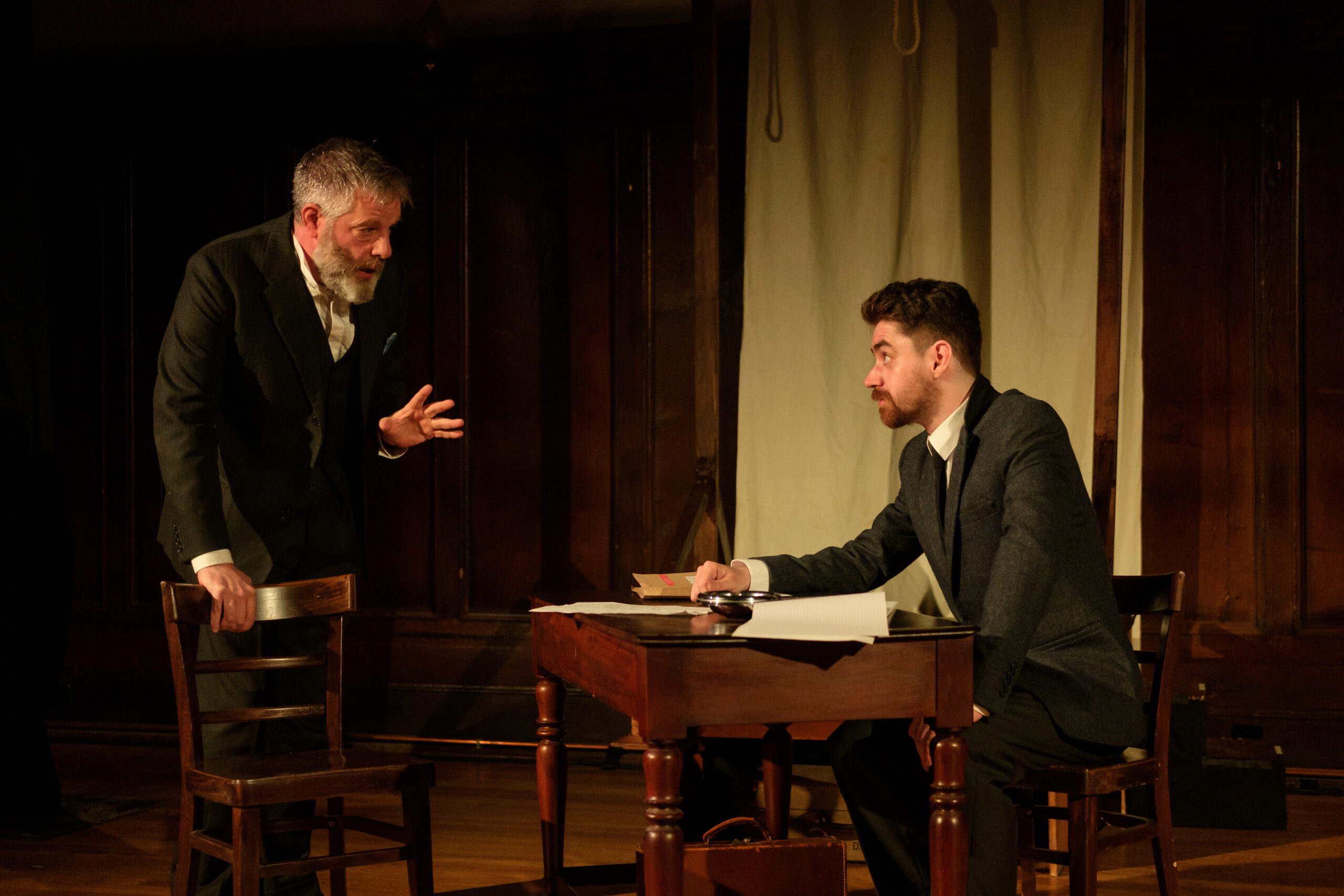
But it’s much more than that. In a Q&A after the opening night’s performance, playwright Peter Arnott cited the complexity of Casement and his story as the element that first attracted him to tackle the subject. In a superbly cast and performed revival of the play originally commissioned for the centenary of the Rising, Casement’s story is teased out by a fictional interviewer, Captain Reginald Hall.
The contrast in styles between the privileged, well-spoken, English-sounding, silver-haired Casement (Paul Arendt) and the pragmatic younger Scotsman Hall (Adrian Moore) is one of the features that makes this production work so well.
The question posed by the play’s title, casting doubt on whether Casement should be executed for treason, is only one of many questions it addresses. After a long and distinguished career as a British diplomat and pillar of the Establishment, why has Casement taken up the cause of Irish nationalism during the First World War, actively seeking German support for an uprising?
In Arendt’s erudite circumlocution we get a pained attempt at frankness that somehow deepens the enigma, while Moore’s attentive and clipped responses challenge the older man’s testimony and motives. Theirs is a fascinating, edgy, intense yet mostly respectful conversation.
Between the two days of interview there’s a brief interlude featuring projected images from the Congo, where Casement documented and exposed the tyrannical cruelty of Belgian King Leopold II’s colonial rule. There needs to be a content warning here, as the images reveal human rights abuses. Accompanying them is a powerful voiceover performance by Paule Yimga Tchamdjou.
For a new company with the tagline ‘Uncommonly Good Theatre’, Union Theatre Company have delivered a bold and impressive debut. It makes the case for retaining full-length theatre; this show runs for 85 minutes without a break and doesn’t feel overly long.
Runs until 19 June 2026 | Image: Robin Mair
