

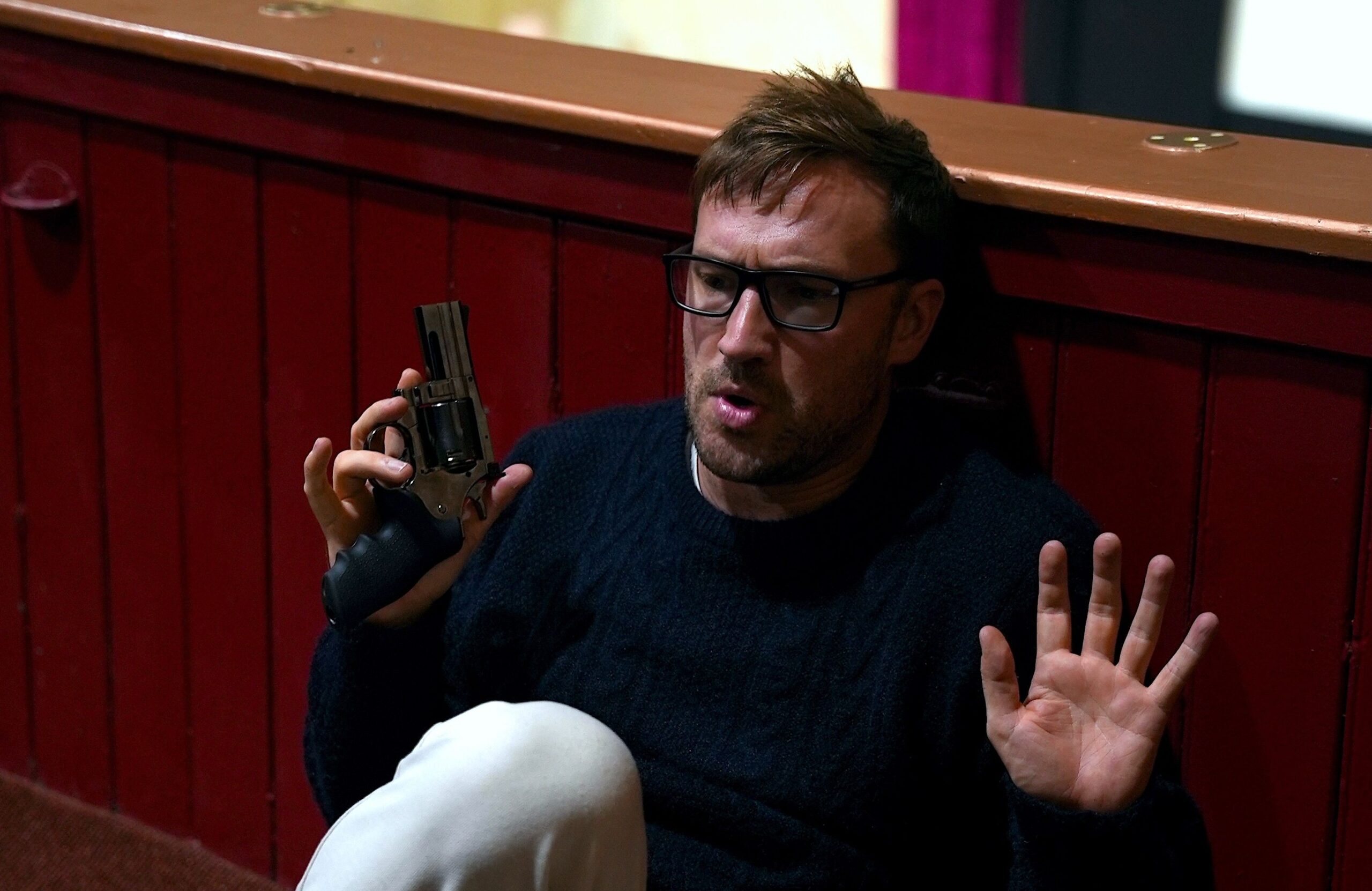
Writer and Director: Ryan J. Smith
Even those with a passing interest in cinema will know that making a film is a costly business. Last year’s Mission Impossible: The Final Reckoning had an estimated production budget of $400 million.
Now imagine making a film on a budget of £4,000. And better still, just three days to get that film done. This was a challenge undertaken by screenwriter and director, Ryan J. Smith. Already used to working in the ultra-low budget sphere, Smith has a track record of producing the goods on a shoestring, but importantly, not cutting corners in the process. His latest film, Arthur’s Empire, sees Smith return to his home town of Blackpool for a comedy heist that has plenty to say about 2020s Britain.
The film centres on magazine journalist and budding novelist, Sam (played by Jake Waring). He has reached a crossroads in his career, when his boss suggests a road trip to do a human interest story, out in the sticks. The readership has had enough about politics, even if politics isn’t done with them.
Sam finds himself in Blackpool, just before Christmas. The town’s trademark sparkle is distinctly subdued. Wandering the empty streets, he stops off at an antiques / trinket shop, stuffed with goods that range from useless tat to the odd sleeper. He meets the shop assistant, Kelsey (a suitably laconic Elizabeth Hope) and the charismatic owner, Arthur (Grahame Edwards). The shop, Empire Antiques, is on borrowed time as it is due to be gutted to make way for luxury apartments. Quite who will be buying them, points out Kelsey, is another matter.
As Sam begins to interview Arthur, he uncovers a fascinating character. A Falklands War veteran and John Wayne fan, Arthur is philosophical about his Empire falling. That is, until Sam accidentally spots Kelsey pocketing some of the merchandise, a get-rich scheme she’s devised with her girlfriend, Jane (Charlotte Dalton).
Arthur’s Empire is not so much a Western reimagined, but an amorality tale fit for these times. Smith’s screenplay weaves in commentary about the dire state of much of the UK: Kelsey works several jobs to pay off debts; Sam should be flying high but he hovers from job to job as a freelancer. The person who sees the lay of the land most clearly is Arthur. Grahame Edwards’ performance is stellar: Arthur’s hard-earned wisdom (and willingness to flout the law) sees survival in black-and-white terms. Edwards unnerves the audience as easily as he won them over in previous scenes.
What is remarkable about Arthur’s Empire is that it certainly doesn’t feel like a film shot over three days: Smith’s storytelling is unhurried and well-paced. Debuting at the Raindance Film Festival, and with several nominations for directing and acting, Arthur’s Empire is a perfect example of how a film can flourish when you concentrate on the important things. In an era where it’s assumed bigger (and brasher) is better, Arthur’s Empire forms a persuasive argument in how low budget film-making can still have the creative edge.
Arthur’s Empire is screening the Raindance Film Festival 2026 from 17-26 June.
