

Writer and Directer: Byun Sung-bin
Although Peafowl would identify as a radical film, it takes a conventional approach to promoting the need for tolerance and understanding of different viewpoints.
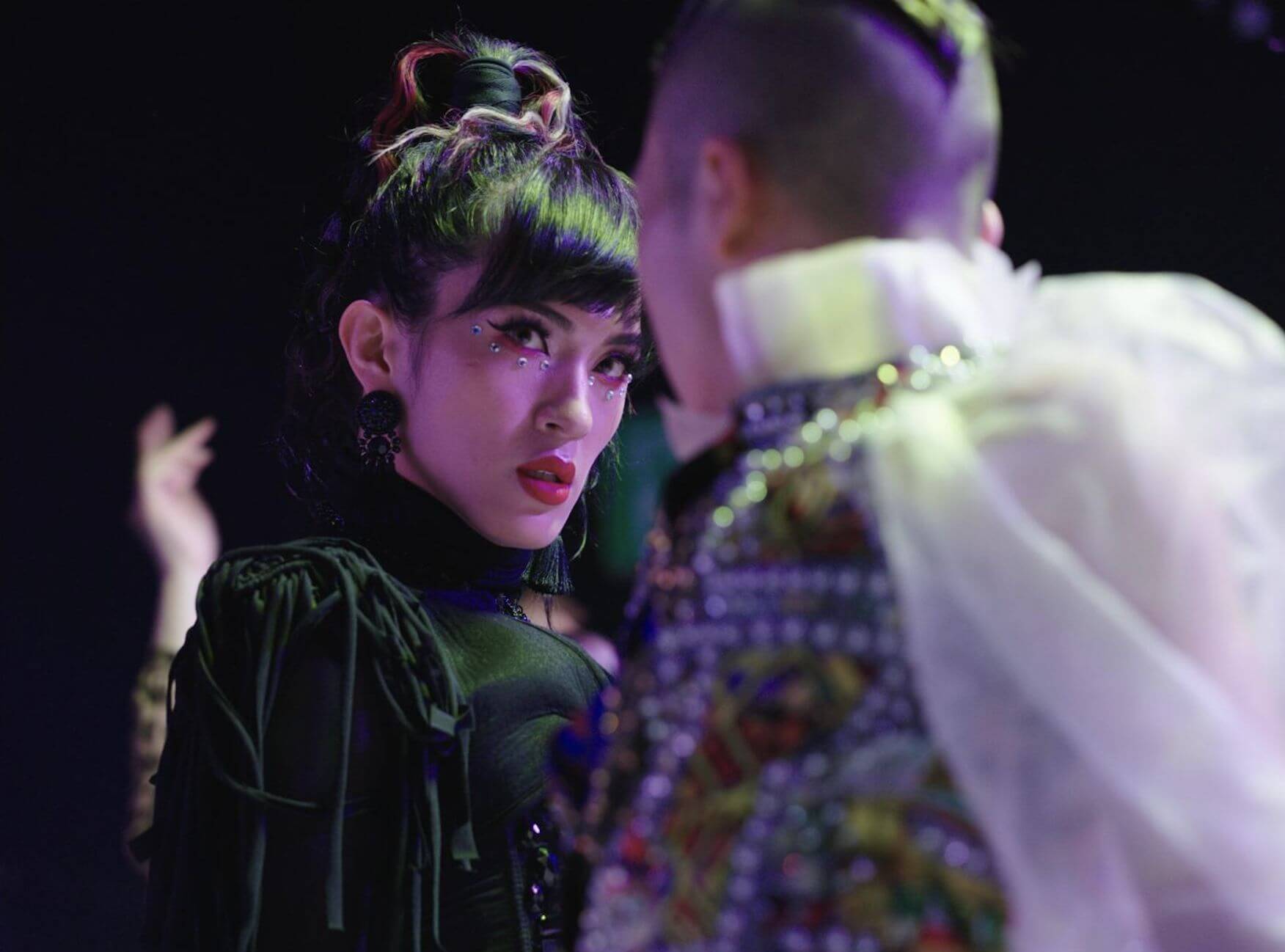
Shin (Hae-jun) identifies as a woman and is seeking funds to cover the cost of gender affirming surgery. She earns a living as a waacker – dancing in a style similar to voguing. However, not only does Shin lose a dance competition, and more significantly the $10,000 jackpot, she gets news her estranged father has passed away. Shin returns to her home village to a mixed reception, most are indifferent to, or enthusiastic about, her true identity but her uncle Uk-do (Kim Jin-soo) is almost pathologically hostile – insisting she wear male clothes and referring to her by the masculine pronoun.
Understandably, Shin decides to cut short her visit. However, she is surprised to find her late father led the village’s traditional dance troupe and his partner, Woo-ji (Hwang Jeong-min) informs Shin she has been left an inheritance on condition she takes the lead in the ceremonial memorial dance for her father. During the time she reluctantly spends in the village, Shin becomes a mentor to her cousin who has begun to realise his true sexuality and learns more of the factors which drove her father to transphobia.
The plot of Peafowl follows a well-walked path. The central concept- an outsider confronting a traumatic past and, in the process, helping others change their views- is hardly new. The scenes of Hae-jun using dance as a means of coping with her frustration will be familiar to viewers from films as mainstream as Flashdance.
Shin is guided on her journey by a spirit – a peafowl (otherwise known as a peacock) which appears in visions or symbolically in artworks or photographs. This offers the opportunity to develop a supernatural tone to the film which writer/ director Byun Sung-bin ignores. The director is not interested in developing an atmospheric movie. The dance competition at the start takes place in a venue more like a gym than a nightclub – there is no alcohol or drugs, and the vibe is curiously antiseptic with no sense of decadence.
The ceremonial dance is held not in a temple or place of reverence but on a barren piece of land. This may be intended to symbolise the empty lives of the villagers, but it also loses the opportunity to celebrate the art of dance. Similarly, the chance for Shin to make a connection with the village dance troupe is not pursued despite a mutual interest in dance and the flamboyant costumes of the troupe. The symbolic approach can be a bit heavy-handed- the need for outdated views to end is represented by the ceremonial tree breaking and burning in the face of Shin’s identity-affirming dance.
The characterisation is broad. Even when his motivation is revealed Woo-ji’s selfless determination to repair the relationship between Shin and her late father is a bit hard to accept. Kim Jin-soo is stuck with representing intolerance and the behaviour of Uncle Uk-do becomes increasingly close to a stereotype bigot.
Hae-jun, who plays Shin, is a real-life transgender waacker so the role is not too much of a stretch. The character is not, however, wholly sympathetic as if her experience of enduring intolerance has made Shin indifferent to other people. She shows scant respect for the memorial ceremonies which Woo-ji insists must be performed with sincerity. Shin seems determined to remain an outsider and resists finding common ground with the other dancers- Woo-ji has to point out the similarity between the beat of the ceremonial music and the pulse of the waacker tunes. Shin seems so damaged she only becomes capable of showing concern for another person when forming a relationship with her closeted cousin.
Surprisingly Peafowl is more successful as a study of the defensive reactions of a traumatised character than a celebration of identity affirmation.
Queer East Festival 2023 takes place 18 – 30 April across venues in London. For further information: https://
