

Book and Lyrics: Dougie Blaxland
Music: Chris Anthony
Creative Director: Amanda Horlock
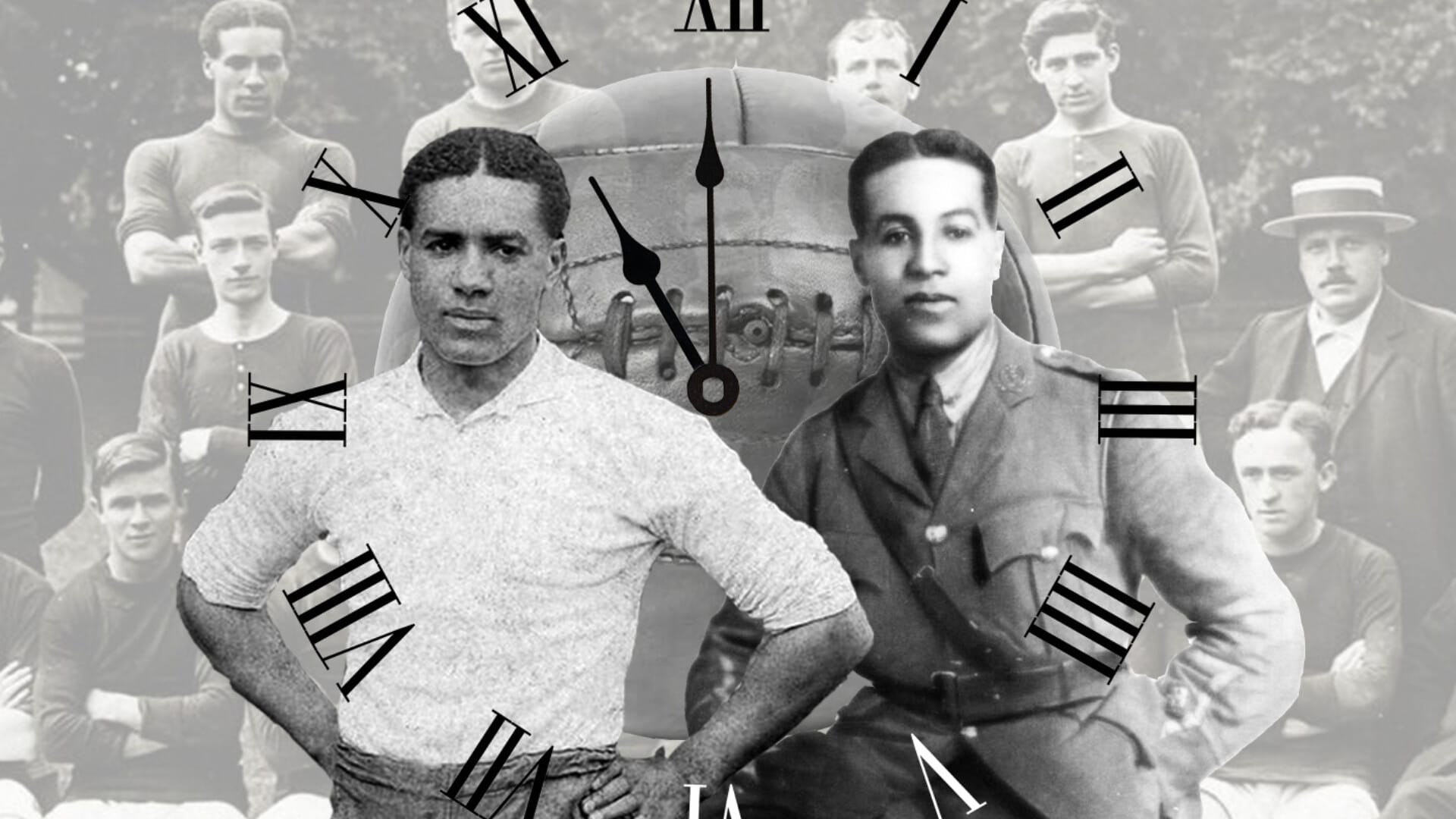
Biographical theatre always faces a delicate balancing act: how to honour a life without overwhelming the stage with detail. Our Little Hour, written by Dougie Blaxland and produced in association with Show Racism the Red Card, tells the story of Walter Tull – a pioneering footballer, one of the first Black players to compete at the highest level of the English game, and later an officer in the British Army during the First World War. It is a remarkable life, marked by resilience and quiet determination, but also one shaped by the racism and institutional barriers of early 20th-century Britain.
Blaxland’s script is rich with research and clearly driven by a desire to do justice to Tull’s whole story. Because of this we see his early years shaped by loss and hardship, from being placed in care as a child to forging a path into professional football. Tull’s time with clubs such as Tottenham Hotspur and Northampton Town’s Cobblers is touched upon, alongside the racist abuse he endured from crowds and the lack of meaningful support from those in positions of authority. Yet this wealth of material results in a first act that feels densely packed, moving quickly through many less impactful moments, labouring points that do not need to be laboured. By the interval, Tull’s footballing achievements – so central to his legacy – feel entirely underexplored.
The second act finds a clearer focus, shifting to Tull’s military service. Defying expectations of the time, he rose to become one of the first Black officers in the British Army, leading troops on the front line despite regulations that should have prevented his commission. The production highlights the injustice that, despite his bravery and recommendation for honours, he was never awarded the Military Cross. These moments carry emotional weight and underscore the systemic prejudice he faced, though the script still leans heavily on exposition rather than allowing the drama to unfold organically and there is still very little football included.
The musical elements, composed by Chris Anthony, serve primarily as a storytelling device. The promotional marketing proudly displays that there have been 16 original songs written for this production. Given that there are full scale West End musicals with fewer songs, the warning signs were there. A piano track gamely played its way through each of them, while the most basic of rhymes (bed and head for example) were rolled out, with the cast breaking into song so often that key points or emotions in the acting just couldn’t land.
What the production lacks in scale and style, it makes up for in commitment. With a cast of just three, the actors take on multiple roles impressively. Leon Newman brings a composed dignity to Tull, capturing both his restraint and inner strength. Neil Reidman shifts convincingly between authority figures, while Geebs Marie Williams provides welcome moments of humour and character, adding texture to the performance, though the very sparse costuming does little to help her out with this.
In all honesty, if this piece had at least half of the songs stripped out, it could be a thoughtful, thought-provoking one hour show that would sit well at the Edinburgh Fringe or as a touring production at schools. It is a story that is worthy of being heard, but its current format doesn’t do the content justice.
Nevertheless, Our Little Hour is a heartfelt, well-acted and important work. Walter Tull’s story of sporting achievement, military service, and the enduring impact of racism is one that deserves to be widely known. While it may not fully capture the scale of his legacy, it succeeds in reminding audiences why that legacy matters – and why it should never be forgotten.
Runs until 21st March 2026
The Reviews Hub Star Rating
-
7
