

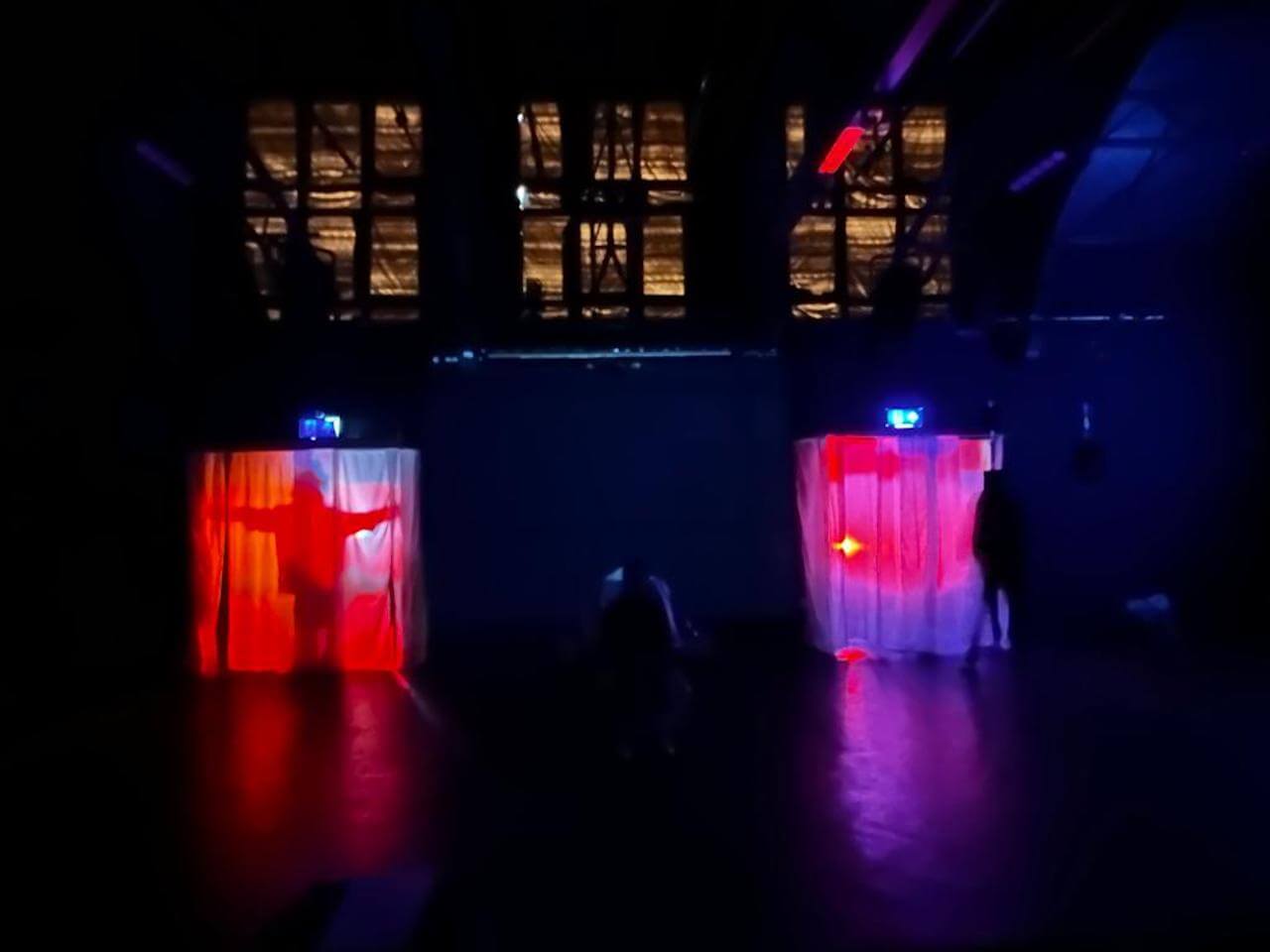
Writer and Director: Mo Korede
Asenath and Alpheus are each living without their fathers. Hers died when she was very young; his walked out when he and his brother were in their twenties. For each, that familial absence has come to dominate their lives.
Writer-director Mo Kerede gives us these similar, but different, tales at the same time, with Shane Afolabi’s Alpheus taking turns with Natasha Vassel’s Asenath to monologue about their memories of their father, and how their life now is shaped by not being able to share it with him.
This structure allows us to pick up on the similarities of each of their lives. Both come from Christian families that imbue a certain sense of patriarchal authority on the father of the house, without ever leaving them an instruction manual for the role. Both have that one seat in the living room – their father’s chair – that symbolises the paternal authority, and which, even when empty, casts a shadow over their lives.
Shared, too, is a sense of each player’s father spending so much time and attention on others that he neglects his own child. Christianity looms large in this tale: the dual monologues are split into chapters named after Biblical fathers from Adam to Joseph, while an unseen Voice (Dominique Reid) reads applicable verses.
But while both Vassel and Afolabi work through varying degrees of resentment at the absence they experienced even while their fathers were around, there is love too. For Alpheus, his attempts to reconnect with his father (also voiced by Reid) over video during lockdown reach some sense of understanding. But as both principal characters reach a point in their lives where they are about to become parents themselves, fears that they may repeat the same patterns take over.
There is a perceptible imbalance between the two stories; Alpheus’s seems the more solid, deepest written of the two. This enables Afolabi to give the impression of being fully embedded in his character in ways that never quite gets there for Vassel, although in the extremities of her monologue, she comes close.
A difficulty with the dual monologue structure is that it can slow down the central tenet of the piece, with each point replaying from either character’s viewpoint. That is especially visible as Our Father reaches its conclusion, as the reasons for the duality and the similarities between the two characters come into focus.
To tie the twin stories together, Korede relies on a storytelling sleight of hand that, while not so overused that it has become cliché, is in mind from the opening of the piece. Commendably, though, Korede’s use of pop culture references to disguise the connection until the last minute nearly works.
Ultimately, in the cyclical nature of Korede’s pointed tale, there is a sense that new fathers should always try to be better to their children than their father was to them. And the message Korede leaves us with is that even when the cycle repeats, it is in that attempt that true love is found.
Continues until 5 August 2023
Camden Fringe runs until 27 August 2023
