

Writer: Inua Ellams
Director: Roy Alexander Weise
Few new plays arrive carrying the expectation Once Upon a Time in Sokoto does before a line is spoken. Inua Ellams’ account of the birth of Nigeria — caught at the point one empire gives way to another and colonisation is about to begin — won the Alfred Fagon Award, which recognises new writing by Black British playwrights of Caribbean or African descent, while it was still unstaged.
That pedigree, and the scale of the story being told, makes its world premiere at Royal & Derngate, the first production in the new Touring Together partnership between China Plate, Fuel and five further venues, something to take seriously. Taking it seriously and finding it fully achieves what it sets out to do turn out to be two different things.
Directed by Roy Alexander Weise, the production tells its story through traditional storytelling interwoven with live action — the cast slip between characters, performed in the voices and dialects of the period, and narration, delivered in their own natural accents. It’s a device more often associated with theatre for younger audiences, though the language and subject matter here are unambiguously adult. Part history lesson, part drama, it covers a great deal of ground: the traditional roles of gender and status, the relationship between enslaved people and those who held power over them, the hierarchies and governance of the pre-colonial states, and the roots of what would later become Boko Haram. Some prior knowledge of the region’s history helps place the detail in context, but as an education in a period rarely addressed on British stages, it serves well.
As drama, it translates from the page less successfully. The constant switching between narration and character — or perhaps simply not spending long enough with any one of them — means engagement with the four central figures never develops much beyond what their circumstances alone would earn from any audience. Character development stays superficial, and it’s hard to invest in what happens to Nafisa, Zinari, Hadiru and Yusef as individuals rather than as representatives of a history. The pace suffers for it: there’s little tension and not much forward motion, for a story that’s fundamentally about people and their relationships but never lets you properly know the people in it. The central friendship between Nafisa and Zinari only really begins once the two women are thrown together against a common enemy near the play’s close, and the contrast between their very different experiences up to that point never quite lands with the force it should.
None of this is down to the cast, who work hard with what they’re given. Adeola Yemitan brings a feisty defiance to the enslaved Nafisa. Antonia Layiwola’s Zinari walks a careful line between wanting an untraditional path and the need to be seen observing convention. Bayo Gbadamosi moves Hadiru nicely from servant to husband, tracking a shift from subservience towards a more traditionally assertive stance as the play progresses. Will Atiomo, credited as Yusef — the man who understands the threat advancing from the south and tries to make others understand it too — also covers a string of further roles, male and female, on top of his narration duties, and does a fine job moving between them.
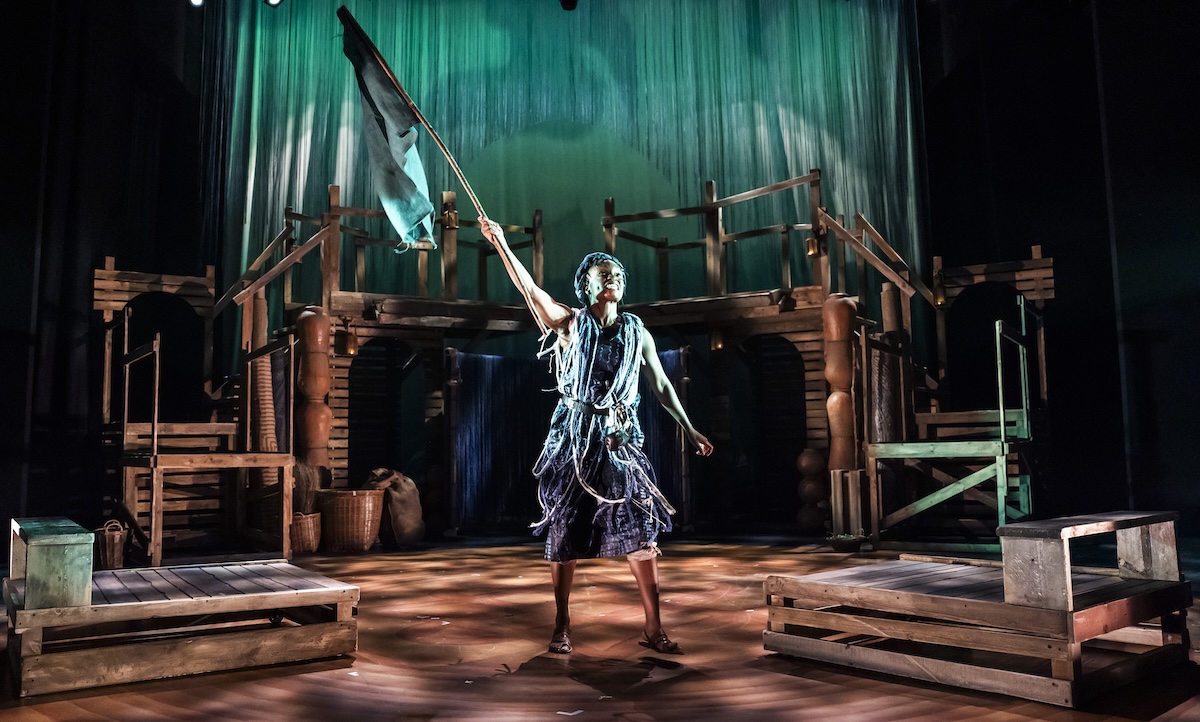
The set by Amelia Jane Hankin is simple but effective, well-conceived to deliver its moments of revelation when they’re needed. Lighting (Neill Brinkworth) does good work when it’s working, though on this performance there were a couple of occasions — early-run teething problems, perhaps — where actors were left speaking in the dark, hopefully something that will be fixed as the production beds in.
It’s an essential story, and one British theatre doesn’t tell often enough. Whether it’s yet become an essential piece of theatre is a different question — the writing has further to travel than the production currently carrying it.
Runs until 10 October 2026 and on tour
The Reviews Hub Star Rating
-
6
