

Judy Garland will forever be an icon of jazz cabaret performance, known for her distinctive vocals and the musical arrangements that highlighted her style to its best ability.
For that reason, her material has become a staple of the cabaret circuit. But evenings devoted solely to her are still somewhat rare, so Australian duo Dani Sicari and Madeleine Joyce’s evening of Garland tributes is more than welcome.
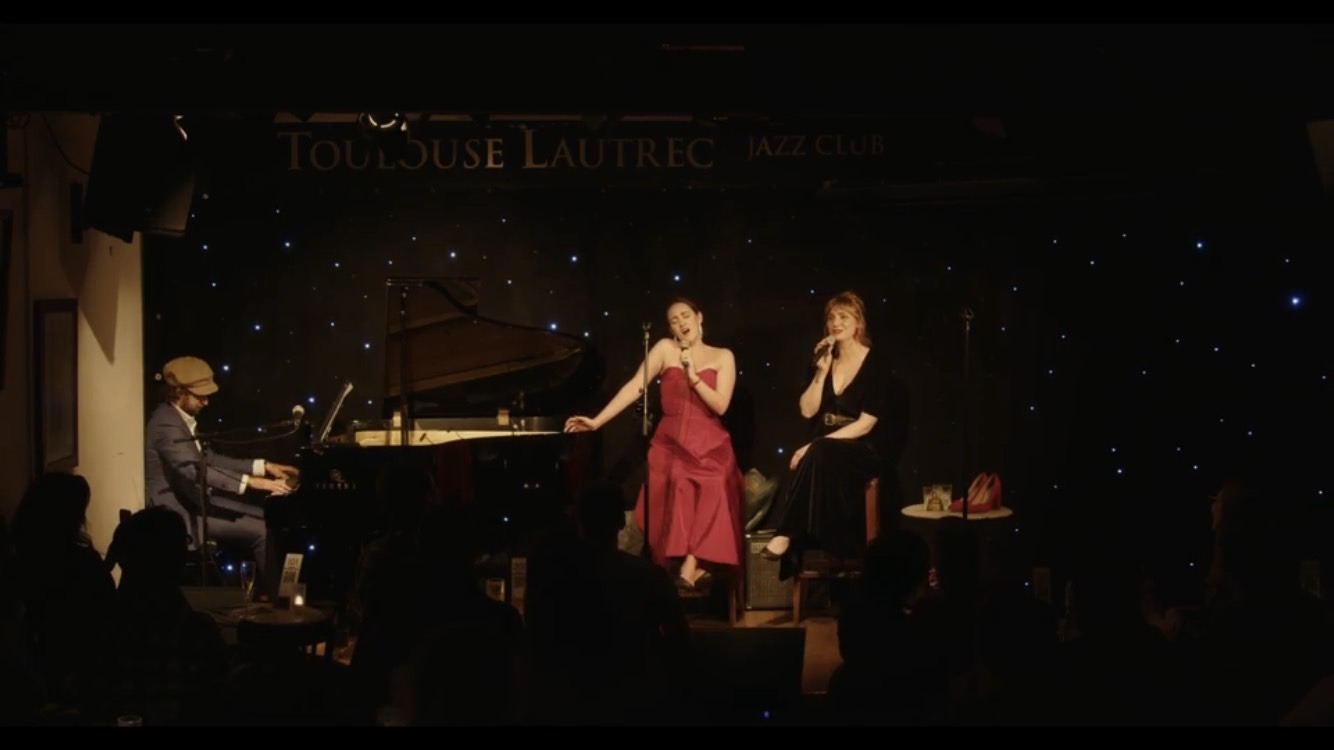
Although Sicari and Joyce, who both hail from Perth, have performed together in London, their recent concerts see them reunited with friend and fellow Perthian, accompanist Lochlan Brown, for the first time in 10 years. The ease with which the trio work together helps the musical performances immensely, as well as providing material for inter-song banter (usually about Perth institutions, including the city’s performing arts college WAAPA, or legendary café chain Toastface Grillah).
But it is the music that takes priority, and while the singers start with a jolly rendition of The Trolley Song, followed up by a Joyce solo of Come Rain or Come Shine, the pair are keen to include some lesser-known numbers, including Sicari’s peppy anthem of independence, I Don’t Care, from Garland’s 1949 film In the Good Old Summertime.
Reference is also made to Garland’s 1963 TV variety show, which, despite running for only one season, produced some iconic performances. Sicari and Joyce elect to focus on the singer’s duets with a young Barbra Streisand, initially performing the pair’s Hooray For Love Medley, which races through standards from After You’ve Gone and ’Swonderful to I Like New York in June and You and The Night and The Music. Later in the set, they return to the Streisand/Garland well for the singers’ more famous duet, a resonantly powerful mash-up of Happy Days Are Here Again and Get Happy.
Elsewhere, some of the Garland tunes tend toward the more recognisable numbers. Sicari’s rendition of Smile leads into a sublime, three-voice a cappella version of Over the Rainbow. It’s an arrangement in which Harold Arlen’s beloved melody yields prominence to its counter-harmonies, lending an extra layer of ethereal charm to the piece.
That’s followed up by Brown performing a solo piano rendition of Somewhere from West Side Story. And while it’s a beautiful performance, the connection to Garland is non-existent; it also feels like performing Somewhere and Over the Rainbow together could have an opportunity for some sort of thematic link that goes untapped here.
The evening also diverts from Judy’s performances to take in a song written by her son-in-law, Peter Allen, about her onstage presence. Quiet Please, There’s a Lady on Stage isn’t performed nearly enough, but including it in an evening of songs celebrating Garland’s career feels like the best place to hear it.
The evening ends with a rendition of Nacio Herb Brown and Arthur Freed’s Good Mornin’, now more closely associated with Debbie Reynolds and Gene Kelly from its reuse in the jukebox musical Singin’ in the Rain, but which was first performed by Garland and Mickey Rooney in the 1939 film Babes in Arms.
It’s a peppy, perfectly upbeat way to conclude an evening of Garland celebration that, despite being only an hour long, manages to cover much of the breadth of the singer’s output. One could gladly stay in Sicari and Joyce’s company for another hour, but the time spent with My Best Judys is – well, there’s no other word for it: ’swonderful.
Reviewed on 16 February 2024.
