

Writers: Imran Perretta and Enda Walsh
Director: Imran Perretta
Previously shown at last year’s BFI London Film Festival, Ish is still on the festival circuit before its wider release at the end of July. Produced by the BBC and the BFI, Imran Perretta’s debut takes place during the summer in Luton. A coming-of-age story, Ish is nevertheless edged with violence. Police with face-recognition cameras trawl the streets while on the radio broadcasters discuss the genocide in Gaza. From the outset, there’s the feeling that something terrible will happen.
Co-scripted by playwright Enda Walsh, the most terrible thing in the film has already happened. Ish’s mother has died, leaving a strange emptiness in his home. His father appears to have buried his grief in work, while his sister begins the procedure to sell the dead woman’s car. Ish’s grandmother smokes cigarettes in the yard when no one is looking.
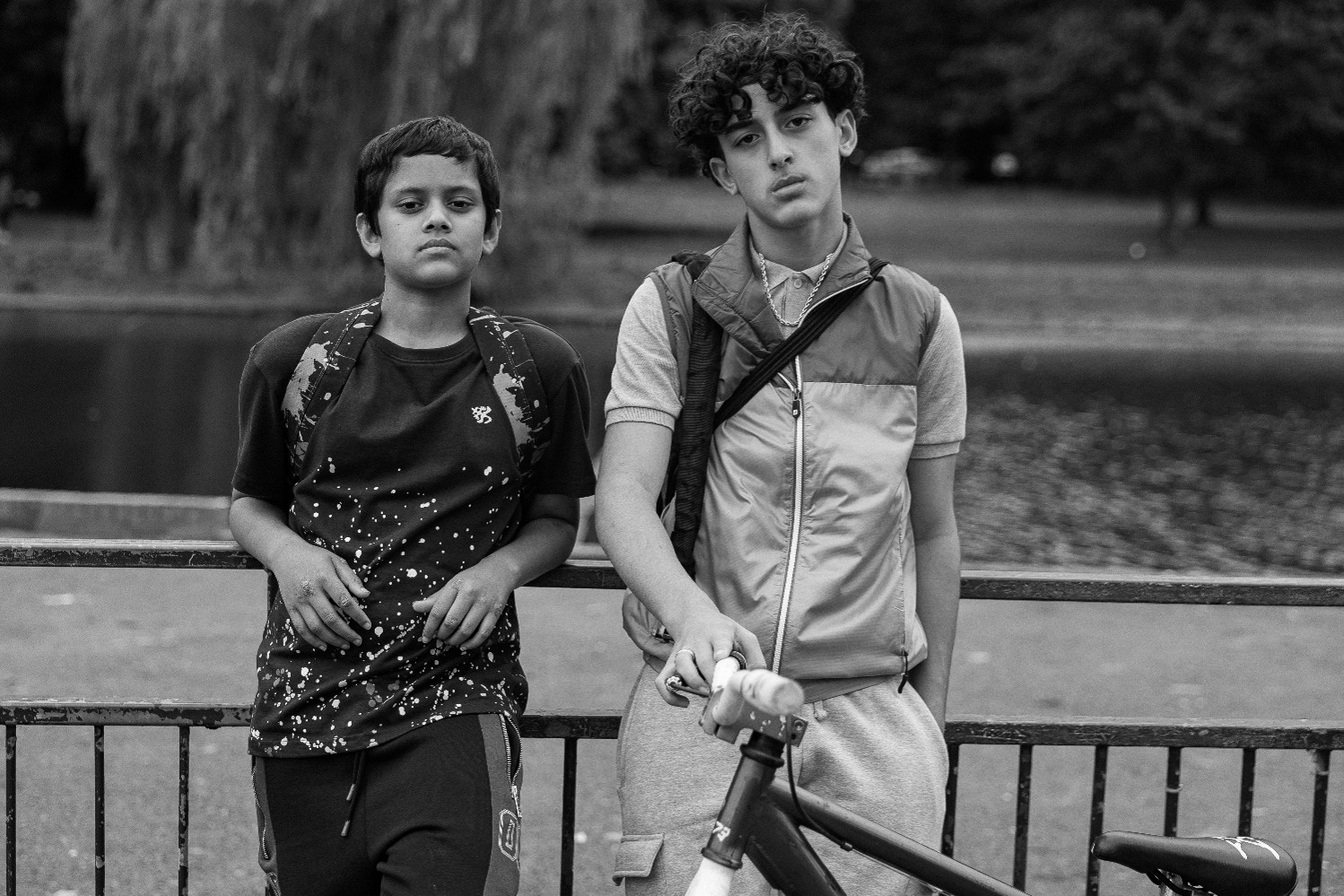
Ish spends his days hanging out with Maram, a Palestinian boy who looks a couple of years older than him, or perhaps they are the same age, but Maram is at least a foot taller than him. Maram is more confident, too, speeding around on his bike, with Ish riding at the front, or occasionally jogging behind. They banter about video games and football. However, there’s a horrific element to their play, too. Maram talks about an impending war for which they should be ready. Hidden in their camp outside of town, they have stored a knife and a torch in a metal box that they have interred in the ground.
This almost idyllic summer is ruined for Ish when Maram meets up with some other boys at a visiting funfair. They seem older, still. Their banter is about girls and cars. Ish senses that he is losing Maram and sits at a distance while the other boys rough and tumble. An incident involving the police seems to sever their friendship irrevocably.
As bad news continues to come out of Gaza and as the police appear to patrol the Muslim parts of Luton even more, the violence in Palestine is sublimated in two powerful scenes, one underwater in a local lido where the boys dive-bomb into the water, and the other in the woods as they brandish stolen fireworks. These are the sounds of war.
Ish is shot entirely in black-and-white. The fireworks look exciting, eerie and dangerous, but in other scenes, it’s hard to work out why Perretta has decided to forgo colour. The monochrome gestures towards the social realism of Vittorio De Sica and Tony Richardson, with Luton acting a character as fully formed as Ish or Maram. In its shades of grey, Luton comes across as ancient, enduring.
Plus, Perretta’s own score, at times mournful strings, at others, church-like choral, complements his vision of the old story that is growing up, even if this old story is accompanied by newer ideas such as racial profiling.
The two leads, Farhan Hasnat as Ish and Yahya Kitana as Maram, are excellent. Hasnat brings a quiet yet raw hurt to the young boy, who doesn’t know how to say how much he misses his mother, while Kitana moves from openheartedness to agitated surliness as the film progresses. Both characters occupy the no-man’s-land of early teenage years, troubled by the violence that encroaches from without.
Ish is screening at the Muslim International Film Festival 2026 from 2-5 July.
