

Writer and Director: Antonella Sudasassi Furniss
Memories of a Burning Body takes a stylised theatrical approach to highlight the lasting bitterness and resentment caused by sexual repression and stereotyping.
Antonella Sudasassi Furniss’s film is based upon the life stories of two sexagenarian Latin American women, Ana and Patricia, and one septuagenarian woman, Mayela, who grew up in a period when sexuality was not discussed, and women were expected to adhere to codes of behaviour which had existed for far too long. One woman remarks she wanted to learn to speak English, but her husband preferred she learn how to cook.
Although their voices provide the background to the film the three women appear only briefly towards the end. In the main they are represented visually by Sol Carballo as ‘Woman’. The film opens in a theatrical manner making clear to the audience it is a representation not real life. A suburban house is made ready to serve as a film location and Sol Carballo is in the make-up chair getting ready to appear on screen. This stylised approach never ends, even when the locations expand to funfairs or schools there remains a larger-than-life atmosphere, so a single person has experiences which reflect all three of the women whose stories are told.
The atmosphere initially is loose and gossipy as the trio compare their late-life situations – sex at this point would be like pushing a marshmallow into a piggy bank. Gradually the memories become intertwined into a single story. Juliana Filloy Bogantes visually represents childhood experiences which introduce the themes of ignorance and intolerance that run through the film. An 11-year old’s first job turns out to be in a brothel; teaching her, at that tender age, the victim in such situations is likely to be blamed. This is a lesson repeated when she is later told it is her fault she was assaulted by her cousin as her manner of dress aroused his interest. A battered wife is encouraged, by her mother no less, to forgive that poor man.
As sex is never taught in an objective manner it becomes a giggly subject for teenagers until harsh reality intrudes. Women were virgins when married but men were just as ignorant – ‘’Are you sure you put it in the right place?’’ is not ideal pillow talk. One woman admits to having had two children without ever experiencing an orgasm.
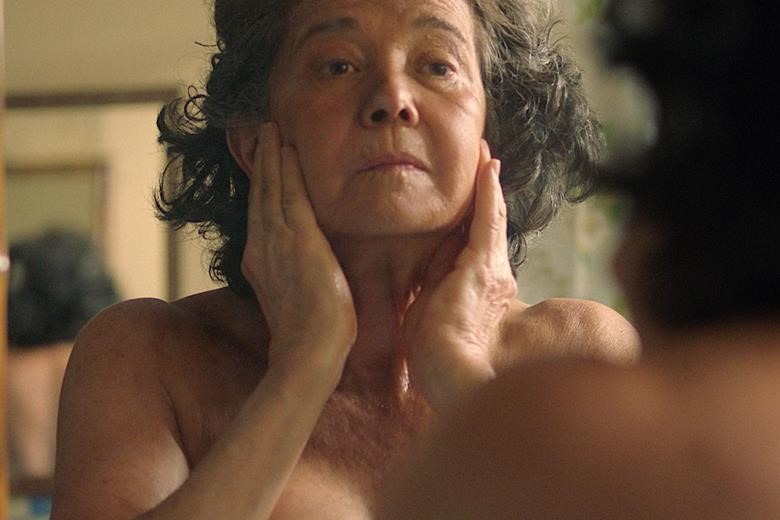
The filmed scenes, over which the voiceovers play, are both naturalistic and representative. Scenes of innocent childhood flirtations, weddings or girls being socialised to accept their status as housewives are played with a full cast of characters in a natural manner. Sol Carballo embodies the women in their old age, studying her body and expressing either melancholy or fury- ruefully perusing old photographs or ripping them up in anger. Yet Carballo’s character is not a recluse and has adapted to the present day, her mobile phone constantly rings with invitations to social engagements.
The film becomes increasingly stylised moving towards the conclusion as women appear in various tableaux including one pose resembling ‘Whistler’s Mother’. Although Antonella Sudasassi Furniss’s film demonstrates the shortcomings of parents and spouses there is the impression the wilful ignorance during the time period, rather than the individuals, was the cause. A girl’s mother is unable to educate her daughter about sex and expects her to study a book on the subject.
Little of the information in Memories of a Burning Body is new but the imaginative presentation brings a fresh perspective on the grim tales.
Memories of a Burning Body is in UK cinemas 15th November, courtesy of Metis Films.
