

Writer: Alan Ayckbourn
Director: Phillip Breen
“That’s rather grotesque,” comments Fiona Foster as her husband Frank does his morning exercises in skimpy nylon shorts and royal blue tracksuit top. How the Other Half Loves, written by Alan Ayckbourn in 1969, is a theatrically playful farce, plotting the shifting dynamics of three interconnected couples. Its light-hearted façade disguises disquietingly pertinent themes: misogyny, powerlessness, anxiety, bullying, manipulation.
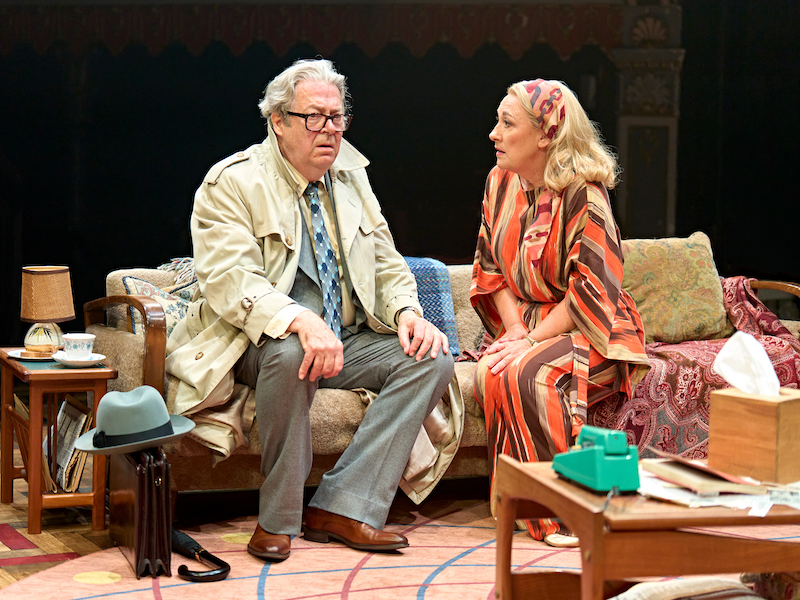
Fiona(fabulously acerbic and exasperated Dorothy Atkinson) is having an affair with Frank’s younger colleague Bob. Both adulterers attempt to cover their tracks by invoking the blamelessly dull Featherstones, who are drawn into the satirical plot. The older, posher Fosters excruciatingly capture the tribulations of a decades-old marriage in all its comfortable claustrophobia and hostility. As Frank (hilariously bumbling Roger Allam) understatedly says: “there are times when acrimony creeps in”.
Allam’s twirling forgetfulness as Frank fits the circular stage perfectly as he wanders endlessly round, looking for misplaced objects, lost words, loose ends. Most of Alan Ayckbourn’s plays were originally performed in the round at the Stephen Joseph (formerly Library) Theatre in Scarborough and London’s Old Vic is dramatically transformed to suit. Staging How the Other Half Loves like this, with tiers of audience sitting where the stage usually stands, makes for a far more immersive experience than the theatre’s usual proscenium-arch arrangement. The Old Vic’s artistic director Matthew Warchus, in a programme note, calls it “an intimate, almost voyeuristic view of family life.”
With choreographic precision, Phillip Breen’s ingenious direction makes the most of Ayckbourn’s witty, inventive script. The lives of two households play out simultaneously in the same space. Bob Phillips complains about the lack of tea and breakfast at the same moments that Fiona carries trays of porcelain cups and boiled eggs across the stage. Two characters open different newspapers in sync with a parallel movement. Paths cross, and characters stand obliviously next to each other in Ayckbourn’s crowded dance of modern life.
The intricately realistic set, cleverly representing both homes, includes a fake-parquet floor, crayon-covered dolls’ house, cushion-dotted sofas, rattan drink stand. There are real plates of food and messy bowls of soup. A key scene involves two different dinner parties taking place on stage at the same time on crossed-over tables with the Featherstones, invited to both, swivelling frantically between the two.
Rob Howell’s inspired designs lean into the play’s 1969 origins, where shiny shorts, blue eye shadow, and psychedelic trouser suits coexist with lingering 50s fashions in much the same way that the contemporary mores of sexual liberation mingle with older patterns of repression and patriarchy. The entr’acte music reinforces the setting with iconic late-60s songs: Peter Sarstedt’s Where Do You Go To (My Lovely) and Marvin Gaye’s Heard It Through the Grapevine.
But this is far more than a nostalgic and amusing period piece. There is an awful poignancy in seeing just how far gender roles have (and haven’t) developed since the play was written. The play’s themes (honesty, abuse, social class) have as much currency as ever. Laura Elsworthy and Adam Gillen play miserably awkward northerners Mary and William Featherstone with reactions that teeter between absurdity and nuance. Mary’s struggle for autonomy in the face of her controlling husband is a powerful part of the play’s emotional arc.
Ayesha Antoine animates middle-class mum Terry Phillips with energy and spirit, always writing letters to the Guardian and running off to check on absent (and strangely silent) baby Benjamin. She’s matched by Rowan Polonski as husband Bob, a study in toxic masculinity from long before the term had been coined. Ayckbourn’s focus on domestic comedy means he’s sometimes snobbily dismissed by critics who privilege overtly cerebral theatre, but his analyses of socioeconomic hierarchies and gender relations stand the test of time.
In its drink-fuelled excesses, sinister power play, and marital cruelties, How the Other Half Loves occasionally resembles Edward Albee’s 1962 drama Who’s Afraid of Virginia Woolf? (having yet another revival in Soho this autumn), but Ayckbourn’s work is more frequently laugh-out-loud funny. Almost every aspect of this show enhances the humour: Frank’s Y-fronts, Fiona’s new Bavarian-style dress with the label still attached. Toilet roll is “bathroom stationery”, and Frank’s later directions to the loo are hysterically convoluted.
Innuendo is rife: Fiona’s withering “I don’t think your prods are awfully effective”, Williams tightening ballcock, and Frank’s “screwdriver for screwing” are all made to sound snigger-worthy. Even place names are hilarious when this skilled cast deploy them (Frank’s incredulous “Woking!?”; William’s dour “Scunthorpe”). Occasionally Allam’s dithering lasts a second too long and Elsworthy’s abject cringing reaches Moaning Myrtle levels, but the physical comedy, partly thanks to fight director Kev McCurdy, is outstanding: jiggling legs, tapping feet, manspreading, singing drunkenly into serving spoons, ineptly wielding monkey wrenches…
Atkinson, now a regular performer in TV dramas (and films – including a turn as the suburban mother of Barry Keoghan’s character in Saltburn), started out with numerous Ayckbourn roles in Scarborough from 1998. Antoine is also a veteran of the Stephen Joseph theatre, notably playing nine-year-old Winnie in the premiere of My Wonderful Day in 2009.
Alan Ayckbourn is an often-underrated comic genius. Director Phillip Breen, in a programme interview, says: “At his best he is the English Chekhov, writing about the deep pain of ordinary people.” Ayckbourn, now 87 years old, has written 92 full-length plays, of which How the Other Half Loves was the ninth. It came two years after another witty standout comedy-of-married-manners, Relatively Speaking, his first big West End hit, and showed the playwright’s skill with pioneering theatrical form and overlapping timelines. Earlier this year, Ayckbourn’s dream-like 1985 play Woman in Mind was stylishly revived in the West End. If these joyous-yet-painful productions are anything to go by, his crowd-pleasing work will live on in theatres for many decades to come.
Runs until 19 September 2026
