

Writer and Director: Kamal Lazraq
It’s a long night in Casablanca for Hassan and his son Issam as they drive around the city and its outskirts with a dead body in the back of their car. Writer/Director Kamal Lazraq shows us a Morocco we never see when we holiday there. Lazraq reveals a criminal underworld of dogfighting matches and underground bars. His is a dark vision with little light.
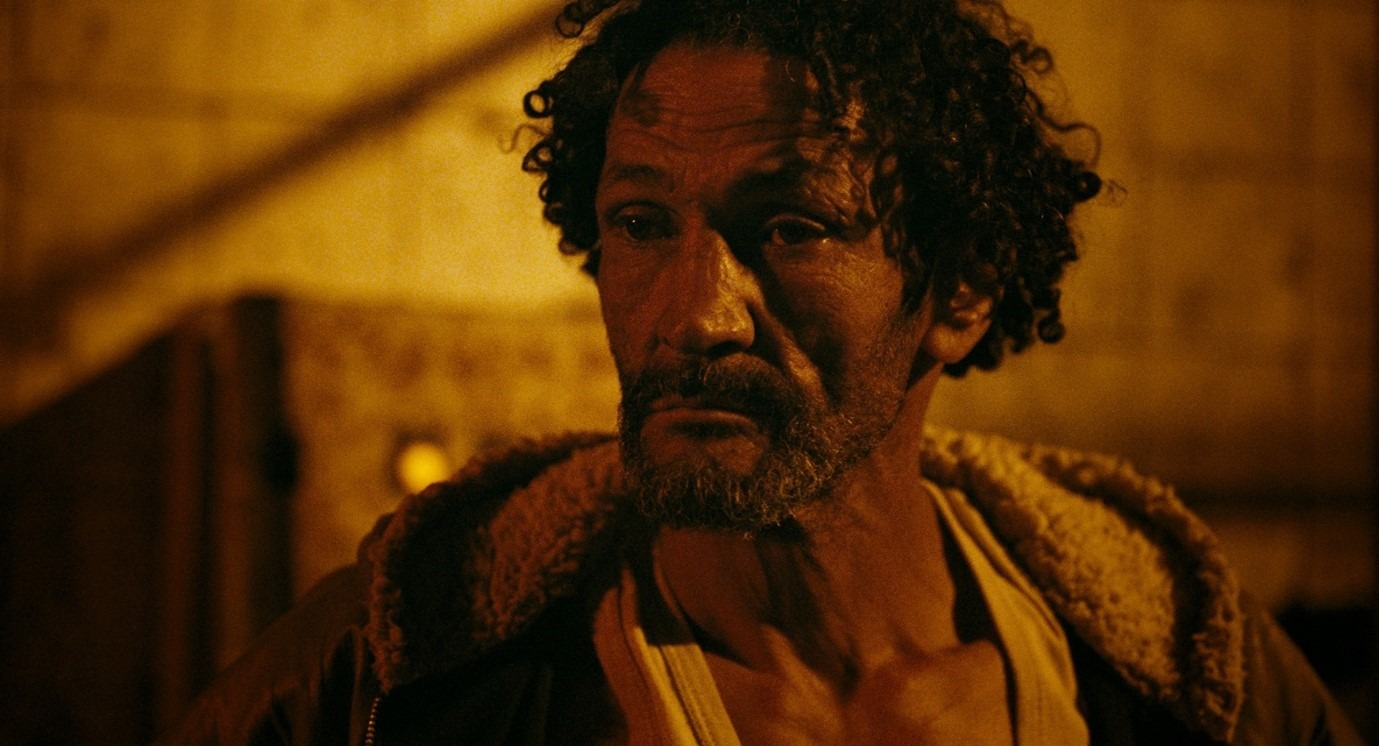
Most of the film, too, is dark, shot with only hand-held lights illuminating the father and son as they trawl outside the medina looking for ways to dispose of the body. The camera lingers on their faces in a direct homage to Pasolini; the face of the father (Abdellatif Masstouri) is rugged from hard work and the sun while Ayoub Elaid, as Issam, has cheekbones that could slice you in half.
Casablanca, however, is bathed in the yellow light from streetlamps, almost as if the city has been filmed through an ochre filter. This is a city that is far removed from the likes of Humphrey Bogart and Rick’s Cafe. Gangs control the area and there seems no shortage of people to help Hassan and Issam in their quest – if the price is right.
They are innocent of murder in a sense. The goon was alive when they shoved him in the boot, but he suffocated on the journey to deliver his body to another gang boss. It’s now Hassan and Issam’s responsibility to get rid of it. In true neorealist style (another influence for Lazraq is the 1948 Bicycle Thieves), the pair and their ‘merchandise’ are sent from pillar to post. Absurdity is caught often in their headlights: a donkey blocks their way; a mad man, as mad as a character from an American rural horror, climbs onto the roof of his shack to perform the call for prayers in the middle of the night; a child, or perhaps a djinn, appears out of nowhere.
Road movies usually chart a relationship between the car’s occupants, but in Hounds, the father and son spend most of the time arguing about what to do with the body. They don’t converse about past disagreements or make plans for the future. A deeper understanding of each other appears at the end, but it’s muted and feels more real because of it.
With its depiction of violence, gambling and drinking dens, it may seem as if the Islamic faith has been abandoned in this quarter of Casablanca, but when an alcoholic fisherman insists that the body is washed before it is disposed of, a sense of respect for Islamic traditions returns. Hassan will do his best to help the man in his trunk get to Paradise.
Both Masstouri and Elaid give understated performances, especially when the camera finds them in darkness, thinking, planning, despairing. Both are non-actors, with Masstouri discovered among Morocco’s street vendors selling sardines. Both he and Elaid lend a desperate authenticity to the film which competed in the Un Certain Regard category in Cannes in 2023, losing out to the UK’s How to Have Sex.
Hounds is a startling debut by the Moroccan about a country we see little of on screens in the West. The end of his film is a little too easy, perhaps, in the way it wraps things up, but redemption is hinted at by the early morning muezzin.
Hounds is screening at the Muslim International Film Festival from 30 May – 2 June.
