

Writers: Pushan Kripalani and Ayghya Lahiri
Director: Pushan Kripalan
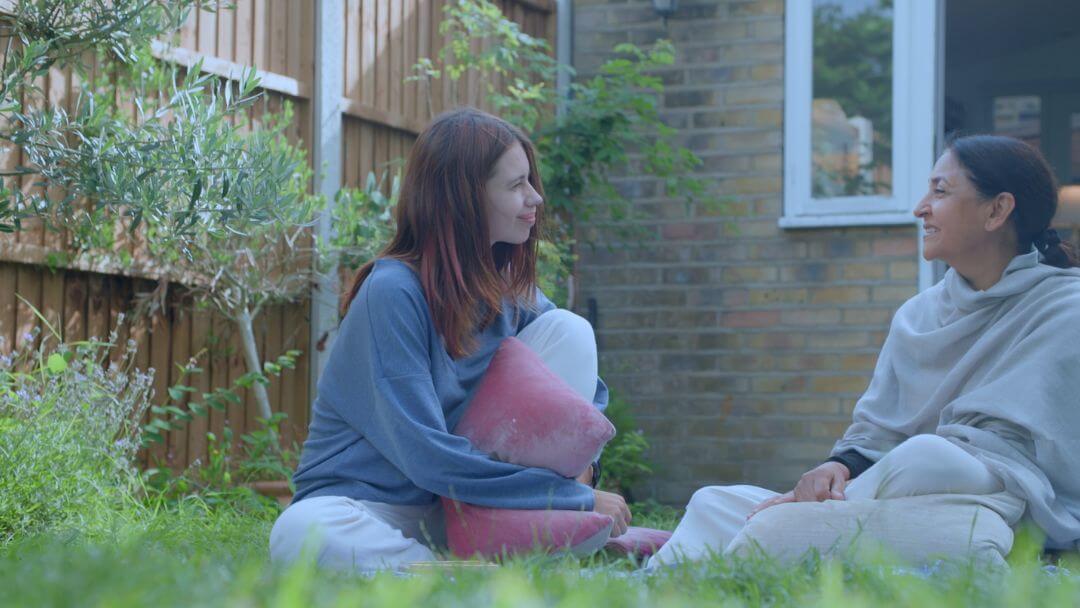
Thirty-something Anamika returns to England having learnt of the deteriorating health of her mother, Sadhana from whom she has long been estranged. Sadhana is living with Alzheimer’s, but recently, there’s been an incident. Her mother’s friend Laxmi has summoned Anamika after a pan of oil catches fire, and there’s been talk of social services getting involved. Anamika is brisk and impatient, determined her mother must go into care. Laxmi argues for letting decisions rest for just three months.
This is the slightly creaky set-up for a well-intentioned but hopelessly naïve and thinly scripted film set over a single summer about a mother and daughter resolving their differences. We are invited to sympathise with Anamika’s situation. But her impulse to put her mother in residential care is puzzling in view of the fact that beautifully groomed Sadhana (a gracious performance by Deepti Naval) seems at most a bit forgetful. She cooks, keeps an immaculate home and continues to be revered as an expert in Indian classical music, still making recordings for the BBC. Neither Anamika or any of her mother’s helpful neighbours seem aware of the structures that could be put in place to keep her mother at home. Has no one in their upmarket London street heard about getting Lasting Power of Attorney, for instance, so Anamika has control of her mother’s finances?
With no understanding of the nuts and bolts of accessing residential care, Anamika in one afternoon chooses a ludicrously plush care home. It’s an advertising agency’s dream: a gorgeous Regency mansion in extensive grounds where kindly doctors stroll. There are no gravel paths or ramps: just as well that none of the residents we see are wheel-chair users. Most are well-dressed, able-bodied older folk. Only a couple of them have the unwashed hair that denotes madness. Currently Sadhana is not in need of what is euphemistically called personal care. But what happens, Anamika should be asking, if her mother becomes incontinent or needs proper medical care? But Anamika simply accepts the projected figure of £47,000 a year (a good half of what residential care costs these days) and books her mother in for later in the summer.
Having made the decision, the mood lightens between mother and daughter. We begin to see how the local community look out for each other. It’s still Covid times, but local cornershop owner, Ashwin Raina (Rajit Kapur) starts a food delivery service. Briefly we think Raina may be a sinister Mr Big when Anamika discovers her mother has signed over to him the deeds of her house. But in no time at all he is revealed a devoted old flame of Sadhana and he and his band of jolly Uncles all have Sadhana’s best interests at heart.
But what has caused the catastrophic estrangment between mother and daughter? Why is Anamika still behaving like a rebellious teenager, shouting at the mother and smashing plates? Kalki Koechlin throws herself into this part of the role with conviction. After a bit of under-developed description of her childhood, we come to the heart of the matter. Can writer/director Pushan Kripalani be serious? Anamika wanted a puppy, apparently. Her mother explained why they couldn’t afford one. Then bought her a goldfish. The goldfish may or may not have died from natural causes, but the mother heartlessly flushed it down the loo. That’s it. It’s laughably feeble. Meanwhile, Anamika’s relationship with her English father is sketched in so lightly that it’s importance never fully emerges.
Meanwhile Harry Atwell literally dials in his part as Anamika’s partner Richard, in a series of video calls from some distant country where he is conducting a field study – another hazy bit of script writing. At the end of the summer, Anamika accepts a job in Basel. And this by chance coincides with her mother suddenly unable to remember who she is. So off to the plush care home she goes without a tear being shed. If only life were that simple.
Goldfish is screening at the Raindance Film Festival 2022.
