

Writers: Tayla Kenyon and James Piercy
Director: Danäe Cambrook
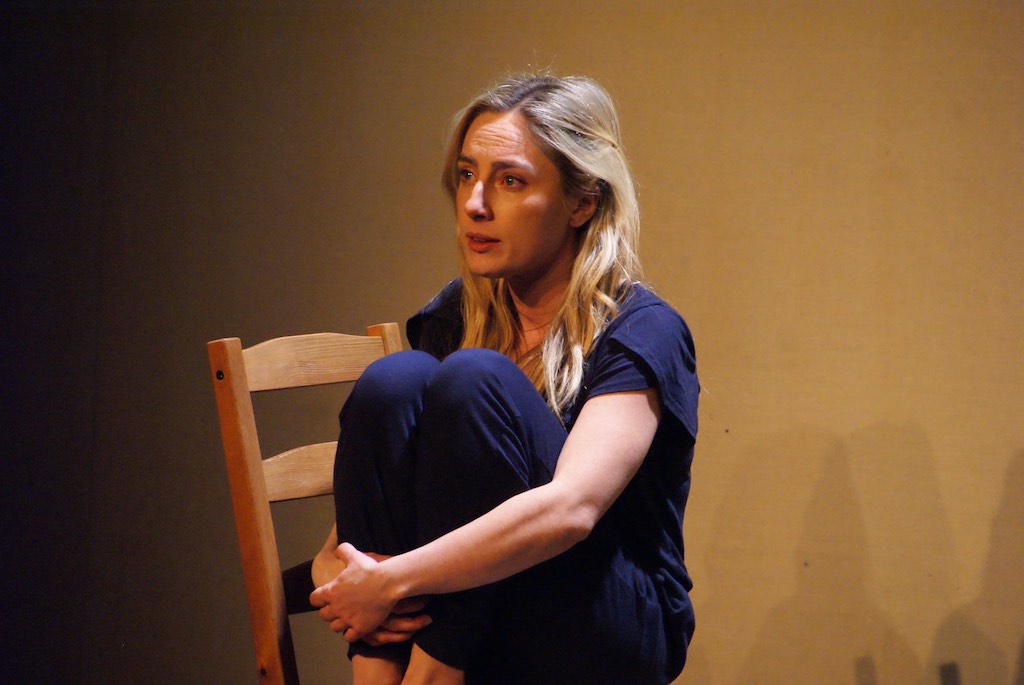
Tayla Kenyon and James Piercy’s cleverly structured and immaculately performed single-hander Fluff covers familiar territory: the crushing burden of dementia. Their eponymous central character Fluff, so nicknamed because she has to be pulled ungraciously by wispy baby hair from mother’s womb, is deeply flawed. Her evolving memory loss, ghastly and unforgiving as it is, saves her the pain of recollecting some of the truly awful things she has both suffered and engineered. Unreliable narration is a character trait here as much as a reflection of incipient illness. Yet Fluff, aided by restrained direction from Danäe Cambrook, emerges ultimately as a figure who deserves redemption. You may not like her. Empathy will be easier to find.
“I was an unbearably ugly child,” Fluff (a skilled, enigmatic turn from co-writer Kenyon) tells us early on. In many respects she is a pretty ugly adult too: vengeful, deceitful, manipulative and inattentive to the feelings of others. As a schoolchild Fluff complains of bullying, yet her recollections are inconsistent and redolent of artifice. Although fired from her job as a science tutor for being “a drunk and a bad teacher”, she equally merits dismissal for a campaign of petty retribution against a troubled, at-risk pupil. Her alcohol addiction leads directly to a domestic tragedy of almost unimaginable heartbreak.
Yet Fluff is a victim too. A teen fling with the school heartthrob Michael Tilly (“everyone was silly for Tilly” she tells us) leaves her the butt of merciless mockery and, seemingly, an unwanted pregnancy. Mum is a drinker too and resents the parental burden imposed by infant Fluff’s presence. Much-loved dad himself succumbs to slow onset dementia; the seeds of which Fluff learns to her horror that she carries in her own DNA. It is Fluff who, in an awful foreshadowing of her own destiny, takes the burden of caring for a decaying parent. Then there are the effects of the illness itself. Words go missing from her vocabulary. Memories jar. Events in her life become confabulated with those in the lives of others. She struggles, often angrily and resentfully, to make sense of it all. For those who have ever been around dementia sufferers, this will be painfully recognisable stuff.
Kenyon and Piercy’s slow-reveal narrative shifts seamlessly between events in Fluff’s life and a birthday party in what seems to be a care home. The identity of the mysterious visitor who insists on touching Fluff’s face and giving her gifts is carefully camouflaged until late on. The theme here is not new but the execution is refreshingly good.
Runs until 23 July 2024
