

Writer: Flora Wilson Brown
Director: Nancy Medina
Climate change is everywhere at this year’s Fringe. There is Climate Change Theatre Action 2025, a showcase of urgent storytelling around the crisis; Danielle Steers and Tobias Turley’s musical Hot Mess, a romance musical that reimagines humanity’s relationship with Earth as a toxic love affair; and Flora Wilson Brown’s The Beautiful Future Is Coming. Premiered at Bristol Old Vic, Wilson Brown’s play threads together the lives of three couples across 250 years, attempting to frame the climate crisis through the eyes of women and motherhood.
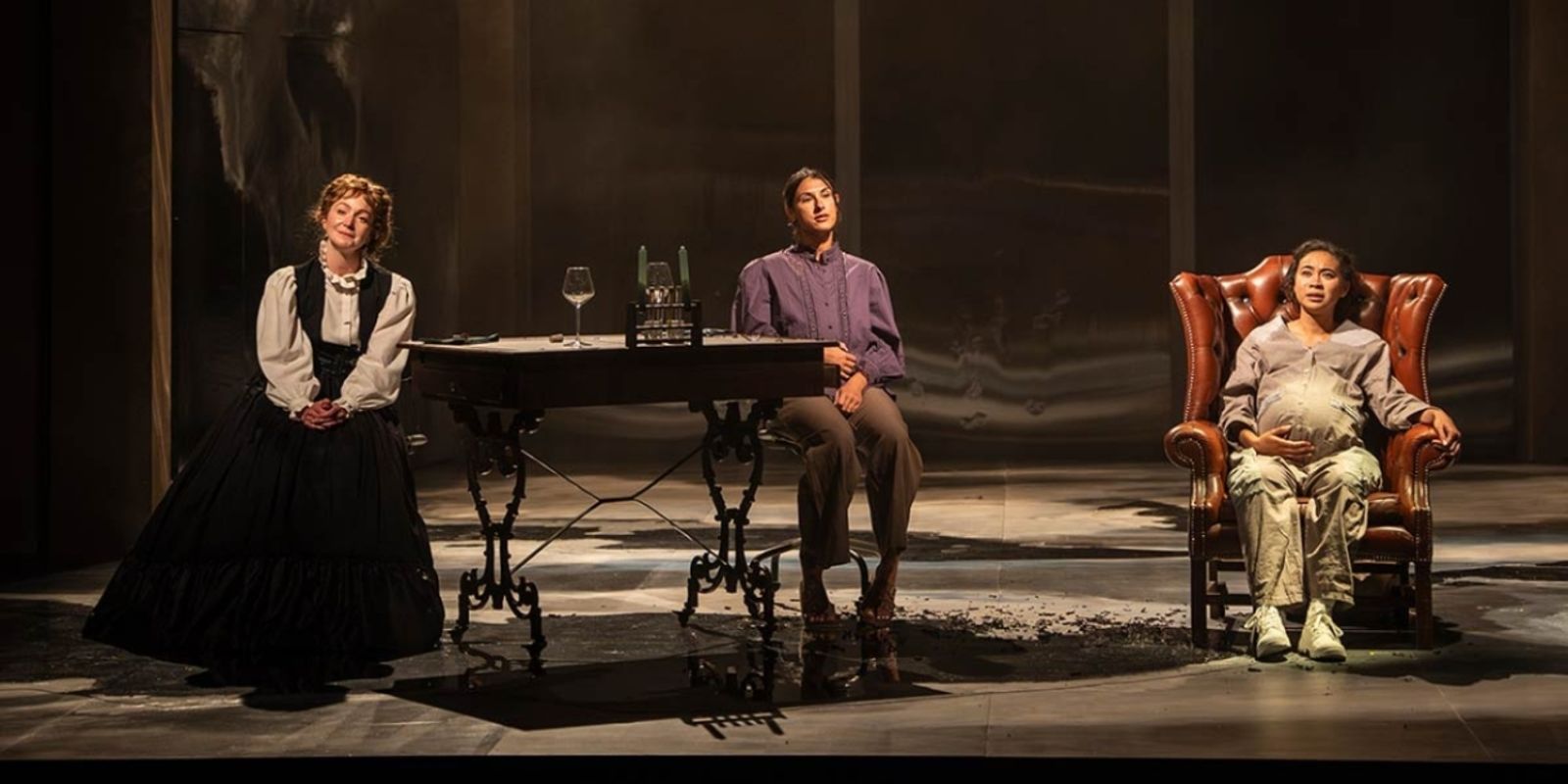
In 1856 New York, Eunice (Phoebe Thomas), married to John (Matt Whitchurch), conducts research into CO₂, suspecting her findings might expose the devastating consequences of human behaviour. In 2027 London, Dan (Jyuddah Jaymes) and Claire (Nina Singh), colleagues in the sustainability sector, fall in love, unaware that an unexpected flood will soon reshape their lives forever. In 2100, Ana (Rosie Dwyer) and Malcolm (James Bradwell) are trapped by extreme weather while working in a seed bank, with Ana also preparing for the birth of her child.
Each of the three timelines engages the crisis differently. Eunice faces both the patriarchal control of her husband and the dismissal of male-dominated scientific institutions while addressing the first evidence of the greenhouse effect. Claire grapples with the consequences of greenhouse effect as climate disaster unfolds around her. Ana and Malcolm, in turn, struggle to preserve life in an uninhabitable world. Yet the decision to stitch these stories into one one-act play feels strained. Apart from a prophetic dream motif, and lengthy monologues where each woman speaks about their absent children and their fear for the future, there is little that convincingly binds them together.
More troubling is that climate change often feels like a backdrop rather than the central force. In 1856, the urgency of the greenhouse effect is overshadowed by systemic gender oppression, yet the connection between gender inequality and environmental crisis is never developed. Wilson Brown highlights Eunice’s contribution to early climate science and acknowledges that motherhood is not a natural destiny imposed on every woman, but the play barely touches on the origins of the crisis or the wrongdoings that produced it. In 2027, the narrative centres on personal grief and loss while sidestepping the systemic failures that block meaningful action and the resistance faced by those who demand change. The deeper ties between environmental collapse and neoliberalism, globalisation, consumerism, capitalism and the collective ignorance are left unexplored. By 2100, life in a devastated world is softened by sentimentality, with redemption arriving too easily. The play gestures toward terror but consistently retreats into lyricism, offering poetry about grief and hope while avoiding discussing the structural realities that drive the crisis.
Of course, hope for a better future is necessary, but if theatre clings to hope without confronting the roots of the crisis, it risks complicity in avoidance. What remains is an over-sentimental, almost fairytale vision of catastrophe, ending with a deus ex machina crafted for comfort rather than confrontation. Instead of exposing the hard truths and collective ignorance that leads to the climate emergency, The Beautiful Future Is Coming retreats into gentleness—poetic, certainly, but evasive.
Runs until 24 August 2025 | Image: Ellie Kurttz
