

Directors: Matthew Jacobs and Vanessa Yuille
Dr Who is regarded as a British institution. This is often used to explain the eccentric nature of the central character and to excuse the dodgy special effects in earlier episodes. Fans had reservations when, in 1996, an effort was made to relaunch the then-dormant show with a special movie-length version specifically aimed at the American market.
These reservations turned into outright hostility when the TV movie was actually broadcast. It featured fundamental revisions to the character – making him a half-human hybrid who kissed his leading lady. It also, although not mentioned in the documentary, gave The Doctor an overt Christian symbolism showing him in cruciform pose with a crown of thorns.
Matthew Jacobs, who wrote the TV movie and co-directs the documentary, used the line Doctor Who Am I as a pitch to the producers intending it as a means of explaining the character of The Doctor to the American market. Now, somewhat down on his luck, he hopes to generate an income by attending Dr Who conventions and sharing his stories. He acknowledges having avoided the convention circuit due to fear he might be physically attacked -something which Philip Segal, who produced the movie, claims happened to him. Jacobs is frank about his motivation for changing his mind- people will pay for his autograph.
Some movies, unpopular upon release later gain respect via DVD recordings. The Dr Who movie is not one of them. Jacobs has a go at explaining its unpopularity- if The Doctor forms a relationship with one person, then he is off-limits to all other people, including the fans. But there is a sense of the arguments falling on stony ground.
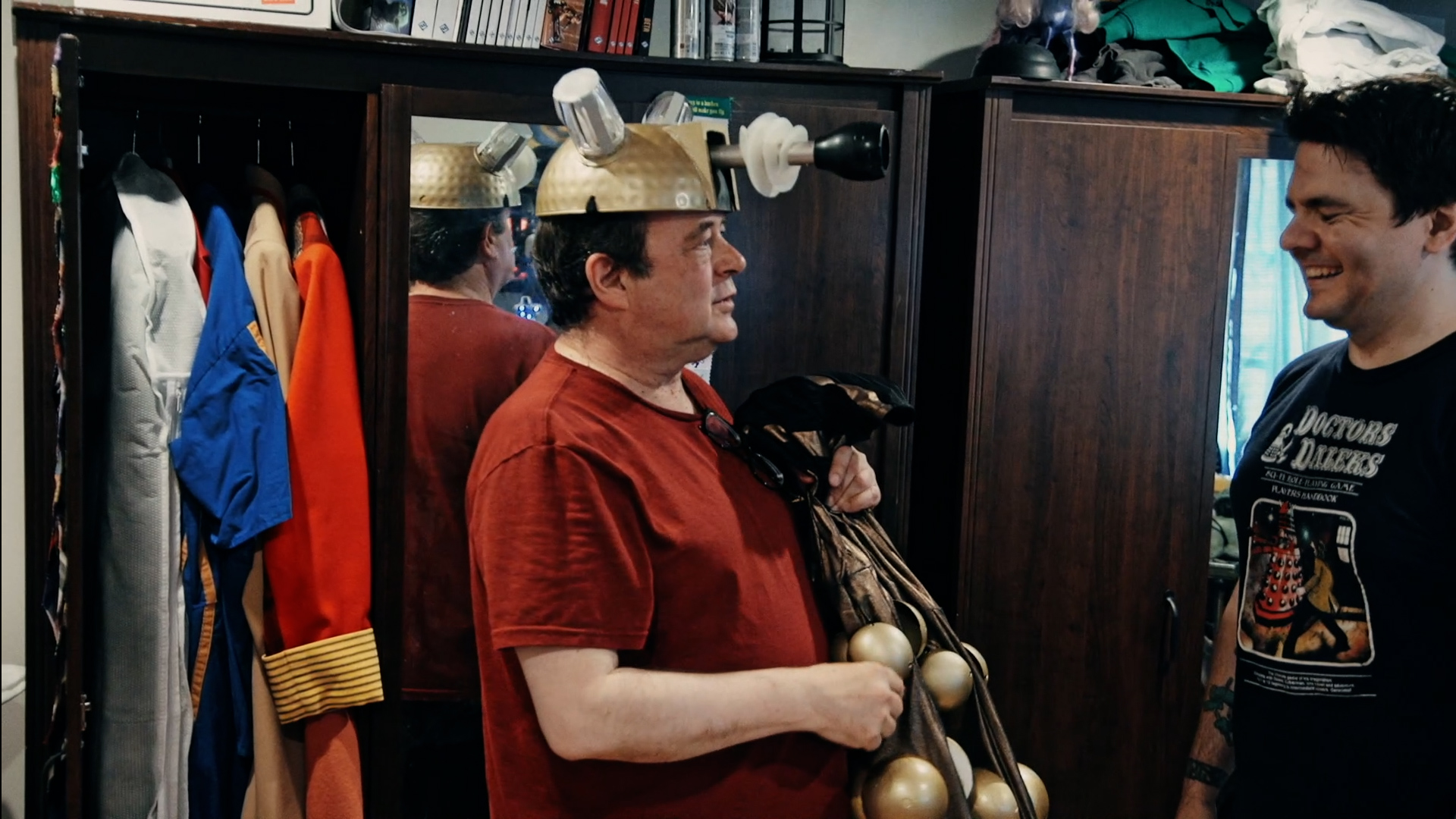
The documentary expands to include coverage of the convention circuit. Yet the documentary takes the same approach as the TV movie- concentrating exclusively on the American conventions where, apparently, emphasis is placed upon cosplay. It seems odd a show in which shaky special effects are recalled fondly should give rise to fandom where costumes and props are made to such a high standard. I’m sure British Whovians will be chuffed to hear attendees at UK conventions described as looking like they’ve been pulled from a bus stop.
Doctor Who Am I takes a respectful attitude to the fans but is not able to find anything that distinguishes them from, say, fans of Star Trek or Star Wars. Fandom provides a sense of community, or the show helps viewers cope with a dark period in their lives. There is the occasional expert analysis which sometimes goes a bit far claiming the show fills the gap left by the decline in organised religion. No effort is made to analyse how fandom has evolved from exclusively young males to include older people and women or how the television programme developed from a guilty pleasure into mainstream entertainment.
The careful approach means the documentary seems unsure if it is admiring the hard work of the fans in building such high-quality props and costumes or regarding their passion as odd. The shot of a baby being posed inside an alien Dalek is, however, a bit worrying.
Lack of ambition limits the success of Doctor Who Am I. Matthew Jacobs makes a brief defence of his script for the television movie but does not really confront fans who show such antipathy towards his work or explain why the attempted re-launch in 1996 failed but the one in 2005 worked so well the show is still around today. Fandom is shown in an appreciative manner without any in-depth analysis of the benefits participants receive or its place in wider society.
Doctor Who Am I will be in UK Cinemas from 27th October.
