

Writer: Frederick Knott
Director: Josh Mathieson
Dial M for Murder is a show which encourages conspiratorial laughs and bated breath. Its disjointed first and second acts have some pacing issues, but die-hard fans of the film will be pleasantly met with a new way to digest the famed story.
Famously known as the iconic Alfred Hitchcock film starring Grace Kelly, Dial M for Murder follows Tony Wendice as he plots his revenge on his wife, Margot, after discovering her affair with American crime novelist, Max Halliday. The plan is all laid out, but can he go through with it, and what would it cost him?
When watching, you can hear fans mutter the next words, hooked on the stage but also in the memory of their beloved film. Audience members gasp or ‘mmm’ in recognition of the lead’s cunning wrongdoings. This is definitely an opportunity for fans to gather. How well this portrayal lives up to the monumental success of the film, however, is up to them.
After a bumpy start, the performance really warms up at the start of the second act. Katy Dean’s introduction to the show as the inspector brings a large stage presence and a much-needed anchor. Her performance as the inspector is natural, restrained, and authoritative.
Similarly, as the character of Max Halliday has more time on stage, he becomes more complex. Simon Pothecary really endears you to his character; Pothecary’s portrayal of Max as a wise and deeply passionate man grows more well-rounded as he confronts Tony, which is a pleasure to see.
The second act feels like it has a slower pace; this gives the actors more breathing room and a less rushed feel. These pauses give great space to show off the play’s incredible story, which fans of the film have clearly travelled to see.
The first act, however, comes across as a little overacted. Before the iconic crime scene in the first act, there isn’t a good display of what normal life is like for these characters. The actors perform well in the extraordinary circumstances of the aftermath of a crime; however, they do not show us the ordinary life which came before it. This makes the first act stilted in comparison to the second.
For example, the existing marriage between Mr and Mrs Wendice is very unbelievable throughout the play. Even if Tony has fallen out of love with Margot after discovering her affair, he seems to show zero reaction towards her as his wife. If he is supposed to be pretending he has no idea about the affair, shouldn’t he still be affectionate towards her to misdirect her? This breaks the reality of the play somewhat. After all, you don’t imagine murdering your partner if you were never that interested in them anyway.
Even the affair between Max and Margot is hard to imagine. There seems to be a lack of chemistry between the pair, a lack of stolen glances or knowing looks which tell you they are involved. All of this amounts to a first act, which depends on the relationships between these couples, to fall flat.
Maybe to its credit, however, the show enormously recovers in the second act. The flatness of the couple’s chemistry doesn’t stay stagnant, and Margot and Max’s relationship evolves by the end. This would be more impactful had it been this way from the start, but better late than never.
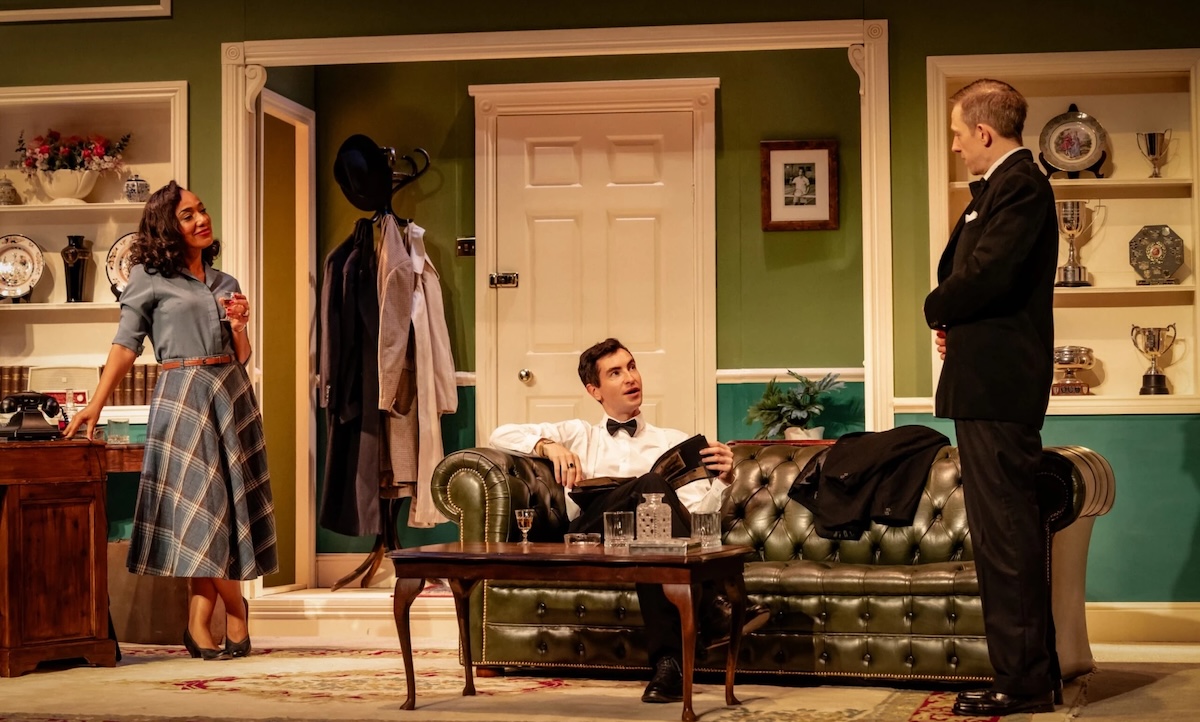
One of the real groundbreaking elements of this show has to be attributed to the set, lighting, and sound departments, all of which work in such unison to create an utterly believable environment that it becomes equal to a character in itself.
The 1950s London flat with its French doors leading out to the garden is perfectly immersive as a set. When people approach the front door, you can hear their footsteps on the landing tracking where they are exactly. Even the key in the lock makes all the right sounds.
There is no doubt that the whole city of London is behind those walls. This level of immersion is impressive for a small regional show, and that comes down to sound by Jack Cowlam, lighting by Paul Debreczeny, and set design by Andy Newell (with set build assistant John Buss).
Overall, Dial M for Murder is an opportunity for fans to see their favourite film on the stage. If you’re a murder mystery fanatic, then you absolutely won’t be disappointed by the twists and turns. Otherwise, it’s hard to see who this show is for.
Runs Until 19 September 2026 and on tour
