

Writer: Paul O’Donnell
For someone with diabetes, it is a form of masochism to watch a show about your everyday slog and even your deep-seated fears (including the one when your feet fall off).
Though if anyone could manage it, it possibly could be someone in this position. After all, as Paul O’Donnell points out in this show exploring diabetes, the condition means you’re used to shoving needles in your own body every day and having to relentlessly confront the weight of little decisions today affecting your quality of life in the long term. With a central subject unknown to many, Dia-Beat-Es is supported by consultations with medical professionals and fact-checking by the Leicester Diabetes Centre.
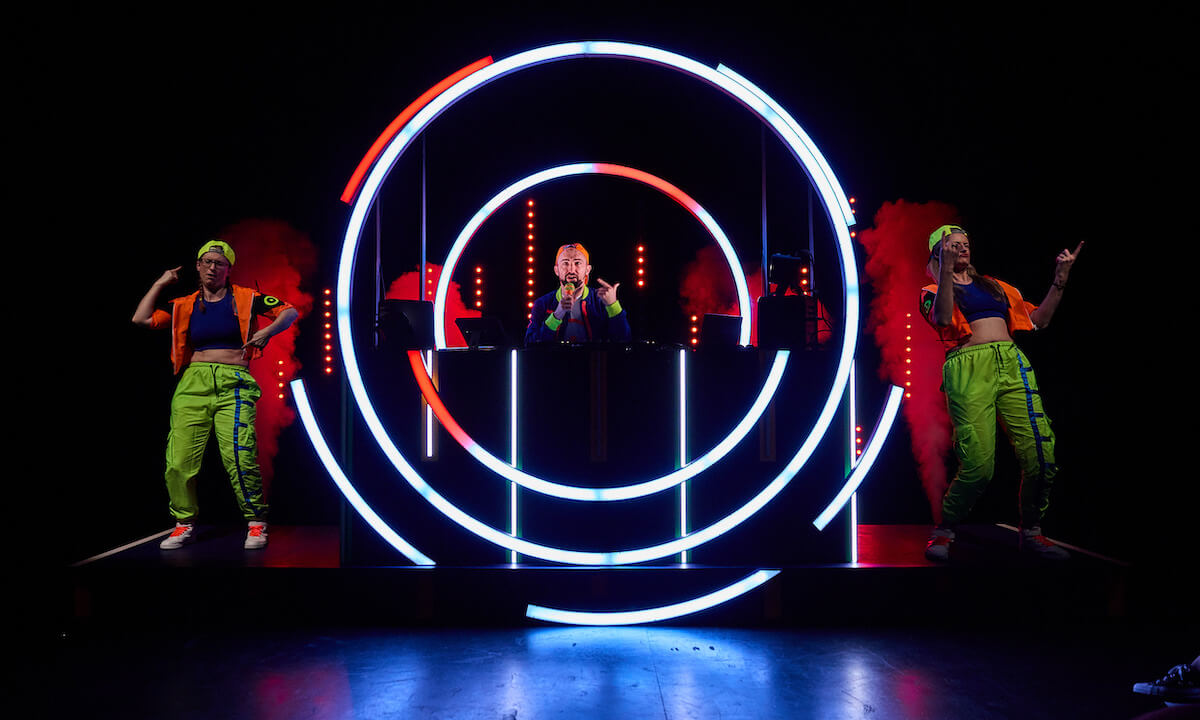
Paul O’Donnell’s autobiographical show, Dia-Beat-Es, is acknowledged as one with plenty of mistakes. A DJ for all of eight months, he shares that he’s jokingly promised funders to be the next Calvin Harris, yet it’s tricky to even envisage how the performer could link DJing and diabetes. However, with plenty of audience interaction and a high-energy performance, he cleverly interweaves audio interviews and popular music to share his personal and familial experience after a childhood diagnosis.
But it’s far from a medical lesson since O’Donnell lightly puts on the persona of the ‘sick bro’, as stitched on his jacket, and recounts his unusually early diabetes diagnosis as a two-year-old. He keeps the basics of managing blood sugar levels with a non-functioning pancreas brief but clear, and instead moves the story along with amusing diabetes puns and familiar tunes including The Eurythmics’ Sweet Dreams (Are Made of This) or the vocals of Kesha in the dance floor hit, Timber.
Even without any knowledge of the condition, it’s easy to bop along and follow his personal awkward moments linked to a condition that never can be forgotten about. Equally, his exploration of the exhaustion of making constant decisions with potentially short and long-term consequences gives reason for why this show is so necessary.
Dia-Beat-Es begins to grapple with the severity of the condition. Recorded conversations with O’Donnell’s family are an unexpected but pleasing perspective to reinforce the emotional toll of the condition on the individual and others. It also poses some questions sometimes also familiar to those with other disabilities or long-term illness: what does better luck look like with this diagnosis? Is it better to experience significant time before diabetes or not know life without it?
The rave also finds moments to explore other political and scientific topics including the intimidating financial cost of paying to stay alive with an ever-weakening NHS while seeing positive advances in organ replacement.
However, O’Donnell’s early promise of a “super sweet night” is challenged by how much to go beyond this. In a smart and memorable way, he starts to unpick the myth of the “good diabetic” or gives rare acknowledgement to carers to raise interesting conversations. However, shorter songs could give room to explore experiences of having to give care, needing to ask for support or other complexities that might bring some bitterness and bite, but perhaps be tempered by the show’s overall sweetness.
Reviewed on 3 March 2023 and on tour
