

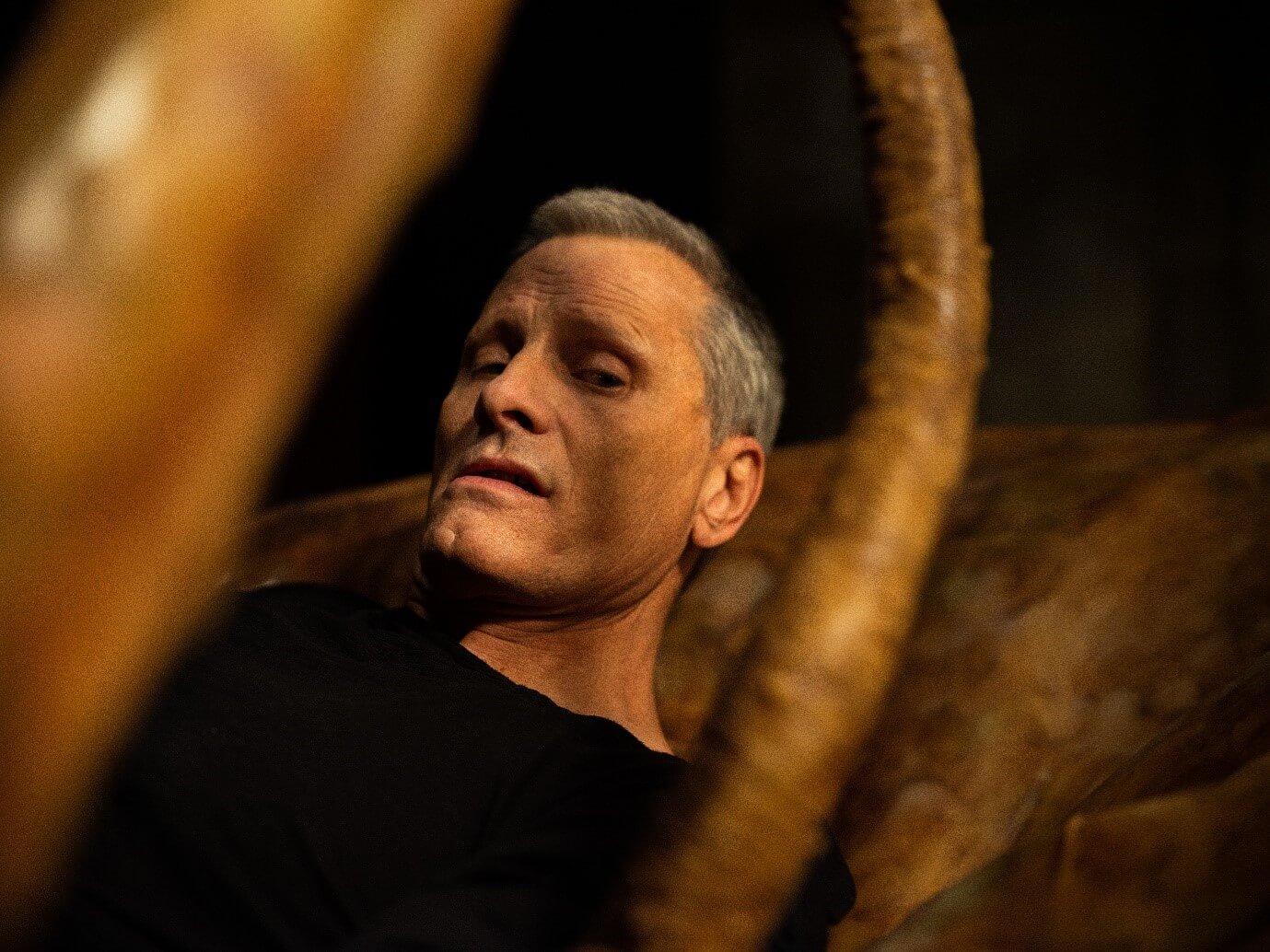
Writer and Director: David Cronenberg
David Cronenberg’s first film in eight years is a strange proposition, then we have come to expect nothing less from the director of The Fly and Crash. This time, his fascination with medical science and science fiction meets performance art as characters explore the chance to monetise evolution as social control, the pursuit of perfection and class combine in Crimes of the Future.
With the organ registration office alerted to unusual activity, artist Saul is able to grow additional organs, a function that his former trauma surgeon turned performance artist partner, Caprice, removes in surgical show for the public. But when a young boy is murdered, an underclass is revealed and Saul’s condition becomes harder to control, particularly when the artist meets the boy’s father who has a proposal.
Crimes of the Future is an engaging if haphazard film set in a dystopian near future that Cronenberg creates well. The scene is recognisable yet notably different with degenerated urban landscapes filled with decay and rust. This is not a world with much hope, and for those unable to wander freely, it is also a potentially violent place, but cinematographer Douglas Koch creates beauty in the broken which gives the film its visual appeal.
And Cronenberg has some interesting conceptual ideas about control of bodily function and evolution where difference is feared, referencing science fiction authors from John Wyndham to J.G. Ballard. The exploration of commercialised art is also quite interesting, taking humanity back to the days of watching surgical procedures as entertainment and posing questions about taste, boundaries and ethics in artistic creation that fit seamlessly with the sci-fi tropes and themes.
But Crimes of the Future loses its way, spending far too long on the psycho-sexual effects of Saul’s procedures in a world where pain no longer exists and Cronenberg’s male gaze is disturbing in all the wrongs ways as several female performers are shown needlessly naked in scenes designed to titillate rather than teach. Eight years is a long time in cinema and this particular anachronism is well past retirement.
It is also difficult to tell whether the film has made all of its points in the first 45-minutes or just takes too long to brings its strands together. Either Way, Crimes of the Future feels overlong even at under two hours, whereas a much tauter version of the story shorn of its elaborate eccentricities, could deliver far more interesting insights into the space between the medical and the artistic.
Led by Viggo Mortensen as the smug but troubled artist with Léa Seydoux trying too hard to be mysterious and enigmatic as his performance partner, and an awkward performance from Kristen Stewart as a straitlaced official drawn to Saul, Crimes of the Future is aching to be stylish and meaningful but, as can be the case with performance art, a great concept tips into pretension.
Crimes Of The Future will be released in UK and Irish cinemas on the 9th September.
