

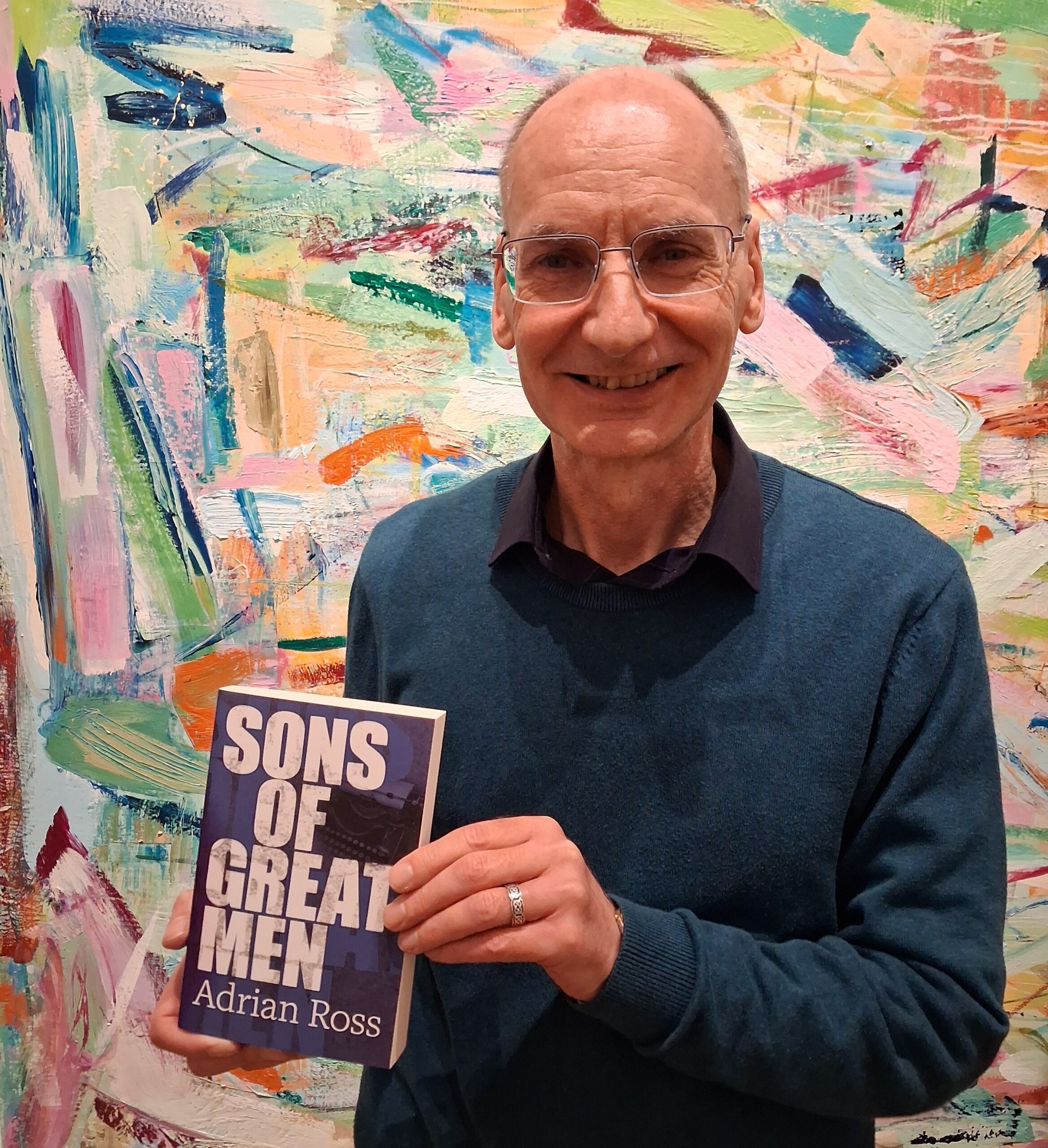
Writer: Adrian Ross
Penning a debut novel is a balancing act. Between making an artistic declaration of intent and “writing what you know”, the challenge for the novelist is how to do both.
Journalist, actor and teacher Adrian Ross leans decisively into the latter, with his novel Sons of Great Men. His central character, Victor, is a struggling character actor who’s played pantomime dames and the top-half of the panto horse (even inside the horse, billing matters). His career in the Isle of Wight is at a crossroads, along with his personal life. When news comes that his mum has had a stroke, Victor’s family begins to assemble.
Ross does a good job of drawing the complicated family dynamic. An ancient surname, de Vries, hints at a more illustrious past. The Great House, their family seat, is more ruin than ready for its Tatler close-up. William, Victor’s brother, is a Conservative MP, eyeing a transfer to the House of Lords. As his mum teeters between lucid moments, Victor pieces together her memoirs. A pioneering journalist in the 1960s, Jayne meets Victor’s father when she is tasked to write about ‘Sons of Great Men’ for her newspaper.
The novel moves between comedy and drama, although comedy is more dominant. Ross’ early chapters on the de Vries family are delightfully sharp: the descriptions of William and his avaricious daughter Henrietta would not look out of place in a Muriel Spark novel. Commenting that William’s constituents are often at death’s door, Ross supplies an inspired line, commenting that the constituent club’s flag is “forever at half-mast”. It is in these observations, shots fired across class lines, that Ross is undoubtedly at his best.
The issue with Sons of Great Men is that it takes on too much, and lacks the stamina to keep those plates spinning. There are B plots that could have been ditched entirely. The novel is simply too long: the periphery characters aren’t strong enough to warrant the 300+ page count. Concentrating on Victor, navigating his family and personal crises, is more than enough to engage the reader.
Ross’ characterisations also vary. It would have been nice to hear more of Jayne’s own voice as she recounts her history. By contrast, Victor’s daughter, Plum, is very lightly sketched in. Where Ross is confident in critiquing the theatrical world and even the layers of bureaucracy within an NHS hospital, his grip on Victor’s personal relationships is hazier. He drifts in and out of romantic attachments: we are never quite sure where his heart is. We spend most of the novel inside Victor’s head, but his lack of commitment, until a surprising choice made at the very last minute, is just confusing.
While there are sections within this novel that absolutely work, Sons of Great Men needed a firmer hand during the editing phase: a more streamlined narrative would enhance what already is working for the novelist. It is frustrating because, when it hits its stride, Sons of Great Men is a solid, convincing debut.
