

Writers and Director: Steve McQueen
In recent years a London Film Festival just wouldn’t be the same without a Steve McQueen premiere. In 2018, he opened the Festival with Widows, in 2020, the writer-director shared two movies from his Small Axe series and last year his Second World War documentary Occupied City had a special screening. Now the opening night spotlight is his again with latest film Blitz which proves more than another, cosy and cliched British period drama, instead a social history of East London enduring bombing raids but also anticipates the budding equalities to come as black communities, women and working class Londoners bear the brunt of the war effort.
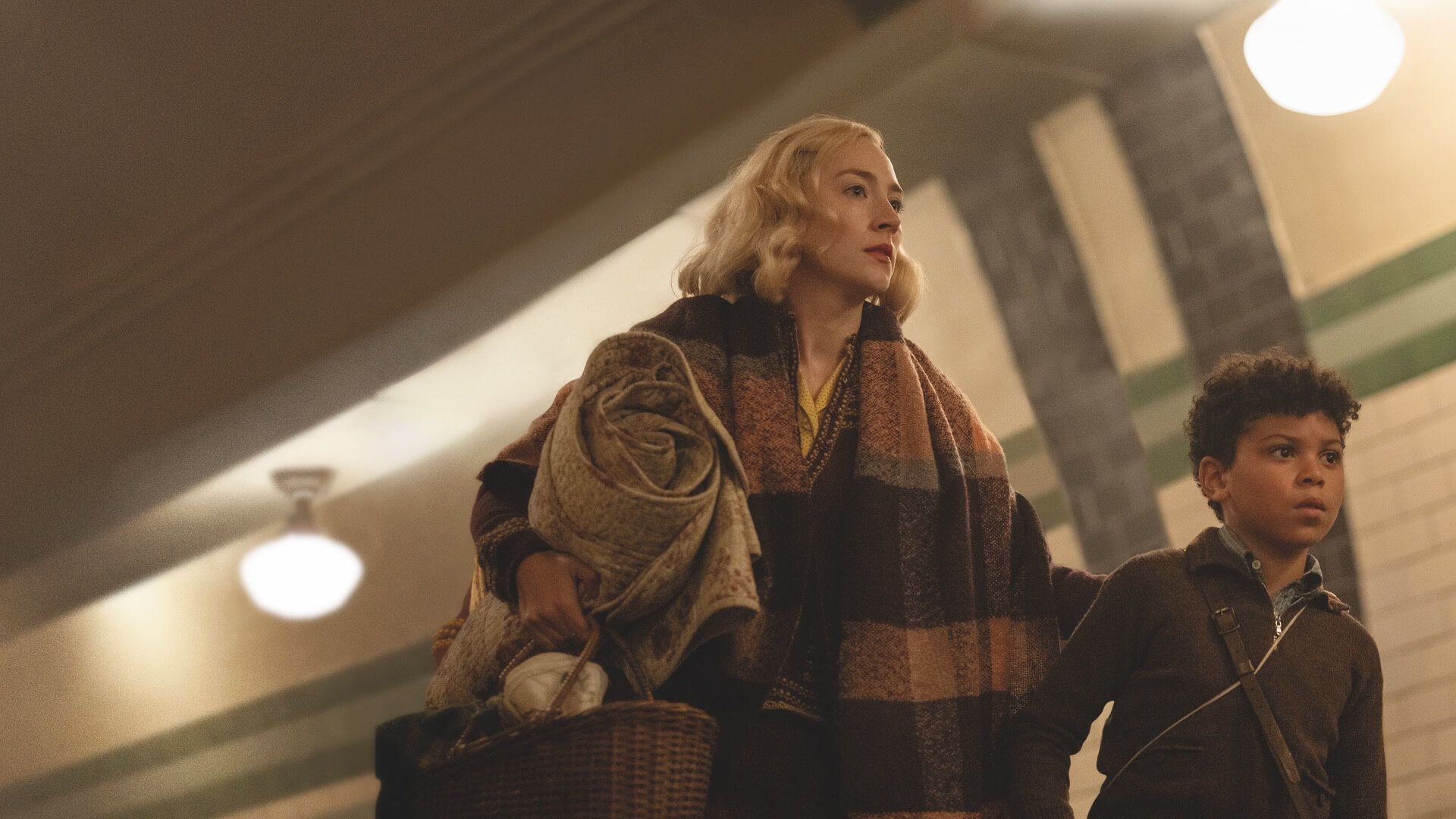
After a frightening raid, Rita (Saoirse Ronan) agrees to evacuate her son George (Elliott Heffernan) for his own safety while she remains in London with his grandfather, Gerald. Escaping from the train, George makes his way back across London and begins a dangerous journey desperate to return to his mum. Meanwhile London is becoming more perilous for Rita and her friends little knowing that George is alone.
As he has so many times before, McQueen essentially rewrites the DNA of the Home Front movie by embracing the stereotypes – plucky Brits, sing songs in makeshift bomb shelters and tube station occupations – but then, as George returns, McQueen creates a different, more truthful (the Director’s word) impression of the capital city with its centuries old racial diversity subtly reflected in every scene. Posters representing empire products, shop displays containing racist imagery from plantations and the casual use of offensive racist language create the world of the film and the still hostile society that George and Rita must exist within. As much as Britain is fighting the Germans, citizen also fight amongst themselves, harping on questions of belonging.
Blitz is an adventure story in some ways, a child’s eye view of navigating adult London, but McQueen enhances this with a light coming of age narrative showing the brutality George experiences for the first time when he encounters corpses, villains and the wreckage of the familiar physical streets he grew up in. Yet, it also a period drama with broad insights into the munitions workers (including a wonderful Hayley Squires) and the family focus that George and Rita cling to which becomes the heart of the film as both cast back to a happier time, whether singing around the piano with grandad (Paul Weller, also excellent) or Rita’s brief love affair with Markus ended by violence. Even the venality of the Cafe de Paris scene which is soon bombed is fascinatingly complex; sympathy for those affected but with equal parts revilement from all this excess when streets away the working-class characters are being locked out of shelters.
McQueen controls these narratives and the changing tones really skilfully, blending them together in a panorama of the blitz experience. As we saw with Lover’s Rock, the energy of dance is a high point but these sequences match the adrenaline rush of the bombing raids as McQueen’s camera immerses itself in the panic and activity as it did in the heaving bodies moving to music. The landscape of burnout London is beautifully presented with aerial tracking shots across the morning-after ruins of the city, while McQueen balances the effects on terraced homes with a segment across the River Thames and industrial London that motored the war effort.
It doesn’t all work, and although such gangs existed, the Dickensian ruffians that George is co-opted by are overly exaggerated and tonally awkward, but this prioritising of the working-class experience, of ordinary people and families ultimately becomes quite meaningful. That the world premiere of this film took place at the Royal Festival Hall near to where one of those bombs hit the city during the blitz only enhances the significance of McQueen’s latest movie opening this year’s London Film Festival.
Blitz is screening at the BFI London Film Festival 2024.
