

Writers: Pawel Pawlikowski and Henk Handloegten
Director: Pawel Pawlikowski
The hype around Fatherland is real. Pawel Pawlikowski’s quiet, short black-and-white film about Thomas Mann returning to Germany after the Second World War to receive the Goethe Prize is a compelling work of art. With discourses on politics, literature and philosophy, Fatherland is a serious film, which nevertheless is accessible through the news of a death that unsettles the Nobel Prize in Literature winner as he embarks on a series of lectures in West Germany’s Frankfurt and East Germany’s Weimar.
Mann is joined on this trip by his daughter Erika, who acts as his companion, driver, interpreter and rehearsal audience for his sometimes-impenetrable speeches. His son Klaus is also meant to join them even though he has told Erika on the phone from Cannes that he never wants to set foot in Germany again. The German language, he adds bitterly, was created for the telling of lies. “We’re trash”, he says. Erika looks for him when she arrives with Mann at the Frankfurt hotel, but Klaus has not yet arrived. He will never arrive.
At fancy receptions and dinners, Mann and Erika observe the new custodians of New Germany, men and women who previously were enmeshed in the Third Reich. Mann tells the grandsons of Wagner that their mother Winnifred should stand trial for her support of Hitler, while Erika loses her temper when she meets her ex-husband, who, at one point, was the Nazis’ favoured actor. Erika and Mann are clearly on the right side.
However, Mann is still German, and Hanns Zischler gives the writer a sense of being caught between two worlds. He gives a rousing speech on Goethe’s wish for a Germany built on love, rather than on the death cult that other philosophers have said forms the basis of the German identity. However, Mann is also now an American citizen, wearing expensive suits and puffing on expensive cigars. This double identity is further complicated as both East Germany and West Germany want to claim him as theirs.
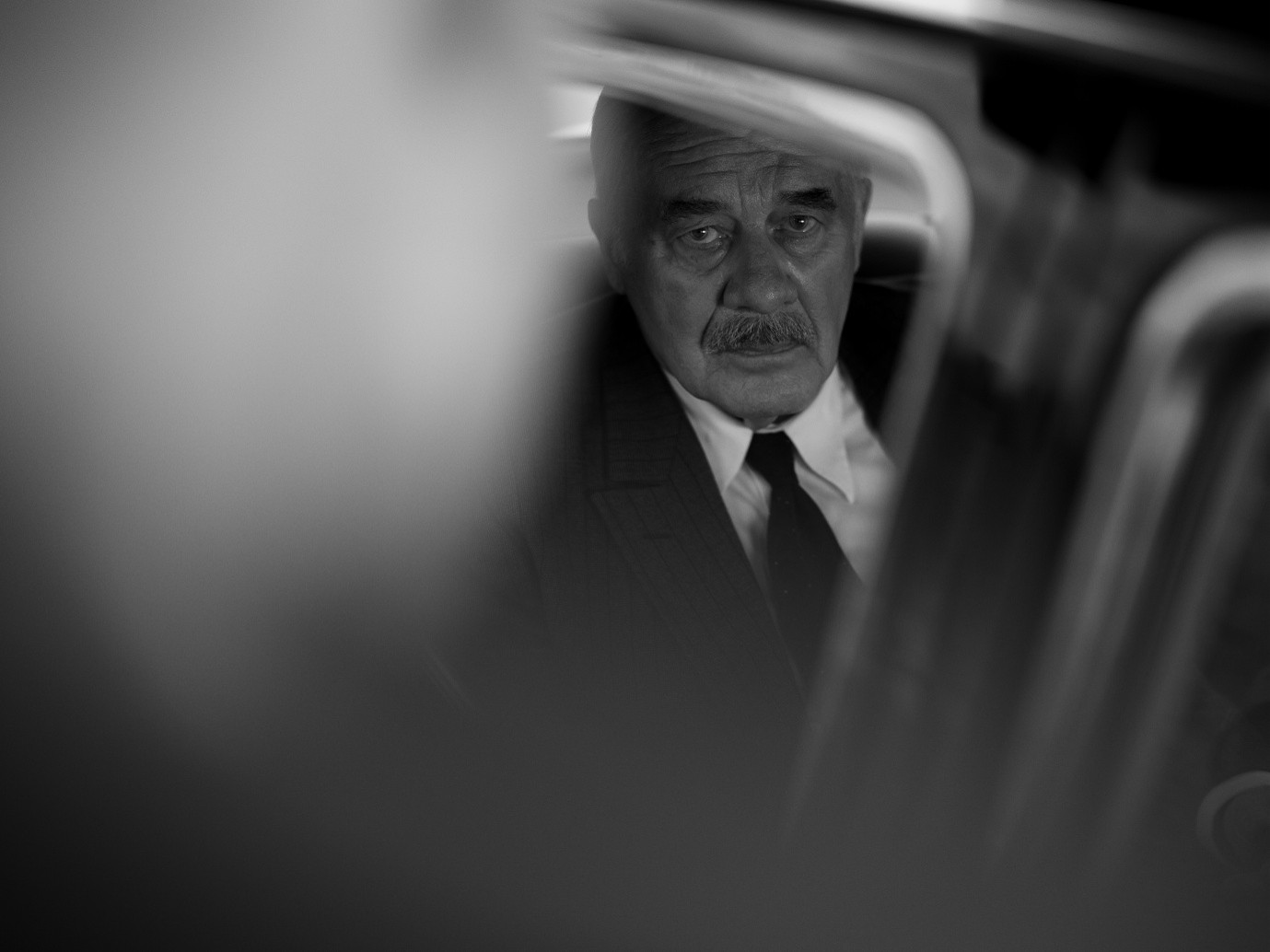
Zischler’s Mann is often a lonely figure, slumping in the back of the car that Erika drives to Weimar or sitting in shadows in hotel bedrooms. He’s a man with the weight of the world on his shoulders. Little is made in the film of his literary work. He talks of Faust, but only in the context of Goethe. His own Dr Faustus, his brilliant novel illustrating how Germany sold its soul to the Devil, was published in 1947, two years before this film takes place, is oddly not mentioned at all.
Sandra Hüller is Erika, and it’s easy to see how she’s already being feted as the winner of Best Actress at next year’s Academy Awards. Her Erika says little, but when she’s translating her father’s words into other languages at press conferences, slight hesitations, tiny movements of the eyes, demonstrate that she doesn’t always agree with what he is saying. When she is sitting in a deserted café with her father in East Germany, she cuts the loneliest figure, even though the camera only shows their backs. Loyalty to her father is mixed up with frustration and anger, although she verbalises hardly any of these emotions.
Pawlikowski’s stark monochrome suggests that the landscape that the Manns drive through and the public meetings they attend are places that, in real life, are black-and-white too. Drained of colour, Fatherland shows the damage of the wartime bombing and the bleak hopes of the future. Only Goethe’s house, retained as a museum and visited by a reverent Mann, has any trace of colour with its glow of pink, but this may be an optical illusion.
Fatherland is a road movie like no other. Its final minutes are breathtaking and haunting, redemptive and sad. Indeed, Fatherland’s conclusion might just be the best finish to any film made this century.
Fatherland is screening at the BFI London Film Festival 2026 from 7-18 October.
