

Writer and Director: Gu∂munder Arnar Gú∂mundsson
The publicity for Gu∂munder Arnar Gú∂mundsson’s Beautiful Beings suggests it’s an updated Stand by Me, but the comparison does this new Icelandic film no favours. Although there are dark shadows in Rob Reiner’s 1986 coming-of-age tale, the world of Stand By Me is basically a sunny one. Told in retrospect by one of its protagonists, it’s a poignant memory of a quartet of twelve-year-old boys enjoying a final summer of innocence and friendship. The equivalent lads in Gú∂mundsson’s film are fourteen-year-olds, already cynical and damaged, twenty-first-century Iceland an altogether bleaker place than Reiner’s Oregon.
Beautiful Beings first focuses on Balli, played with haunted intensity by Áskell Einar Páknasib. He’s a nervous, neglected child, living an abject life with a drug-addicted mother. Kids at school don’t want to sit beside him. Feral packs of boys routinely beat him up. We hear a TV reporter on the increase of violence among Iceland’s youth, and we witness the boys who bully Balli being beaten up in their turn by an older gang.
There’s an echo of the two gangs, older and younger, in Stand By Me, but in Gú∂mundsson’s world the sunshine has gone out. Scenes happen in neglected parts of the town or in semi-derelict houses. The three boys who initially menace Balli gradually turn into friends of a sort, thanks to the innate compassion of one of them, Addi. They bring Balli food and help him clean up his squalid home. Addi alone carries the group’s secrets. His tough friend Konni, in particular, is secretly petrified of his violent father which explains his own uncontrolled outbreaks of aggression. Thinly drawn Siggi, supposedly ‘the weirdo’, also comes from a dysfunctional family. Addi’s life is relatively normal: he’s just embarrassed by his mother’s embrace of all things occult. But he is privately aware of the powerful imagery of his dreams, realising he may possess psychic powers. This leads to the weak plot device of Addi foretelling subsequent scenes of aggression.
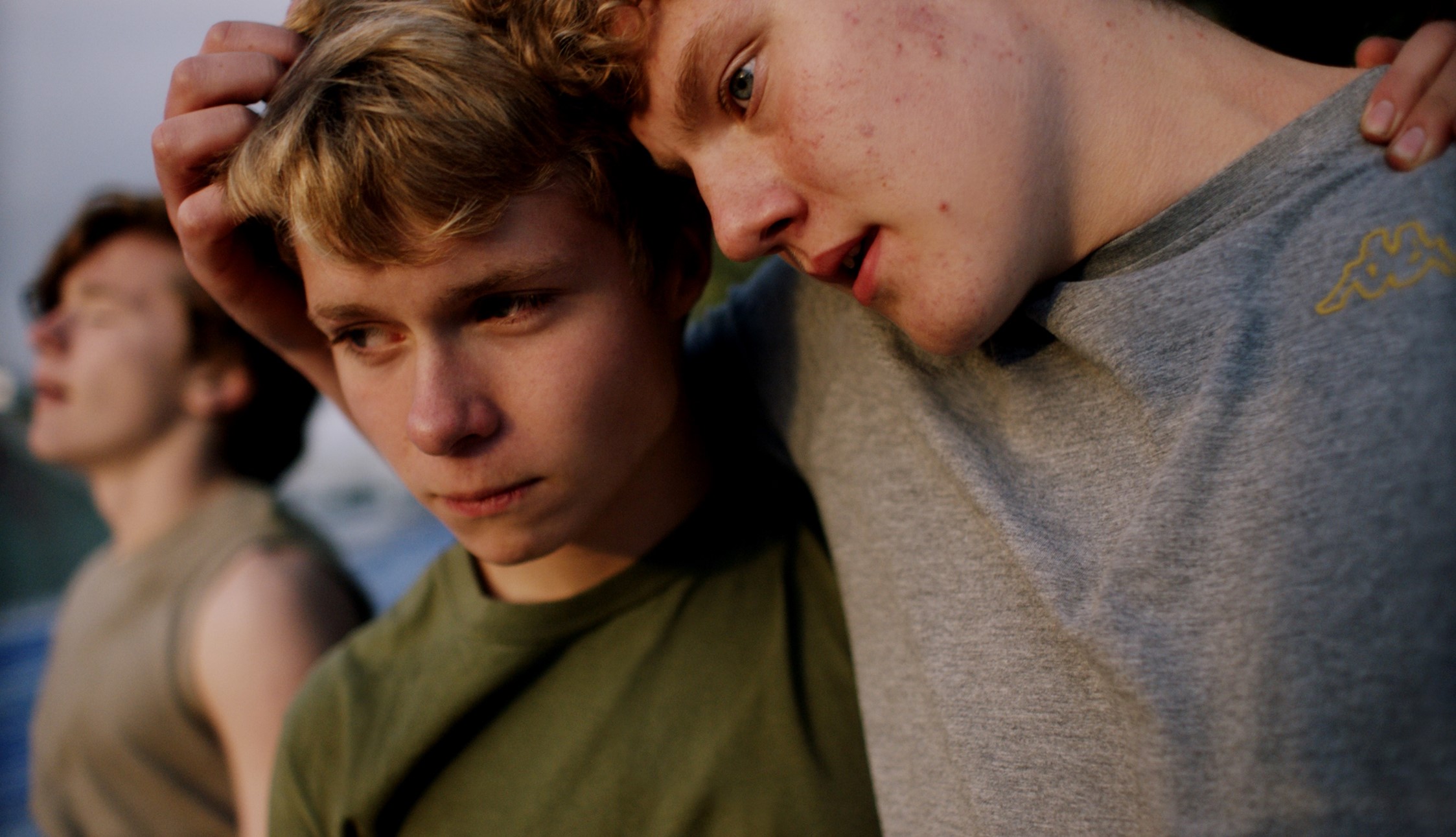
The four boys are not as well differentiated as Stephen King’s characters. Birgir Dagur Bjakasson is no doubt cast as Addi for his striking resemblance to River Phoenix in Stand by Me. Bjakasson has both the looks and the acting ability to carry the film, sensitively capturing the mercurial moods of adolescence. But the camera loves him far too much, lingering suggestively and exploitatively on Bjakasson’s body.
As this suggests, there are strong homoerotic undercurrents in the film, particularly between Addi and Konni. At their best, these work well to show the more compassionate side of boys. There is a particularly moving scene in which Konni, having dumped Balli into a hot bath, tenderly washes his hair.
Sturla Brandth Grøvlen’s cinematography is excellent, especially in dream sequences. When Addi is persuaded to try magic mushrooms, we see through his eyes a new world which is at first marvellous, then nightmarish.
The plot moves further from Stand by Me, as it cycles repetitively through a series of out-of-control parties The line “Stand by me” itself loses the evocative layers of Ben E. King’s 1961 song and its thematic power in the original film. Here it’s reduced to its surface meaning – “You’re not going to stand by your friend?” asks Konni when the boys face the choice of grassing up one another to escape conviction. It misses the suggestion of an enduring bond of love which deepens in adulthood.
Film has long thrived on depictions of escalating cycles of bloodshed. But despite a two-hour running time, Beautiful Beings never explores why Iceland, a country with a traditionally low crime rate, might foster such social disintegration.
Signature Entertainment presents Beautiful Beings on Digital Platforms 30th January.
