

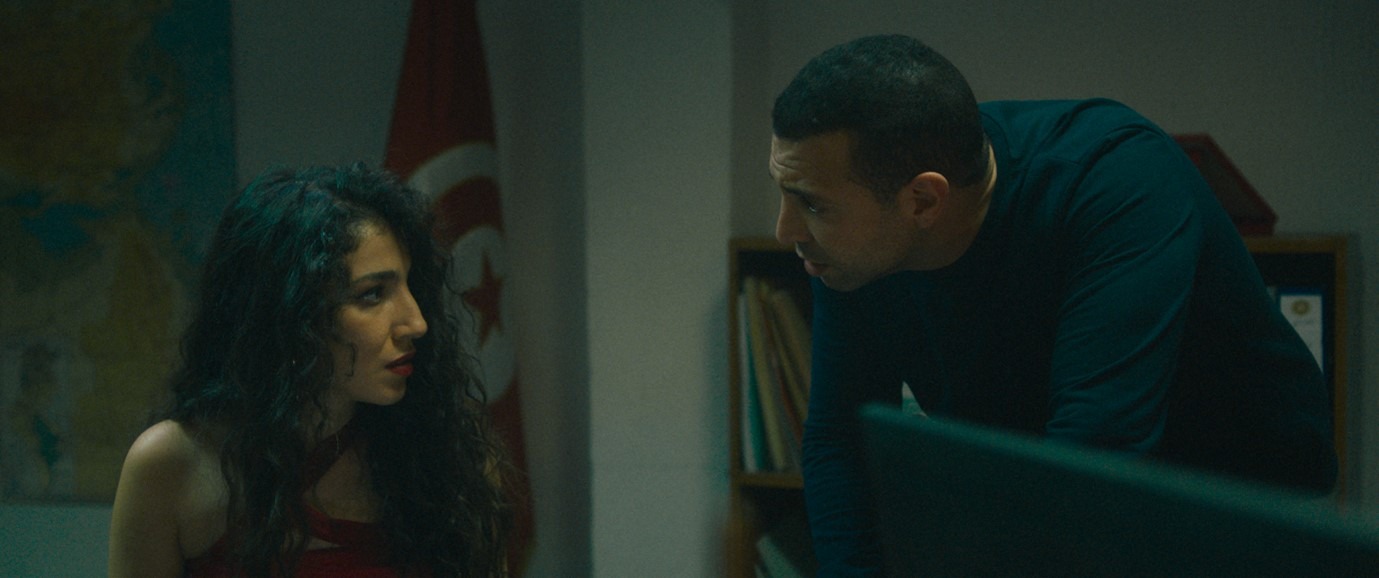
Writer and Director: Mehdi Barsaoui
Characters abandoning an old identity in search of a new life is a familiar trope in film and television, but all too rarely does that new life every materialise. Mehdi Barsaoui’s second feature Aïcha is based on true events, a woman who wanted to test the love of her parents by faking death, which expands the concept into a story of transformation but also of police corruption and the control of women’s bodies – themes that are familiar in the programme for the 2024 BFI London Film Festival. Part thriller, part social comment, Aïcha is an accomplished two hours as Barsaoui tracks an evolving situation that increasingly erodes the newfound agency of the main character.
Hotel worker Aya is tired of her life, working on behalf of her family since the age of 14 and stuck with obligations that restrict her. When the minibus taking her to work crashes on a mountain road killing everyone else, Aya finds a way out, letting everyone believe she died as well. Arriving in Tunis and calling herself Aria, she is soon swept up in the life of her new housemate leading to fateful evening that will threaten her new identity.
This female-led narrative impressively captures the changing experience of the lead character, from trapped domestic worker to vibrant young woman discovering herself in an exciting city, to again being confined by her gender and the pressure that men place on Aya to behave in ways that suit them, often threatening and manipulating her. But there are female role models and complex authority figures throughout, including a local baker who kindly supports Aya, her flatmate who seems so quiet but is also using Aya’s naivety as well as the head of the police force ordering a major cover up to protect her own retirement plans.
The developing corruption storyline is particularly well explored, undercutting the primary stories of Aya and the police investigation, showing the accident of the original crime, the activism of the immediate family and the ensuring protests, feeding effectively into the plot in ways that create pressure on everyone, leading to the film’s convincing conclusion. Barsaoui also contrast the rural experience with the city as well as day and night life with colour and energy shifts that buffet the fortunes of the characters.
Anchored by an impressive central performance from Fatma Sfarr as Aya, the wallflower with a steel core is well conveyed while Sfarr brings the audience’s sympathies into her choices as she tries to reclaim bits of herself, eventually finding a surprising way through her troubles. The impressive supporting cast is equally central to the success of Barsaoui’s scenarios creating a strong ensemble to underpin Sfarr’s performance.
Aïcha is a smart picture about authority and the misuse of power in Tunisia but has considerable universal application in understanding the compromises heaped on the powerless and in rooting for an underdog who, however unwittingly, might just bring it all crashing down.
Aïcha is screening at the BFI London Film Festival 2024.
