

Book and Lyrics: David Lindsay-Abaire
Music: Jeanine Tesori
Director: Michael Longhurst
No one gets a second time around, but the arrival of the Broadway smash Kimberly Akimbo in the UK, premiering at the Hampstead Theatre, needs a second and third pass to tighten up a show that offers plenty of self-conscious feel-good energy, but little in the way of story development with one-note characters and plenty of interesting themes and questions that are never answered. Winner of numerous Tony Awards, it is hard to see beyond the clichéd sentimentality on offer in Michael Longhurst’s production. It’s a nice story about nice people, but you’ll forget you’ve seen it on the way home.
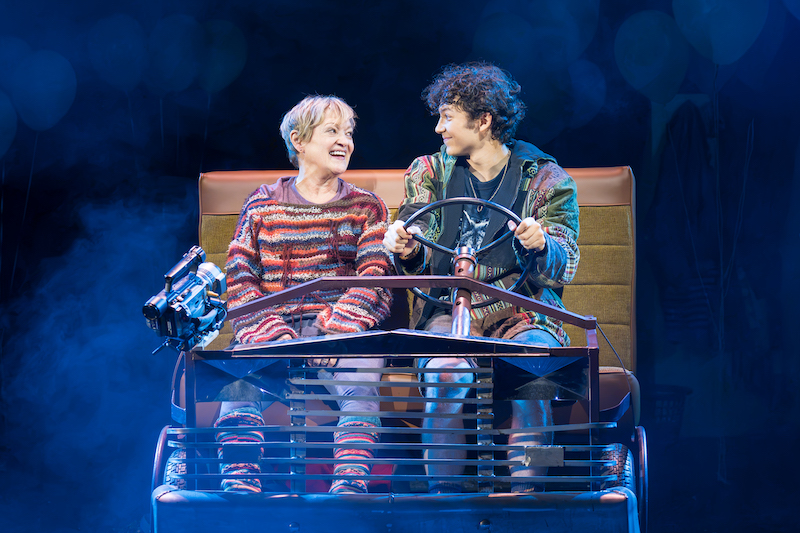
Born with a rare genetic condition that causes her to age prematurely, 16-year-old Kimberly looks many times her age. Feeling displaced at home and school, Kimberly meets Seth as they team up on a presentation, but with a baby sister on the way, her aunt unexpectedly showing up on parole and a school choir that needs new costumes, there are too many things for her to keep control of.
David Lindsay-Abaire and Jeanine Tesori’s musical struggles with focus and is driven by an over-excitable plot in which every new scene brings additional elements into the narrative without offering a clear trajectory. There is no major adversity or jeopardy to overcome and instead feels disconnected, lots of little occurrences without delving deeply enough into any of them to get a fuller sense of the characters and their lives. And in this way, the story positions not having home-cooked meals, a domestically useless family and unrequited teenage love on a par with mail fraud and contemplations about time passing – the idea recurs throughout the show but has little to say about time other than it passes, so use it well.
Characterisation is equally problematic, with every individual built around a singular trait; Kimberly’s father is just an alcoholic, her mother is just pregnant, Seth is just nice. They all get a solo in a formulaic musical theatre structure that largely leaves everyone where it found them except for the obligatory ‘everything’s fine now’ song at the end. Even Kimberly’s condition is also only a description; it is not integral to the plot particularly, and the creators never use it to fully explore the inner conflict of teenage life, the pressure or desire to be like everyone else and the genuine fear that her life might be a short one. The concept talks to big life themes but lacks grit and, arguably, the courage to enter into any really difficult territory, making it hard to know what its purpose is.
The ever-interesting Soutra Gilmour’s staging is fun, a revolving doll’s house that turns into a school, the local skate rink and a handful of other locations that flow smoothly together. The cast also works hard, including Maria Friedman as Kimberly, who brings some consistency to the performance in a scattered creation, while Alice Fearn earns the most laughs as her amoral aunt. Plenty of audience members will enjoy its pleasant optimism and undemanding approach, but its big reputation and award-winning status deliver only disappointment.
Runs until 7 November 2026
