

Writers: Hannah Power and Conor Murray
Director: Emma Finegan
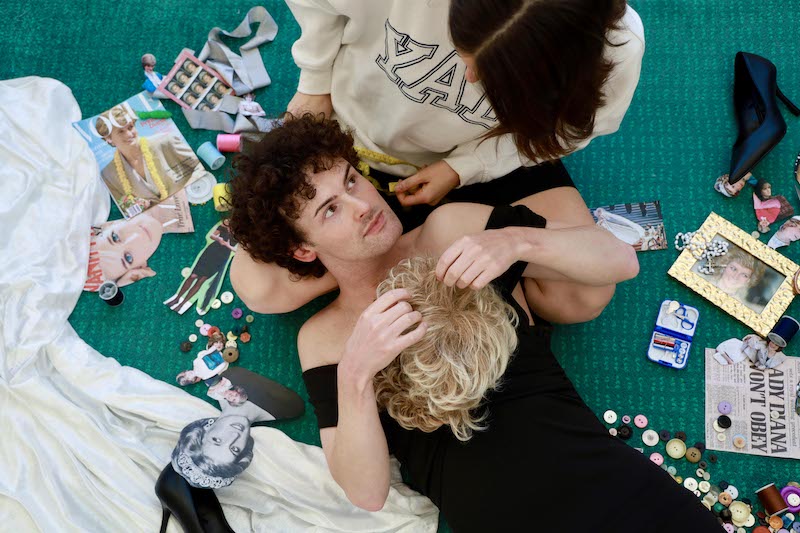
Secrets, lies, and the death of a Princess on one of the most significant days in late twentieth-century history, Hannah and Conor embark on a journey, taking these teenage characters from hopeful dreamers in 1997, obsessed with the then Princess of Wales to young adults ready to embrace their future apart. Written by Hannah Power and Conor Murray, Don’t Tell Dad About Diana, transferring from last year’s Edinburgh Fringe to the Underbelly Boulevard, tells the tale of two friends with theatrical aspirations trapped by traditional Irish family life and dreaming of glamour.
They have been planning for weeks with homage costumes handmade by talented seamstress Hannah, while impression, routine and drag performance will be delivered by Conor as they set out to win the Alternative Miss Ireland contest at a local bar dressed as Diana, Princess of Wales. Overcoming numerous obstacles on their way to the ceremony, including keeping the whole enterprise secret from their respective families, only one thing can derail their hopes: the death of their icon.
Don’t Tell Dad About Diana is full of brightness, two slightly exaggerated comedy characters, plenty of humorous over-reactions and the kind of life-or-death jeopardy that can only be felt by two overly dramatic teenagers whose lives will end if they can’t compete in this local competition. Power and Murray have written a neatly planned 55-minute show with two seen characters and a cast of many that explores the restrictions of being a 1990s teenager in Ireland, confined by school, parents and limited aspirations, as well as the exotic excitement Princess Diana and the possibility that moving to London to live a new fabulous life might offer.
What happens on their journey involves both big and small tragedies seen in the wrong proportions by the characters; Hannah’s struggle to get the bustline right on her version of the ‘revenge dress’ and the impracticality of cheap chiffon offer the same world-melting dilemma as Conor being caught in the club loos by his straight-laced brother while attending to a male schoolfriend. And for most of the show, that tone is nicely managed, building to a falling out between the pals, a family confrontation and the end of their icon.
Despite the title, however, too little time is spent on fleshing out Conor’s family in particular and given the importance of his dad to both the story and the title, the character feels sketched and pallid. To understand Conor’s fears about being a gay man in a very traditional household, his love of drag, his intention to study theatre, his father needs to be a far stronger presence, even if he is only a clichéd one.
The love of Diana is an interesting one, but given the depth of their obsession, the friends seem less poleaxed by the abrupt discovery of her death than the audience might expect, while the decision to play out Conor’s performance in the middle of Don’t Tell Dad About Diana rather than as a celebratory finale seems a strange one.
But this is a fun show with lots to say about an enduring friendship that may well survive not only Diana’s death but their new futures as well.
Reviewed on 28 May 2026
