

Writer and Director: Abu Aleeha
We can only hope that not every man in Pakistan is such a monster as those depicted in this film about a female scout looking for players to join Women’s Football League teams and even, one day, to play for the country. The scout finds Afsana when she’s playing football with the neighbourhood boys, but Afsana’s father has planned a different future for his daughter. And this is where any similarities with Bend It Like Beckham end.
Afsana’s father, Arif, played with pantomime relish by famous Pakistani actor Nayyar Ejaz, is eternally disappointed that he doesn’t have a son; instead, he has two girls. The pressure on his wife to conceive again and produce a son is so acute that the film begins with her visiting some kind of spiritual advisor, but he demands sexual favours for his intercessions. Almost every other man in Abu Aleeha’s film is just as repellent.
Arif is an auto rickshaw driver in the daytime, ferrying men who are just as prehistoric as he is around Lyari, once one of the most dangerous cities in the world. When he gets home, he beats his wife, and on the day he finds out that Afsana has been playing soccer, he beats her too. Even her receiving an education at school is a bone of contention with Arif.
The female football coach (Ayesha Omar) has an even worse story to tell. Her husband, emasculated by his wife’s earnings as captain of a football team, beat her up so hard that she could no longer play the beautiful game. She escaped to London, but now has returned to her hometown to discover fresh talent.
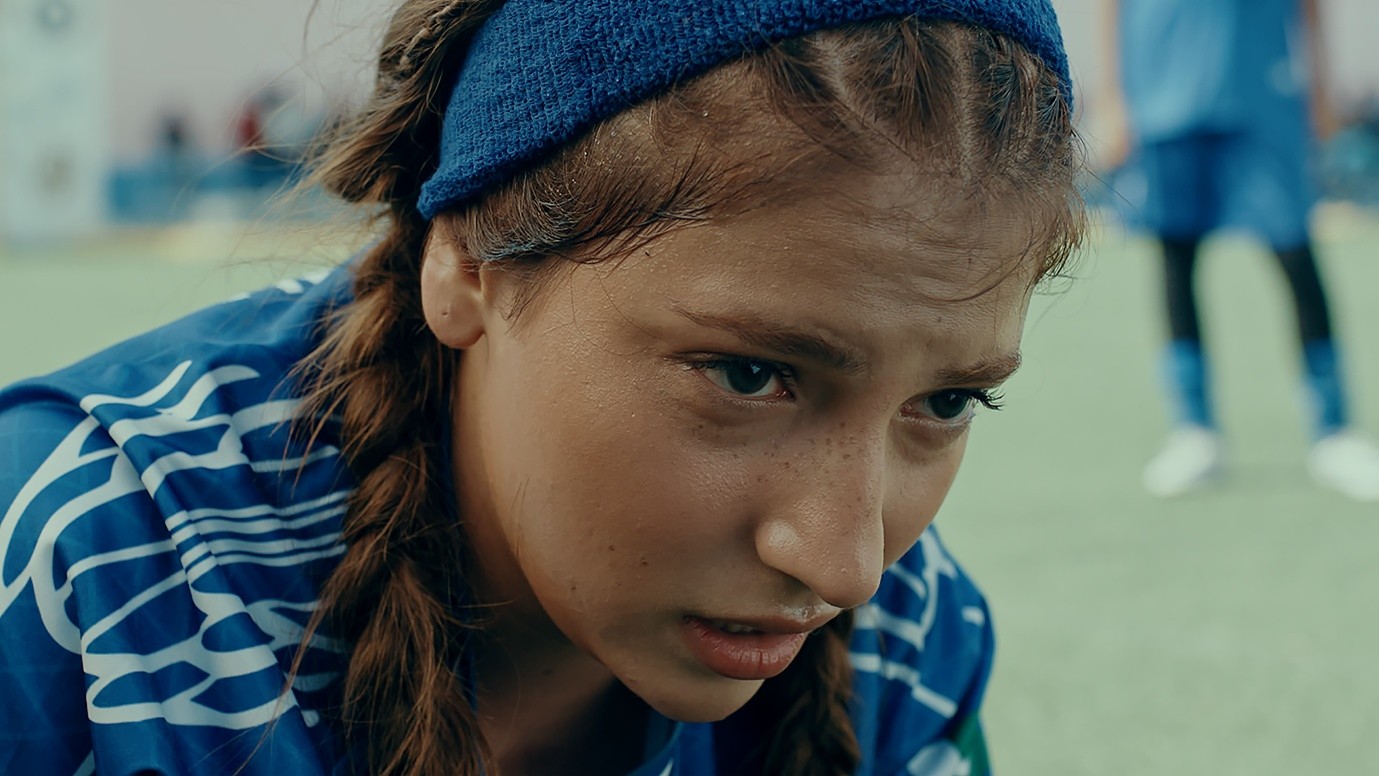
Acting as a ray of sunshine in this film, which would otherwise be very depressing, is the performance of Dananeer Mobeen as Afsana. Cheerful, funny and confident, Afsana symbolises a modern female identity, where women can successfully navigate careers without sacrificing marriage and religion. As the coach says at one point, women want companions out of marriages. They already have a Lord.
That Mera Lyari has important issues at its heart is indisputable, but it also lacks nuance with its broad villains and simple redemptions. And strangely, for a film that depicts the worst sins of patriarchy, the blame for such a system is, in one key scene, put on women, on mothers particularly, for putting up with their husbands’ behaviour and passively accepting that such traditional masculinity should continue. While this is obviously a recommendation that women should empower themselves, the fact that men are not encouraged to question their own conduct and morals is somewhat disappointing.
With its roots in the New Wave of Lollywood films, Mera Lyari’s continual use of music in almost every scene and its reliance on melodrama may alienate some Western audiences used to a grittier version of social realism. But Mobeen’s performance is always compelling.
Mera Lyari is screening at the 28th UK Asian Film Festival.
