

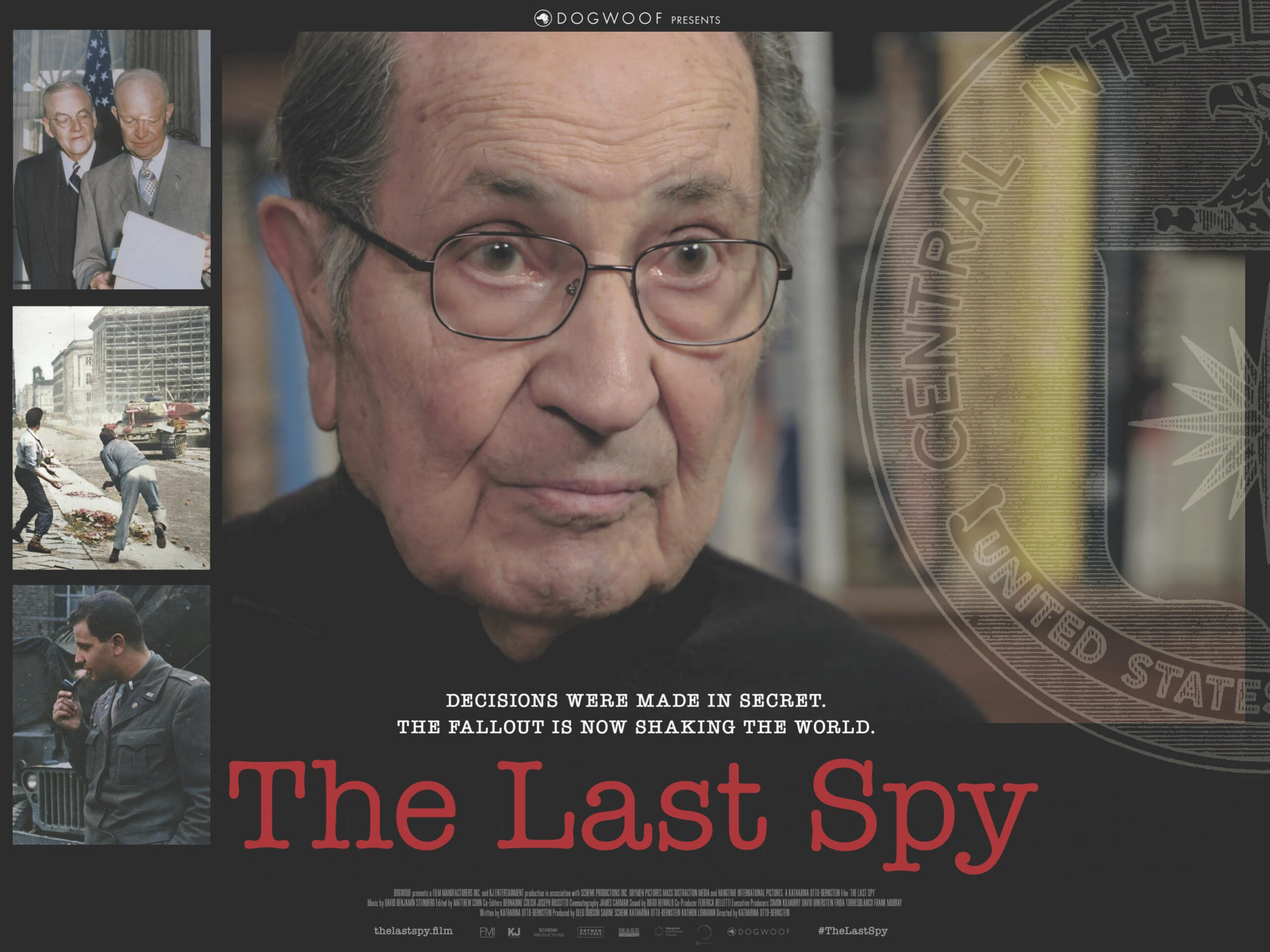
Writer and Director: Katharina Otto-Bernstein
Living through the great events of the twentieth century offers an extraordinary range of experiences, and none more so than for former members of the world’s most renowned secret service organisations as they were being born in times of international conflict and dangerous political extremes. Katharina Otto-Bernstein’s new documentary The Last Spy takes a very traditional approach with an interview format but the life of Peter Sichel is so fantastical and still so stoically accepted that as he reaches his hundredth birthday, Sichel remains convinced he was just doing his job.
But Sichel really did have a front row seat on history, living through the Second World War and the Holocaust, guiding the formation of the CIA in the years after and building networks of agents and informants through the post-war Russian zones in Germany that shaped the Cold War. In this, Otto-Bernstein just sequentially and often dispassionately describes the scenarios, his role and the effectiveness of the approach, a true administrative-manager who is as frustrated by a case officer having an affair with one of his women spies – who caused carnage when it ended – as he is with the major historical events that he both witnessed on the ground and ultimately participated in (albeit reluctantly sometimes) – including the CIA’s new policy in the 1950s of destabilising and replacing non-friendly regimes.
Otto-Bernstein combines this personal testimony with interviews with Sichel’s children who knew and still know relatively little about his work, praising his modest and still discrete character. “I wonder if he ever killed anyone,” one adult daughter explains, recognising that she will never know and he will tell. Something of the personality, the dedication and enduring sublimation needed for success in the secret world and to manage agents in it comes across. Nonetheless, Otto-Bernstein’s film reveals plenty about the experience of working not just on the excerpts of the twentieth century we usually pick out and study forensically, but to live and manage it all, connection and developing history.
Using archival footage, the writer-director often illustrates Sichel’s interviews with newsreels and video recordings either directly relevant to his testimony, such as images from the liberated death camps that show the callous piles of Jewish dead bodies, or similar black and white film of movies that illustrate his points. Otto-Bernstein also delves into Peter’s personal life, his own Jewish heritage, recruitment and rise through the ranks as well as meeting his wife and the balance of family life with a different role that kept him travelling the world.
The film develops in chronological order but doesn’t really engage with some of the other spy stories of the era including the deployment of nuclear bombs in Japan – which in spite of the American historian’s insistence was based on collaborative European science operating out of the US – or with the betrayal of the CIA and SIS by double agents like the Cambridge Five whose detection exposed a scale of duplicity across international espionage that Sichel and his colleagues could not be ignorant of. How the CIA responded to that in its early days is as much part of the story as his successes and the moral reasons for his resignation.
But what a life and while the filmmaking itself may not break any new ground, may appear even old fashioned, it’s clear Sichel was someone who made the twentieth century what it was.
The Last Spy is in cinemas on 24 April.
