

Writer and Director: Lucio Castro
Drunken Noodles is another distinctive, playful turn from Argentine auteur Lucio Castro, following his breakout End of the Century. While his debut bent time into cosmic shapes to reconfigure the gay “meet-cute,” his latest continues this exploration of ephemeral connection as a non-linear odyssey; calling it “magical realism” feels reductive. Castro doesn’t just introduce the fantastical; he destabilises reality itself, dissolving the boundary between the lived and the imagined. It is a film of small, intentional moments where interior and exterior fold into one another—an erotic, entrancing experience stitched together by haunted memory logic.
Castro integrates real-life artist Sal Salandra’s eroticised needlepoint works as both plot point and motif, with the narrative unfolding in discrete chapters introduced by embroidered titles that serve as portals. We meet Adnan (Laith Khalifeh), a young art student cat-sitting for his uncle in a Brooklyn apartment while interning at a local gallery. Immersed in Salandra’s kitsch tapestries being displayed at the gallery, he moves through a blue-grey palette underscored by Satie-esque piano. The city is rendered in precise, Antonioni-style tableaux that mirror Adnan’s urban ennui; he spends his days ambling in quietude and frequenting a local cruising spot, which Castro transforms into a magical nocturnal space of transformation where desire turns into fantasy.
Adnan also has a quick and steamy encounter with Yariel (Joél Isaac), a takeaway delivery rider, the two men sharing a post-coital portion of the titular drunken noodles on a park bench immediately following their first meeting. Their encounter eventually culminates in an arresting sequence involving Yariel’s friends, which Castro’s artful editing transforms into a series of silent, almost still frames. Captured by cinematographer Barton Cortright in a painterly 1.33:1 Academy Ratio, this tableau vivant evokes the compositions of Derek Jarman, turning a sex scene into a striking work of gallery art. This significant connection is later solidified by the haunting note Yariel leaves behind: “If an exchange occurs in the dark, it means it will last forever.”
From this point, the film drifts from the urban to the rural, threading backward to Adnan’s earlier encounter with Salandra (played by Ezriel Kornel). Another sexual encounter with the older man soon dissolves into the film’s most beguilingly enigmatic image—a faun-like creature seen cavorting in the darkened woods. This moment recalls the fetishistic, incantatory visions of Kenneth Anger and the balmy, liminal reveries of Apichatpong Weerasethakul’s Tropical Malady, creating an intoxicating cinema that feels like a queered reimagining of Disney’s Fantasia, featuring a surreal reference to the ruby slippers from The Wizard of Oz.
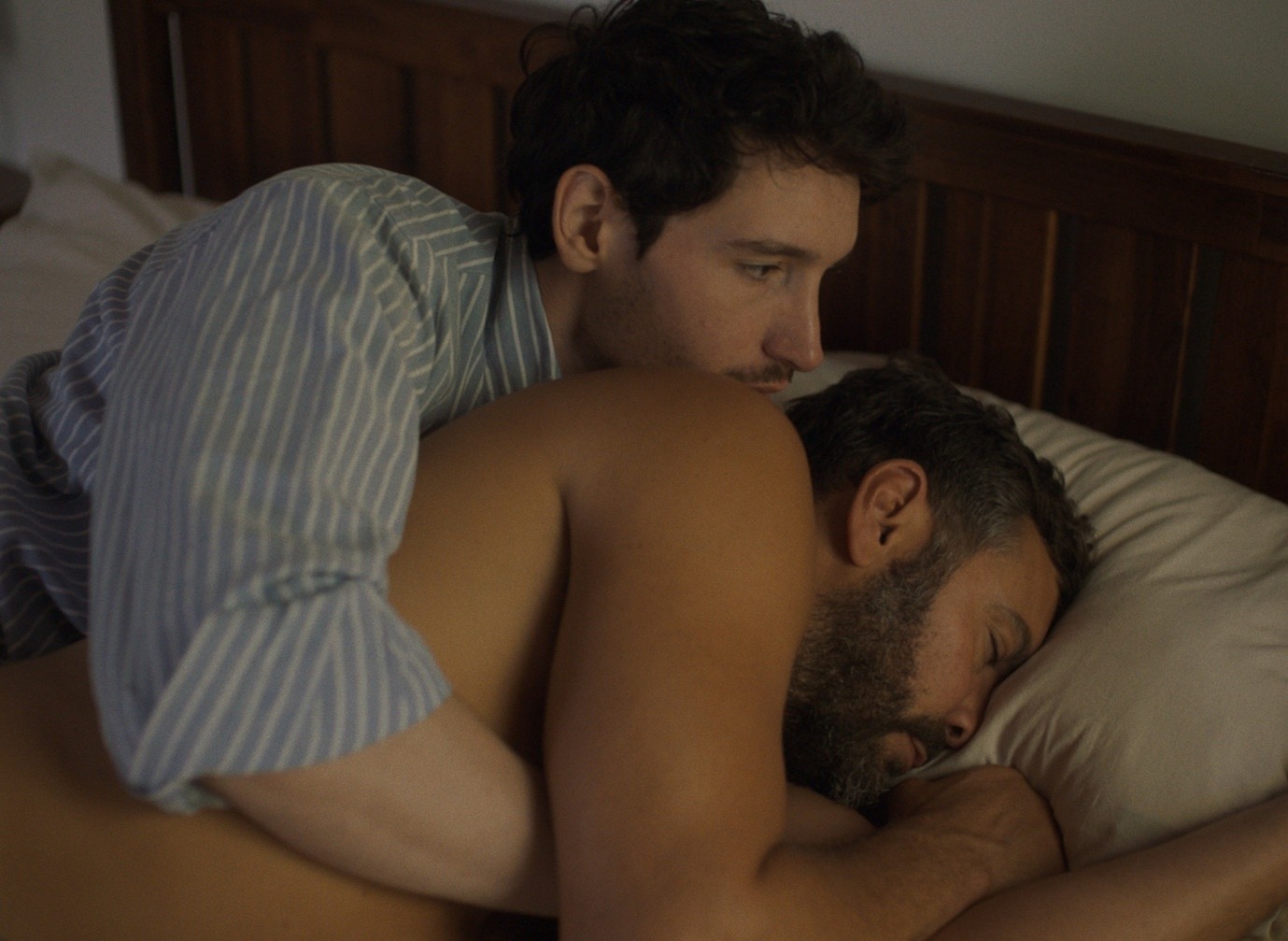
A third sequence set further back in time takes a more grounded approach, exploring the cooling of desire through Adnan and his softly spoken boyfriend, Iggie (Matthew Risch), in a sexless relationship where predictability has caused a distance between the two men. There is a profound emotional logic rather than a narrative one connecting all of these sequences, even as they seem to be breaking with space and time altogether as we move to a final, mythic pastoral coda. Ultimately, this is a queer odyssey about spiritual connection, which finally draws upon the Tang Dynasty poetry of Li Bai—the legendary ‘Drunken Sage’ whose poem, ‘Drinking Alone by Moonlight’, appears on-screen at the film’s close. By transporting Adnan to this landscape, Castro shows him finally moving past the pursuit of desire to embrace a state of ease and spiritual contemplation, concluding an exquisitely rendered and often delightfully strange journey that shows how we can find contentment in the ephemeral fragments of our own lives.
BFI Flare runs from 18-29 March.
