

Music: Igor Stravinsky
Libretto: Jeremy Sams
Director: Jack McNamara
The Soldier’s Tale is a unique piece of performance art, developed by Stravinsky and his writer friend Charles-Ferdinand Ramuz, in Switzerland in 1918. Struggling for funds during the war, they chose to adapt a Russian folk tale into a small-scale piece of travelling theatre. The story tells of a soldier who sells his violin, presumably representing his soul, to the devil for riches. It doesn’t take a genius to guess how that plays out.
Seven musicians, two actors, two dancers and a narrator were the original performers, when it was first mounted in Lausanne in 1918. Sadly, the widespread influenza epidemic put a stop to all touring plans, but the piece has had an ongoing life in various forms in the hundred years that followed. There have, however been few full-scale British productions since the piece’s UK debut in 1926 at The People’s Theatre in Newcastle.
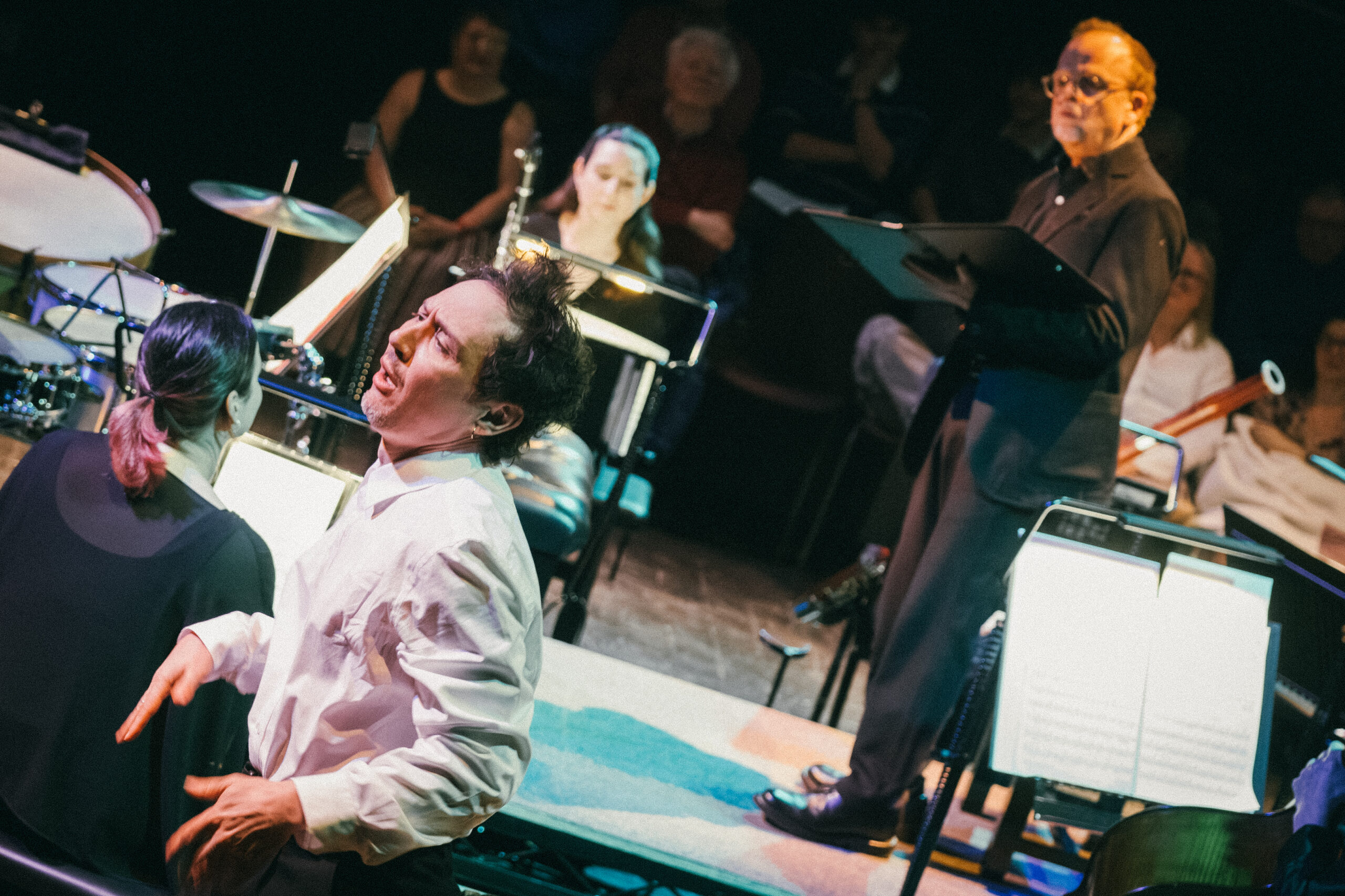
For this centenary production of only two performances, The Glasshouse International Centre for Music and Newcastle’s Live Theatre assembled a first-rate collection of performers. Maria Wlosczowska, leader of Royal Northern Sinfonia, directed the six other note-perfect musicians and also dazzled with the flexibility and virtuosity of her violin-playing.
Middlesbrough actor, Scott Turnbull, provided the inspired and engaging physical performance depicting chiefly the soldier, but also the devil and the soldier’s princess bride. He did this through a form of physical theatre that incorporated both mime and dance. It would be difficult to imagine anyone bringing more flair, charisma or commitment to the task. It was not quite clear to this reviewer, however, why he chose to don a swimming cap or to smear himself with soil. Perhaps Jack McNamara or movement director, Roberta Jean, could enlighten us. Nevertheless, his performance never failed to involve the audience.
Perhaps the icing on the cake, however, was the performance of legendary actor and, surely by now, national treasure, Toby Jones as the narrator. As the musicians gave a flawless rendition of Stravinsky’s melodies, interweaving folk traditions with ragtime and early jazz influences, he brought a musician-like precision to give an authoritative and nuanced reading of Jeremy Sams’ libretto, sometimes humorous, sometimes deeply dramatic, but always interesting.
Despite being only an hour long, for this reviewer, the piece had some longueurs, given the understandably repetitive nature of the music, as dictated by the narrative. The audience in the Glasshouse’s intimate Stage 2, however, were rapturous in their response, and it was a truly memorable and intriguing performance of a rarely seen piece.
Reviewed on 21st March 2026
The Reviews Hub Star Rating
-
8
