

Writer and Director: Marco Berger
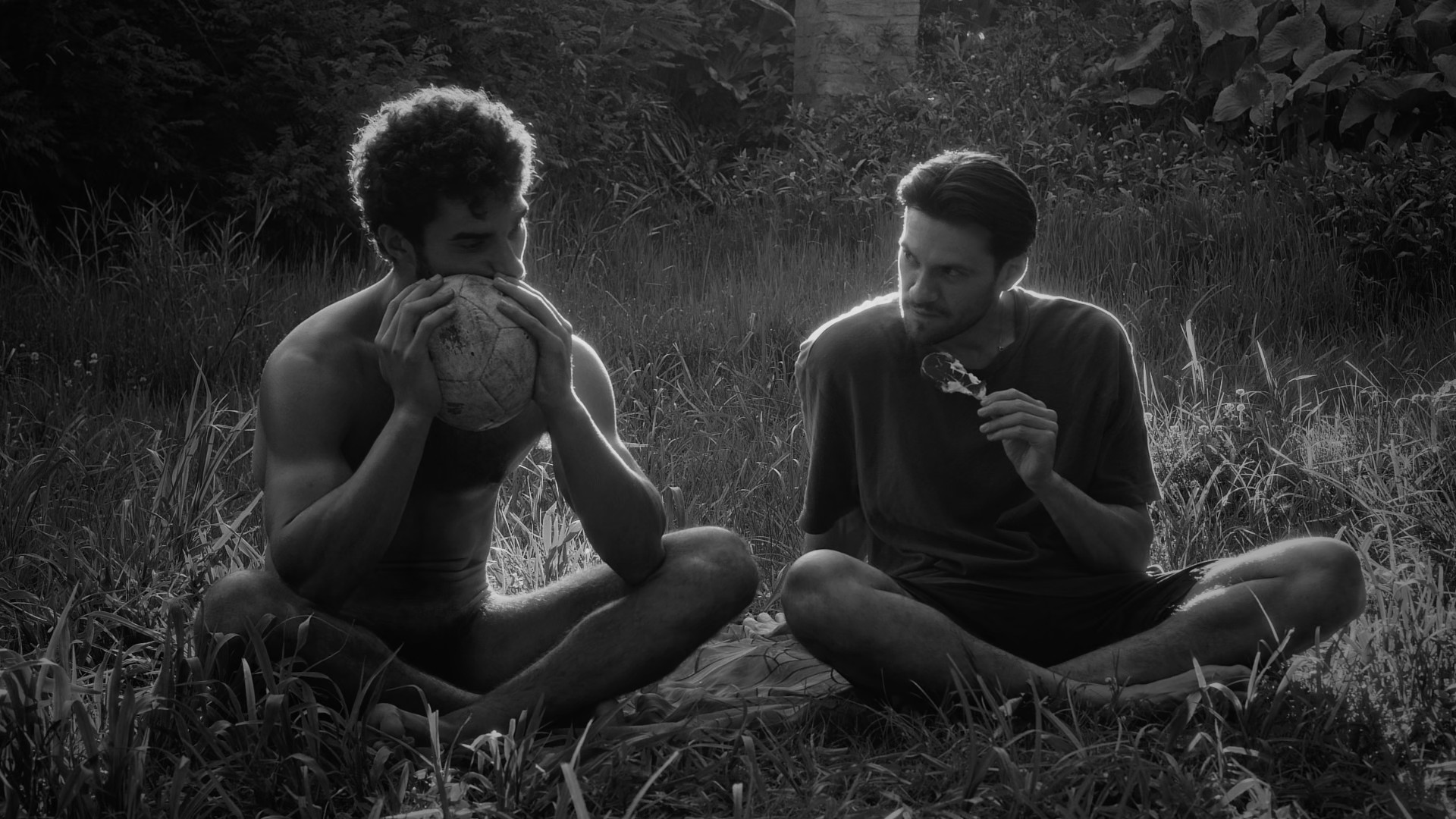
BFI Flare wouldn’t be the same without a film by Argentinian director Marco Berger. But his new film Perro Perro feels very different from his recent interrogations of homoeroticism within groups of young men, often straight young men. Shot strikingly in crisp black-and-white, Perro Perro’s story of a dog-like man is more allegorical, although it’s intriguingly unclear what point, if any, Berger is trying to make.
It begins with a series of shots of flowers and plants that grow in the dense jungle-like interiors of waterlocked islands, some hours from Buenos Aires. The images are not exactly erotic, but their sensual monochromatic tones put one in mind of the photographs of Robert Mapplethorpe, who sought sex and beauty in his work. And above all, Berger’s film is a discourse on beauty; the beauty of bodies, the beauty of nature.
Set in a parallel world where people read books instead of scrolling through phones, two heterosexual couples spend some days in this marshy paradise. The nearest shop is a boat ride away, and when Juan and Ramos go to fetch provisions, they spy a stray animal in the undergrowth. They beckon it with whistles and snaps of their fingers. The animal eventually approaches, and yet it is also a man, like Juan and Ramos.
However, Juan and Ramos never refer to themselves as men, nor do their girlfriends ever refer to themselves as women. In their world, the word ‘men’ describes naked male humans who function as pets, much like how we would own a dog. Stray men are feared as much as we fear stray dogs. ‘Women’, again naked, are less feared, but are more independent and easier to care for, much like cats. This odd set-up is discussed without irony. When one character suggests that humans should own smaller animals, like rabbits, as pets, she’s congratulated for her imagination.
Juan is smitten by the stray man whom he names Max. He gives him water and feeds him the leftovers from the breakfast table. Juan spends time with Max in the garden, rustling Max’s curly hair or scratching his chest. Max loves it and is clearly taken with Juan, following him everywhere and looking heartbreakingly doe-eyed when he’s forbidden to enter the house. Juan’s girlfriend Jazmin is less impressed, especially when Juan suggests that they take Max back to BA with them.
Juan and Max become closer, and to the audience’s eyes, a sexual attraction almost forms, although in the characters’ world, this would be seen as a perversion, as bestiality. But it remains sexy and romantic, and the tension between Juan and Max is portrayed in a similar manner to the ‘will they/ won’t they’ drama between the gay man and his straight friend in Berger’s previous film, the excellent The Astronaut Lovers. And yet, in Perro Perro, the relationship is chaste, the same between a man and his dog.
Uruguayan actor Juan Ramos plays Max like an excitable puppy; he looks, however, like a Greek god. The audience, especially the Flare audience, may think him beautiful, but to the holidaying friends, Max is cute and adorable. As Juan, Germán Flood is a little distant, but also beautiful, hiding the strength of his attachment to his new pet as if he were hiding a secret. When his friends are out, he smuggles Max into the house for a shower. The audience is on the edge of its seats in case Juan and his man are caught, as if there’s something wrong with washing a dirty pet.
Although many of Berger’s hallmarks can be observed in Perro Perro, the film marks a departure for the director, moving into more arthouse cinema. Perhaps this is why he didn’t get much funding for the project. During filming, the actors shared bedrooms, and there was no money put aside for an intimacy co-ordinator, which seems surprising given that Juan Ramos has to spend most of his time naked around the other clothed actors.
Nevertheless, Perro Perro never looks like it was made on a budget. It’s stunningly and sensuously shot, with the light captured in a way impossible to recreate in a colour film. Strange and slightly uncomfortable, this breaks new ground for Marco Berger.
BFI Flare runs from 18-29 March.
