

Writer: Robert Kaplow
Director: Richard Linklater
So much of theatre is tragedy, understanding the glamour behind the reputations and buried deep within the magical stories are lives broken and disappointed as the pressure to succeed and the trajectory of fame crushes many. Richard Linklater’s subtle and beautifully realised film about award winning songwriter Lorenz Hart screening at the BFI London Film Festival 2025 is about a star on the wane, and a man whose best years are behind him. Ethan Hawke’s portrayal of the lugubrious Hart is a moving depiction of hope eternally dashed but painting on a bravado that others indulge as the musical theatre world celebrates a show he can only watch from the sidelines, and in Blue Moon, it is Hart who is left standing alone.
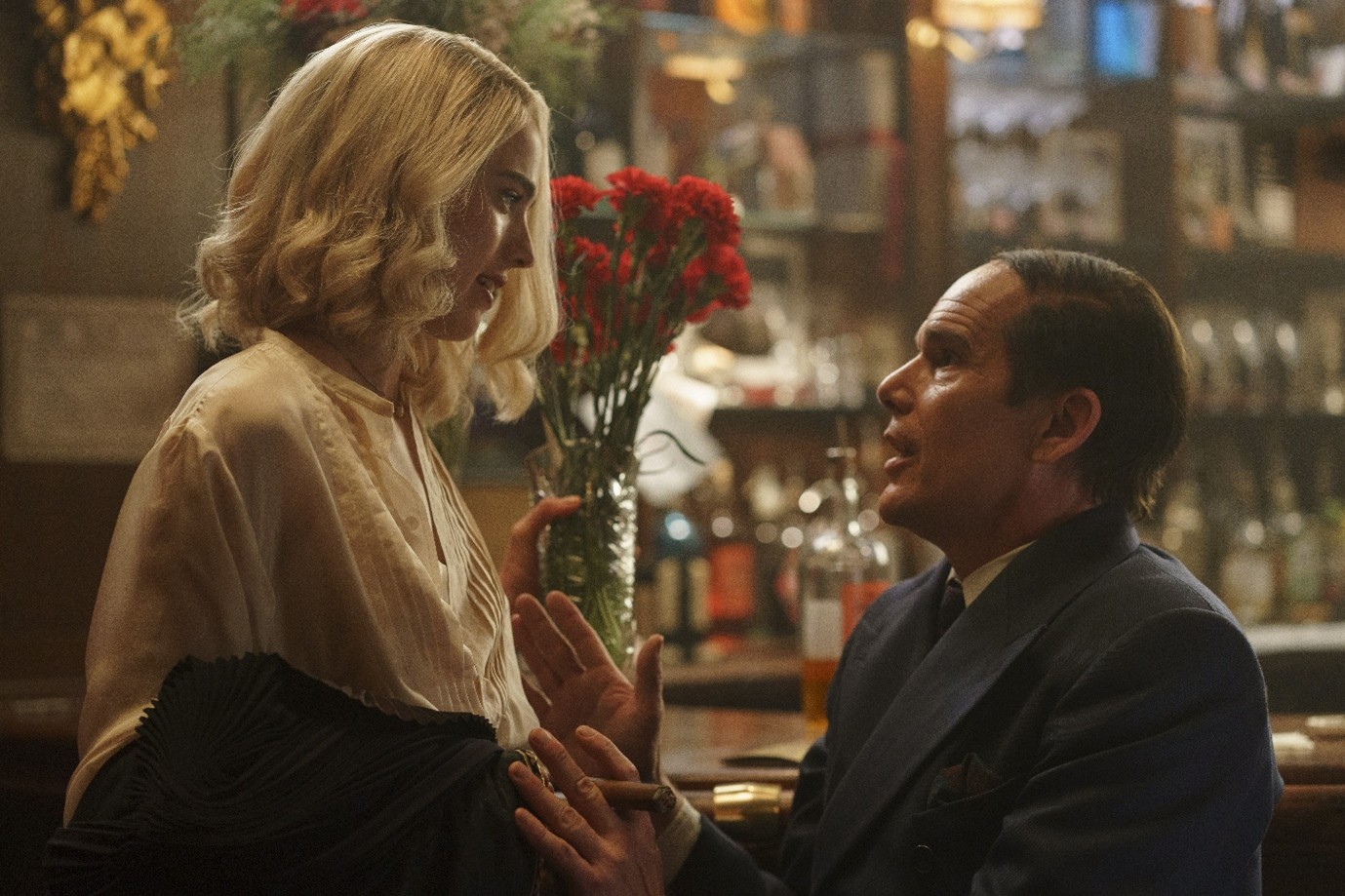
On the night of the Oklahoma! opening on Broadway, musical theatre lyricist Lorenz Hart arrives early at Sardis where he will, slightly less than graciously, celebrate a show written by his composer partner Richard Rogers and new writing collaborator Oscar Hammerstein. There he hopes to see Elizabeth a student he is obsessed with and believes has fallen for him, while some pointed encounters with Rogers spoil everyone’s party.
Written by Robert Kaplow and directed by Linklater based on letters Hart exchanged with Elizabeth Weiland, this single location setting has a suitably theatrical three Act setting. It opens with Hart on talkative form regaling the staff and early customers of Sardis with tales of his showbusiness life, a wonderfully written continuous scene as he slips between different memories, his expectations with a woman called Elizabeth, more than 20-years his junior, and reminding young soldiers and delivery boys who he is. He chatters and chatters, recreating the past and claiming a significance that even he knows can never be recreated in the present.
Telling Blue Moon almost entirely from Harts’ perspective allows the little hurts and snubs to register on Hawke’s face, flickers of pain and disappointment, even outright bitterness, that his character half expects but hoped for alternatives anyway. As the film moves into its second Act, the arrival of Rogers and a host of guests awaiting the excellent reviews shifts the dynamic and the audience see Hart through their eyes. He becomes fawning and expectant, waiting for Rogers to notice him and to pick up their working relationship once more, while the final Act deals with the aftermath of the party, all taking place in real time when Hart feels humiliated and, again, left behind,
Blue Moon is filled with interesting duologues, the meetings with Rogers spread out across his gathering are fascinating and played by Andrew Scott, Kaplow and Linklater captures the surface pleasantries, everyone keen to congratulate the composer with a series of meaningless handshakes. But Scott also notes Rogers’ ability to see through the façade that Hart presents, a slight disdain for his former partner’s working style which takes them through minor bickers to promises and empty gestures.
At the heart of Kaplow and Linklater’s film is the idea that musical theatre was changing through the partnership of Rogers and Hammerstein, leaving the more romantic melancholy of Hart’s world behind. And Blue Moon makes Hart the forgotten man, once so celebrated and now reduced to pedaling his stories to bartenders and coat check girls. His songs may last forever, but the tragedy for the man who died at 48 after an alcoholic collapse was to feel forgotten in his own lifetime.
Blue Moon is screening at the BFI London Film Festival 2025 from 8-19 October.
