

Writers: Melissa Gan, Emmanuelle Mattana and Sophie Somerville
Director: Sophie Somerville
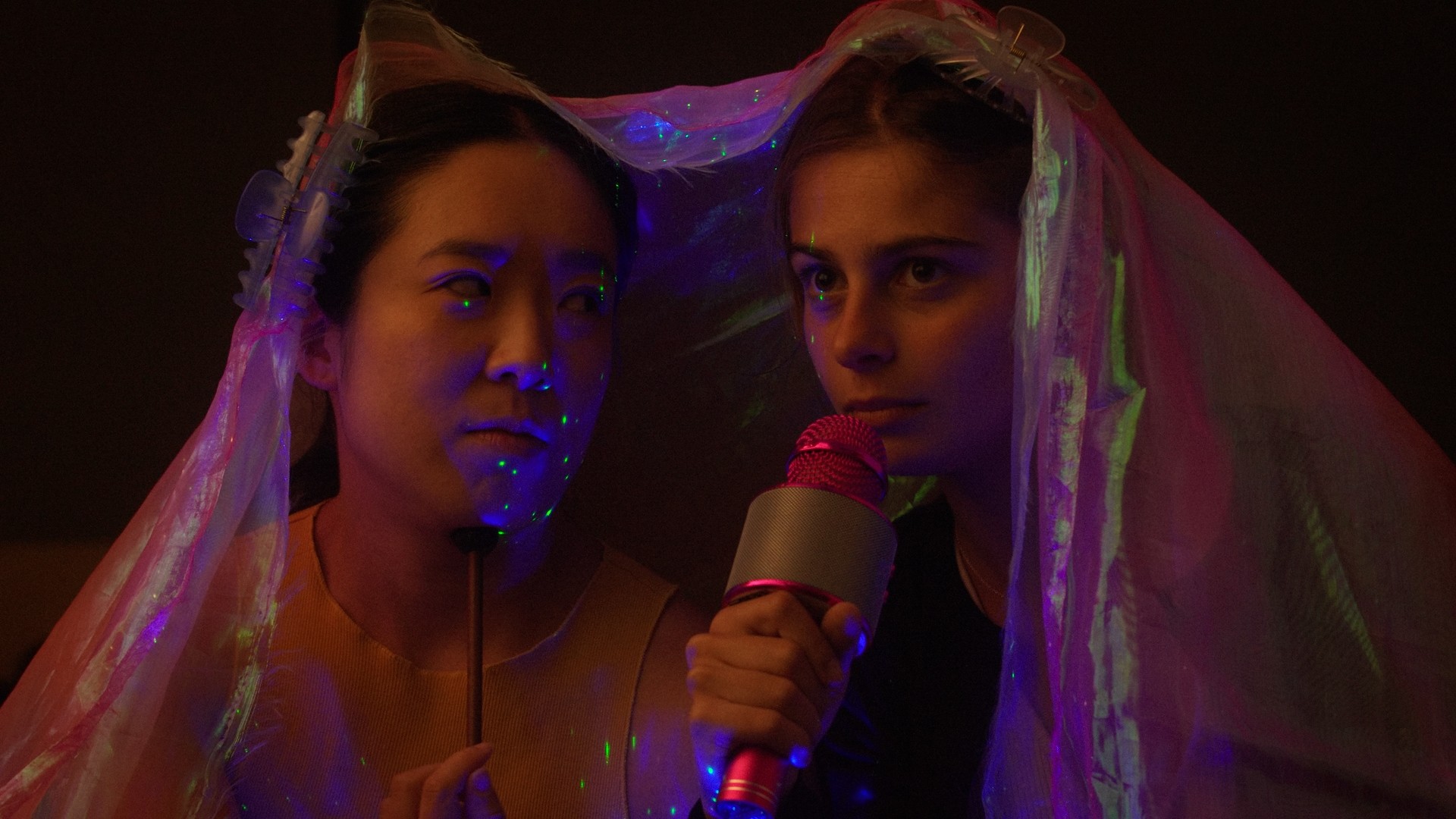
Two young women shoot the breeze in Sophie Somerville’s rambling examination of female friendship set in Melbourne. Covering 24 hours, Fwends follows Em and Jessie as they reconnect in the city. While also a love letter to Melbourne, Somerville’s film initially lacks depth and urgency.
With only the slenderest narrative – Em has been sexually harassed at work back in Sydney, and Jessie has just split up with her boyfriend – the two women walk around the city’s streets and parks chatting, mostly aimlessly. They talk about coffee, the patriarchy, Em’s phone addiction, rent prices and ladybirds. Of course, their endless chatter – all unscripted and improvised – is a smokescreen for what they really want to say. Beneath their drifting conversation is the aching loneliness of Gen Z. Meanwhile, Melbourne flows on oblivious.
Of the pair, Melissa Gan’s Jessie is the more interesting. As she takes Em (Emmanuelle Mattana) around the city, she’s always getting lost, never able to find the café she’s keen to find. Instead, they settle on a featureless concrete café on the corner of a main highway. Jessie chats about nothing, only berating Em when she takes her phone out to check on emails from work, where she puts in 11-hour shifts and is expected to be on call all the time.
But when they eventually get to Jessie’s house, where a pair of her ex’s boxer shorts still hang on the balcony, an argument brews. It’s the only tense part of the film, and dinner is conducted almost in silence. But when they return to the apartment, they find they are locked out. A night of MDMA and more walking in the city beckons.
Under the influence of drugs – though the ecstasy doesn’t work for Jessie as she’s on antidepressants – the film continues to meander in the same way as the two friends wander the nighttime city. Somerville inserts black and white shots to capture Em’s highs, which break up the otherwise long takes. Fwends may mirror the purposeless lives of people in their 20s, but it doesn’t make for compelling viewing, and dawn can’t come too soon.
And yet, when Jessie is finally given the opportunity to discuss her problems and tell the truth about her life in Melbourne, the film hits the right spot. There is no resolution; there can’t be. When Em gets back on the train, life will go on as before. She won’t do anything about her harassment at work, and Jessie will never go back to the park that she was so eager to show her friend. Despite Fwends’ lack of drama, the atmosphere that this film creates will extend long after the final credits.
Fwends is screening at the BFI London Film Festival 2025 from 8 – 19 October.
