

Writer and Director: Julia Finn
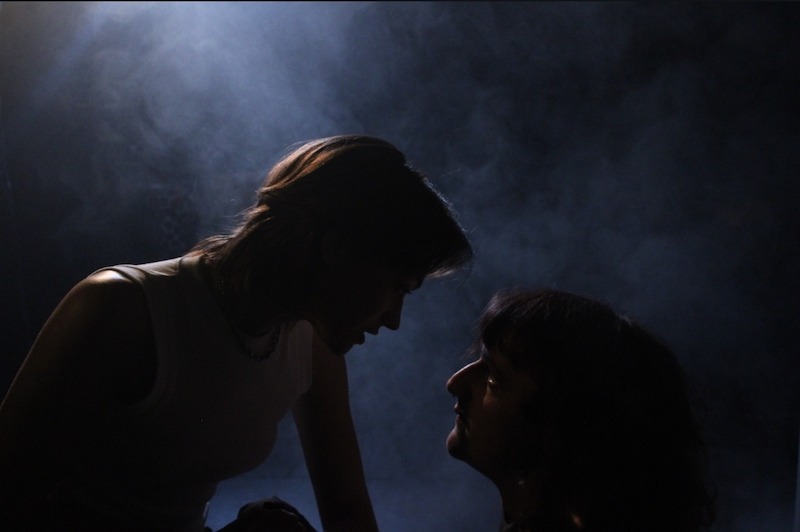
In a world where it is not safe to be outside, lesbian couple Jess and Ross are trapped in an underground bunker, have burned through the delicacies in their food storage and are now living mostly on soup. With their tempers running as low as their supplies, they are starting to turn on each other.
The Barons Court Theatre’s small, subterranean space has rarely been more suited to its subject matter than with Julia Finn’s Shelter. The innate sense of claustrophobia that’s necessary for the play to feel its true weight is easy to envisage here, the sense that living on top of each other is no way to live becoming manifest in front of our eyes.
As Finn’s story progresses, details start to emerge about the threat outside—some form of rampaging monster is traversing the lands. The scale of this is suggested by occasional grunts and snarls and an audio medley at the top of the show that includes clips of Richard Burton narrating Jeff Wayne’s War of the Worlds.
There is a sense, though, that the monster outside might be metaphorical, or at least paralleled by the monsters within the couple’s heads. Jess (Mal Owen), who is trans, is already having to ration her HRT medication to make it last, but the reduced dosage plays into her sense of dysphoria. It becomes clear that both she and Annie Haworth’s Ross have been locked in this bunker by Jess’s brother, a fundamentalist Christian. Whether it’s for their protection against a world full of metaphorical monsters, both homophobic and transphobic, or whether they have been removed from view because her brother is ashamed, the motives for their incarceration in the bunker are deliberately muddy.
All the unknowns involved drive a psychological narrative in which Jess and Ross start to turn on each other. Haworth becomes, by turns, the more in control of the pair, managing supplies and keeping track of everything while Jess spirals, but also the most spiteful and dangerous. A scene in which she finds Jess’s coming-out letter to her brother and scorns it sentence by sentence feels like a supreme act of intense cruelty.
Such moments become greater and greater as the play progresses, although often it feels as if the disagreements and shouting come from Finn’s desire to propel the story rather than from the characters themselves. Shouting matches need delicate handling in order to retain interest for an audience, and that’s rarely in evidence here.
Matters are also not helped by the character of Ross, who never feels as if her back story is anywhere near as thought through as Jess’s. Haworth gives the better performance of the two, but with so much less meat on the bone, it feels like neither character really has the opportunity to bring the audience into their world.
By the end, we are left in no doubt that the monsters inside the bunker might be just as dangerous as the ones outside. Whether that is enough to will them to find a way out is quite another matter.
Continues until 24 May 2025
