

Writer: Yi-Hsun Yu
Directors: Tzu-Hui Peng and Ping-Wen Wang
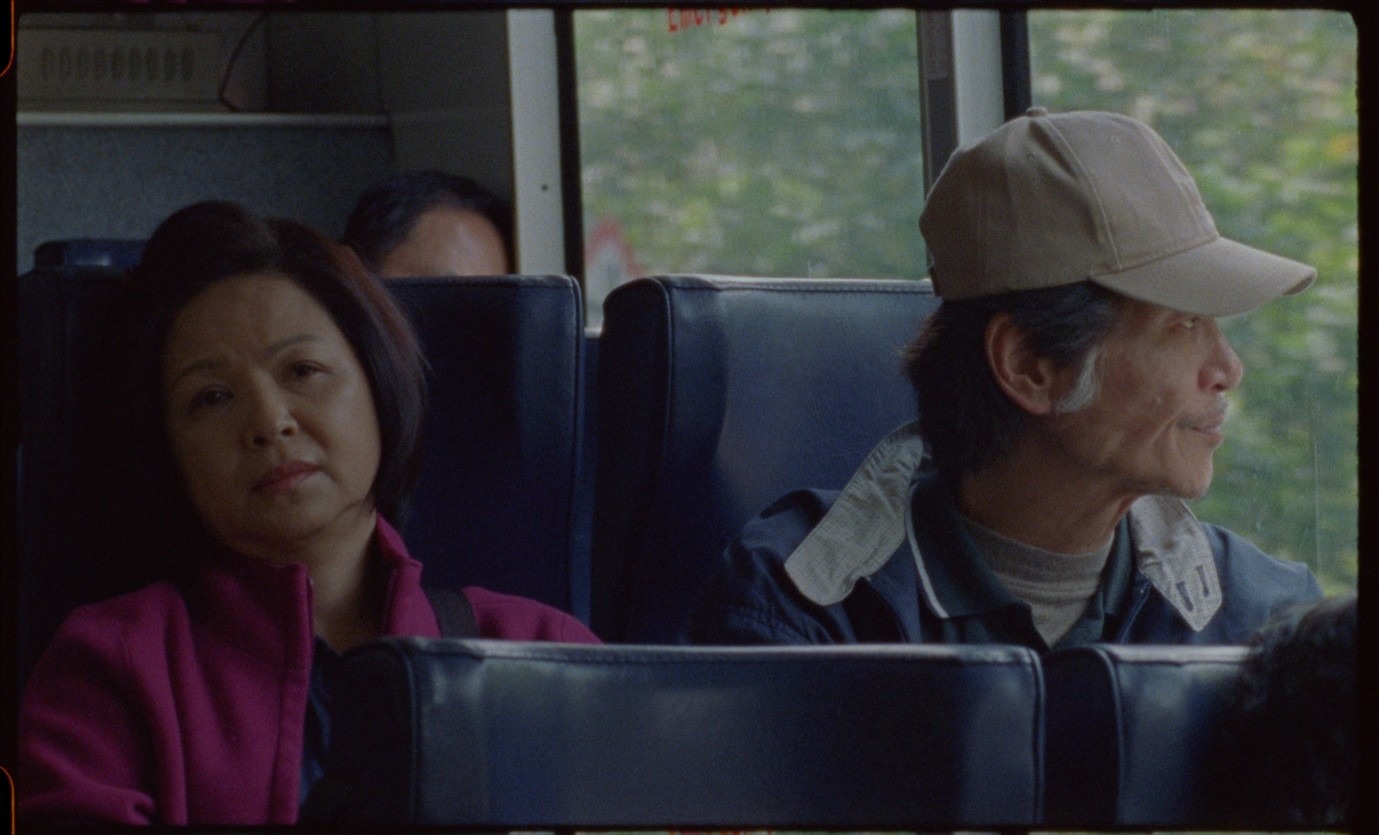
Spare in every way, A Journey in Spring is desperately sad. Playing at this year’s Queer East Festival, Tzu-Hui Peng and Ping-Wen Wang’s 2023 movie is hardly queer at all, instead focussing on the grief of man after his wife has died. With long shots, mainly from stationary cameras positioned low down, this story of mourning is delicately moving.
Khim-Hok and Siu-Tuan live on the outskirts of a Taiwanese town. They have to climb up a long flight of stairs to reach their house, which may have been reasonable when they were younger. But now they are old, and it rains incessantly when once the sun shone. They seem to scrabble to make ends meet. Siu-Tuan collects empty plastic bottles and tin cans to take to the recycling centre, where she receives a little money in exchange. Khim-Hok spends his days mooching around the markets and the shops, finding parts for the kitchen sink that nevertheless remains unrepaired.
They don’t appear to like each other very much. They bicker as they ascend the steps at the end of another long day, Siu-Tuan laden with the rubbish of the twenty-first-century. When she nags him, he retorts that he “married a wife, not a mother.” Only once do we see the couple at peace, laughing while they watch TV in their tatty house. He tends to her wounds, sustained by falling on the flight of stairs, before he breaks out into a little dance. It’s the only happy scene in the whole film, and more fragile because of that.
But when his wife dies in her sleep, Khim-Hok is distraught and keeps her body in the house rather than telling his son, who works at a fish stall with his boyfriend. We learn little about this son other than that he was once married to a woman, a union that never provided Khim-Hok with a grandson. The audience is allowed to draw its own conclusions about why father and son are estranged. The stark storytelling offers only the barest of clues.
The score, a few piano chords by Hsun-Ting Peng, is just as austere, perfectly complementing the final days of Siu-Tuan’s life. Shot in 16mm, A Journey in Spring makes the present day seem older than it is: a mobile phone materialises like an anachronism. But the grainy texture of the film captures these despondent lives, where there is nothing to look forward to. There are long shots of water trickling down a damp-stained wall and images of reflections in murky rivers.
And because Siu-Tuan has collected so much plastic, the audience notices the plastic water bottles and the plastic carrier bags that appear in almost every scene. Khim-Hok even carries the urn containing his dead wife’s ashes in a plastic bag. A Journey in Spring is not an environmental film in any way, but the endless rain and the detritus of single-use items add to the idea that life is futile and that lives are unrecyclable, regardless of how much praying is performed at temples. It’s telling that the final shot is of a painting of a waterfall rather than the real thing.
Jieh-Wen King cuts a lonely figure as Khim-Hok, shambling through the town’s streets and waiting at bus-stops. His grief is keen enough to cut, especially when hope is scant.
A Journey In Spring screens on 1 May at the ICA as part of the Queer East Festival 2025
