

Writer and Director: Madison Cole
In 2012, the Australian Senate Inquiry Report into Forced Adoption Practices reported on the twentieth-century scandal where children, usually of unmarried mothers, were taken immediately after birth. The mothers were often drugged and coerced, with doctors, nurses and religious figures treating them as less than human.
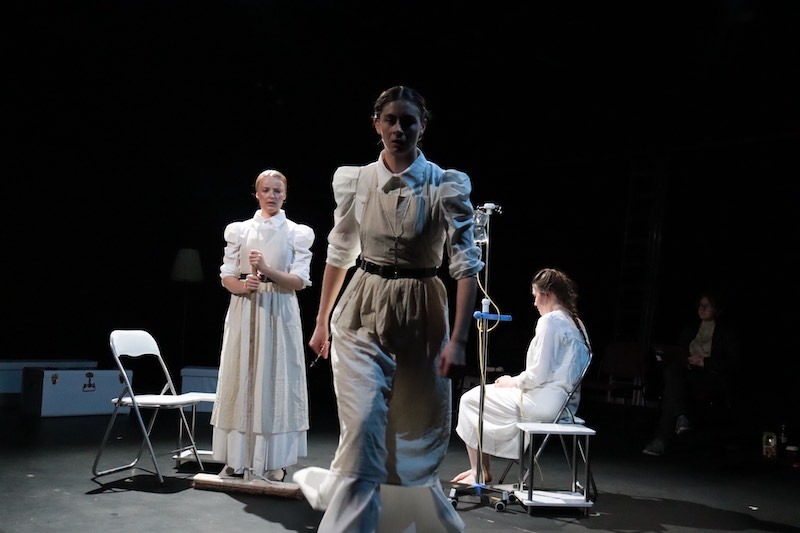
It is this scenario that Madison Cole explores in Inferna. The 1960s-set fictional story revolves around naïve 15-year-old Sydney schoolgirl Calynn (Arabella Morton), who, after sneaking away from her domineering mother to go to a party, is raped by her boyfriend, Ciaran Barker’s James. When her mother finds out she is pregnant, she immediately drives across the country to place Calynn in an asylum for teen mothers run by nuns who sedate their charges to prevent them from running away.
Calynn’s ignorance around sex, especially compared to her coarse-speaking, streetwise friend Alessia (Paloma Hill), is a tad overplayed. Still, it does speak to the reason why sex education for young people is so essential. Calynn does not even understand what it is that she did not consent to, and it is only when in the asylum that, thanks to her roommate Daya (Gracie Oddie-James), she can verbalise that her pregnancy was the result of rape.
The oppressive, subhuman treatment in the asylum is the most effective and disturbing part of Cole’s script. Occasional screams of young women in labour punctuate the scenes, but it is Calynn and Daya’s growing friendship in the face of trauma that emphasises their predicament. The almost cartoonish evil of novice nun Eris (Maire McGovern), a real Nurse Ratched of a figure, threatens to tip some asylum scenes away from realism. While such characters undoubtedly existed, it is asking a lot to expect the whole inhumanity of the forced adoption system to be distilled into one character.
Cole frequently cuts away from Calynn’s story to look at the people left behind in Sydney as Alessia and James try to find out where their friend has gone. These distractions serve more to keep those characters alive to us during Calynn’s incarceration than to progress the story. It does not help that the traverse staging confines Sydney-set scenes to one small end of the space, with Calynn and Daya’s hospital ward at the other. It means that each scene plays out in a sliver of the expansive stage, such that props and furniture often seem to take precedence over intelligent blocking of actors.
After Calynn has been allowed to return home, the play’s final half-hour struggles to keep a pace and purpose to its storytelling. Some characters deliver monologues about how their lives played out in the years afterwards – including a reunion between two characters that would be better played rather than told about – while the primary attention shifts towards whether Alessia believes James raped Calynn in the first place.
Inferna has found a fertile, urgent and necessary subject matter to discuss – with the rollback of advances in abortion rights and women’s bodily autonomy, especially in America, the timing feels right for such a reminder of what we have, or at least should have, left behind. At times, the horrors and indignities of what countless young women were subjected to are all too apparent. But the scrappiness around the edges of the work is to its detriment, and we are left with a play that is far less powerful than it deserves and needs to be.
Continues until 5 February 2025
