

Directors: Aitor Arregi and Jon Garaño
Writers: Aitor Arregi, Jon Garaño, Jorge Gil Munarriz and Jose Mari Goenaga
Based on a true story, Marco: The Invented Truth is a fascinating portrait of a man who fabricated another life to gain celebrity status. Enric Macro pretended to be one of the survivors of the 9,000 Spanish people who were sent to Nazi concentration camps during the Second World War. Why anyone would invent such a history is perhaps unfathomable, and this film provides no answers.
With Franco’s Spain aligned with Germany during the war, despite declaring itself neutral, the fact that there were Spanish inmates in prison camps such as Flossenbürg and Mauthausen was hardly discussed in the war’s aftermath. It took a long campaign by survivors for more recent governments to recognise Spain’s more direct involvement with Hitler. One of the greatest speakers for Amical de Mauthausen, an association created to remember the dead and the survivors of the concentration camp, was Marco.
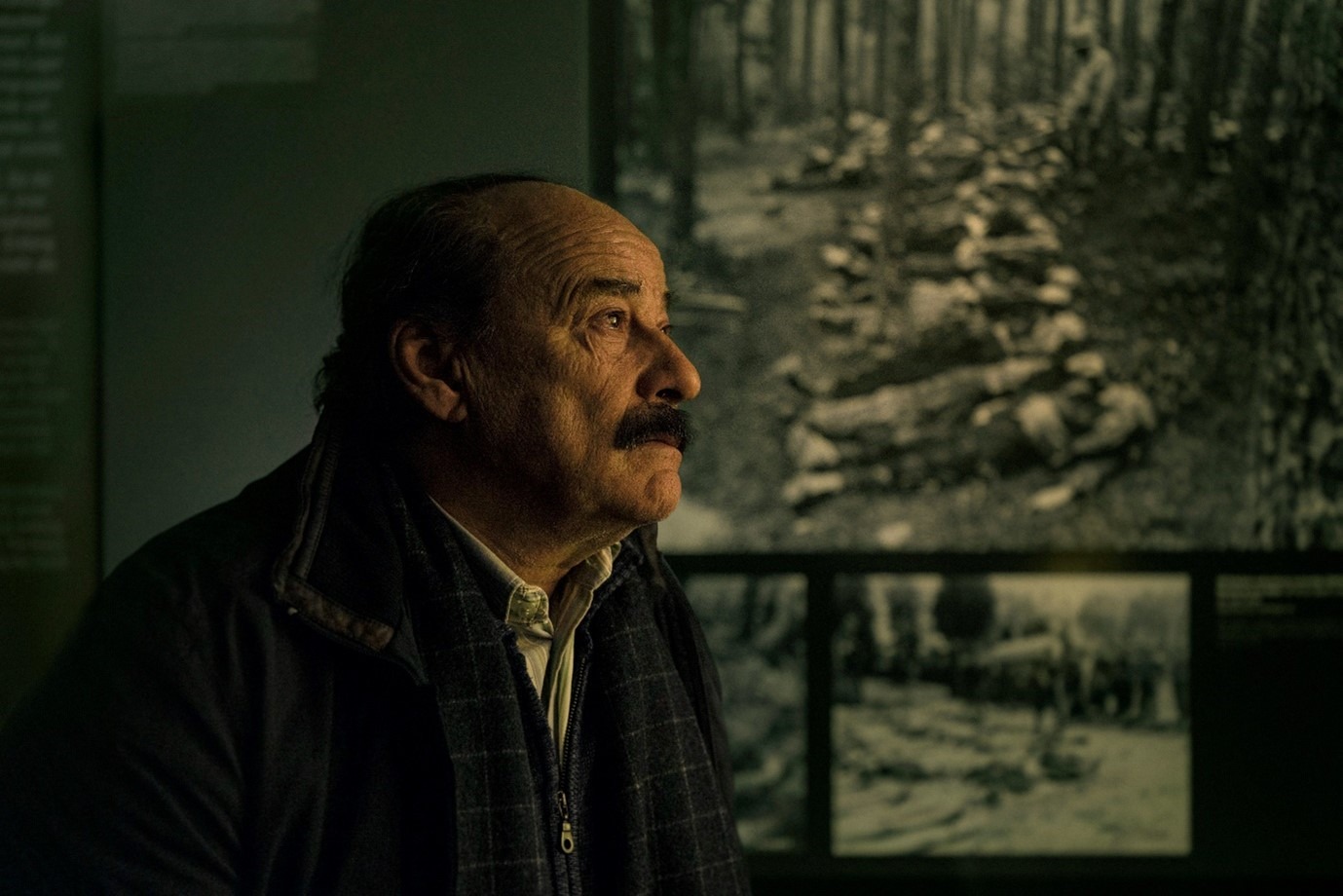
Early in the film, we see Marco going into a school classroom, telling the rapt students about the chimneys of the camp spewing ashes into the air. His speeches only get more detailed, more horrific, as he describes what happened to him at Mauthausen. One story, about playing chess with a Nazi officer, has all the drama of a political thriller. His listeners are moved, and tears are shed.
But we also see Marco attempting to obtain an official record to prove he was interned in Mauthausen. He begs friendly administrators for a certificate to prove that he was a prisoner, and when this fails, we see him adding his name to a list that he has stolen from officials. This film implies that his wife knew about the fraud but did nothing to expose him. She feigns sleep in bed while he alters one of the names on the photocopied list.
However, Marco’s talent in delivering emotional speeches and his dogged determination meant that the Amical received the attention of the Zapatero Government in the mid-2000s. Indeed, in the film, Marco suggests that without him, lies notwithstanding, the cause would have never become so well-known. But the filmmakers don’t seem so convinced, showing Marco as a man who will become famous at any cost.
Looking eerily like the real man, Eduard Fernández puts in a great performance as Marco, never giving the audience a clue to the reasons for his lies and displaying little remorse for them either. The best shots in the film are those that expose him dyeing his moustache in the mirror, a metaphor of vanity, sure, but also of the role he’s playing and the disguise he’s adapting.
That this is not a new story, the film freely admits. There have been books written about Marco and even a documentary which Marco helped to make. But Marco: The Invented Truth takes liberties, seen at the very start where a clapperboard board snaps shut to the shout of “Action”. Perhaps we will never know the reasons why Marco told such awful lies and, with his death in 2022 at the age of 100, the truth has probably died with him.
Marco: The Invented Truth is screening at the BFI London Film Festival 2024.
