

Writer and Director: Megan Earl
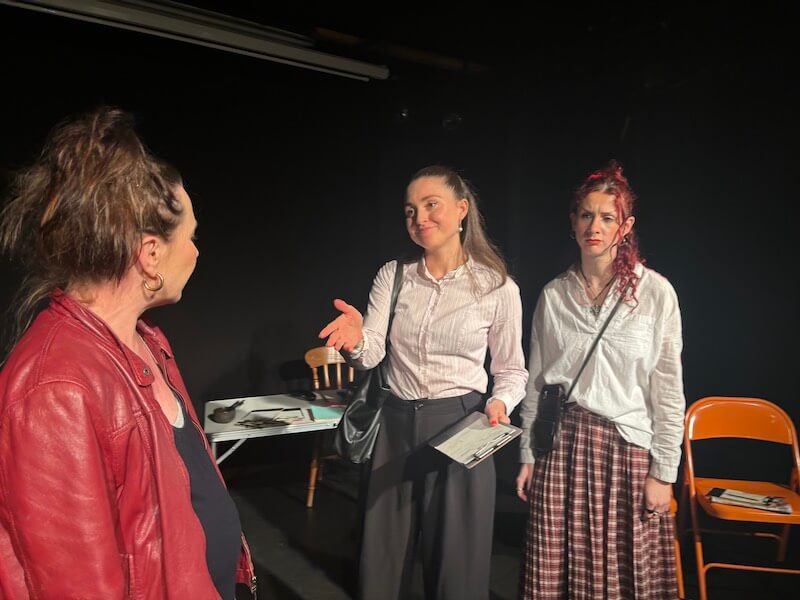
The Moral Women is a unique new play by Megan Earl, depicting Britain in the not-so-distant future, where abortion has been criminalised. The play examines the consequences and impact this has on the women in society, reminiscent of the struggle many women still face globally. We follow four women and a receptionist at an underground abortion clinic, trying to retain women’s bodily autonomy, despite the harsh crackdown by the government.
While we receive intermittent updates from the off-stage television about the updated restrictions and criminal penalties for those attempting to procure an abortion, the narration can be slightly difficult to follow at times, as the setting hasn’t been completely established until midway through the play. However, this does allow us to solely focus on the characters’ unique experiences, without preconceived personal views on the matter.
The play takes a decidedly cynical view of the way women are viewed in society and there is some excellent comedic dialogue to ensure the audience is engaged. Consisting of one long flowing scene, it allows us continuity with the characters and the actors (Emma Wilkinson-Wright, Kandy Rohmann, Georgie McGuigan, Jasmine Rachelle and Laura King) to excellently set up the complex characters they portray.
The characters are carefully entwined into each other’s lives through chance, which allows for some wonderful dynamics in the cast. There is a wide range of experiences being depicted highlighting the message the play intends to put forward; that any woman could be affected and of the importance of the right to choose.
The actors have the difficult task of portraying incredibly complicated life circumstances and an emotional journey, but each is convincingly realistic in their roles. The dialogue, while having poignant moments, occasionally reads too much like an essay than a play, and often loses the naturalistic flow of speech. This is perhaps due to the fact the writer is trying to convey a message that she is passionate about, in which she is successful.
The ending scene, in which the clinic is raided by law enforcement, while important, is depicted slightly too theatrically to feel realistic, however, it does exemplify the fear instilled into countless women globally about the legal repercussions of abortion services. The opening scene and closing scene are mirror images of each other, which further highlights the continuing cycle of control and fear the women in this created world will face.
While this play has some rough patches in terms of fluidity and realism, there is a lot of potential in terms of the unique storyline and exceptional character-building.
Runs until 8 May 2024
