

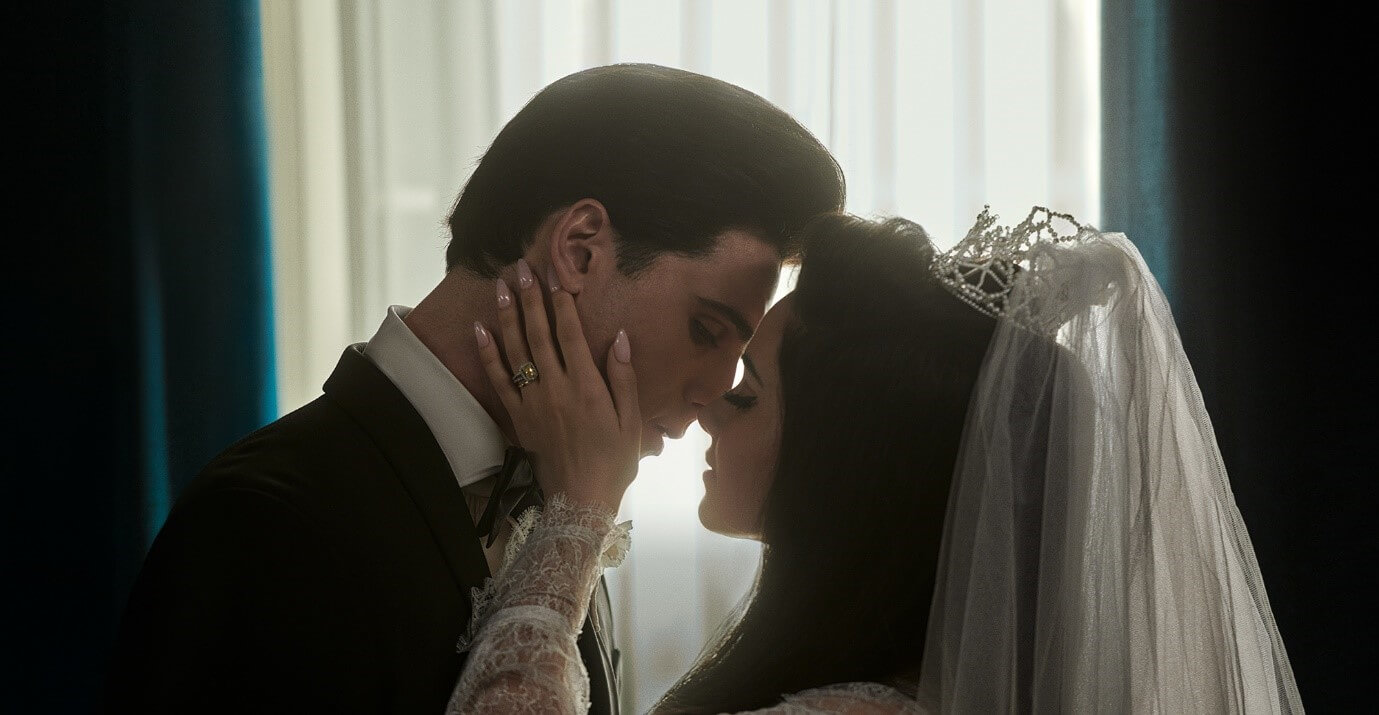
Writer and Director: Sofia Coppola
We’re all aware of the story that suggests Elvis never had sex with Priscilla again after the birth of their only child, but according to Sofia Coppola’s new film they hardly had sex at all. Cailee Spaeny is phenomenal as the teenager who is trapped like a prisoner in Graceland while she waits for the King to make a move.
The two meet in 1959 when Elvis is stationed in West Germany as part of his military service. Priscilla, 14, bored and friendless, lives there with her parents, her father an officer in the Air Force. On a particularly listless day, she is invited to attend a party thrown by Elvis in his rented house. Even dressed in her fanciest frock, Priscilla looks like the child she is. She’s surprised and flattered when the 24-year-old rock ‘n’ roll star takes an interest in her, but from a 2023 perspective, this interest seems very sinister. With the consent of her parents, the couple begin a romantic affair.
Hollywood beckons and Elvis returns to the States. Priscilla daydreams at her desk in school and, when at home, she tortures herself by reading all about Elvis’s new relationships in teenage magazines. She’s relieved when he finally calls – albeit three years later – and between the two of them they somehow convince her parents to agree that she goes to Graceland for a two-week holiday. The parents insist that she is chaperoned at all times, but when she arrives, still looking like a child, she shares Elvis’s bed. However, Elvis insists that their affair remain chaste.
Spaeny captures perfectly the excitement and tedium of teenage years. When she goes to live in Graceland permanently, her evenings with Elvis drinking and gambling punctuate long days with her schoolbooks when Elvis works on another film. Spaeny gives Priscilla a visible vulnerability that is not caught in the real-life photographs of the time. In those pictures for the papers, Priscilla always looks untroubled and happy, but beneath Spaeny’s smiles are signs of disappointment.
Jacob Elordi is a complex Elvis. Chivalrous and gentle at the start but pathetic and controlling as soon as Priscilla arrives at his house. He tells her what clothes to wear and how she should have her hair styled. His self-assurance is boosted by his entourage of young men and by a guru who tells him that rather than being a drop in the ocean he is the ocean. It’s no surprise that he feels qualified enough to lead Bible lessons on his porch.
The film gallops through the final years of their marriage and so Elordi’s journey to camp rhinestoned caricature is rushed. In comparison, Spaeny’s Priscilla becomes more human. Her hair falls naturally, no longer backcombed into an inch of its life. Her clothes are plainer despite the 70s and her husband’s evermore outlandish outfits. Her face is older without her trademark winged eyeliner. With this transformation, Priscilla is more coming-of-age movie than biopic.
Coppola’s film doesn’t come without its clichés, however. There are dreamy shots of a teenage Priscilla walking down the school corridor books clutched to her chest; later there are shots of the couple kissing as fireworks burst behind them. The rich interiors and Stacey Battat’s fabulous outfits are reminiscent of Scorsese’s gangster films with Elvis as tyrannical as a boss while the wife looks for an escape from the luxury that is meant to satisfy her. Priscilla is even given her own guns, ones that apparently match her dresses.
But without showing what Priscilla did next, Coppola’s film, produced by Presley herself and based on her autobiography, struggles to give its lead any depth in character. Priscilla is so immersed in her life with Elvis, always trying to conform to his wishes, that we see little of her own sense of self. Only when we see her cheating in an exam do we see another side of Priscilla that isn’t dutiful, but mischievous and independent. Too often, as in life, she remains in Elvis’s shadow.
Priscilla is screening at the BFI London Film Festival 2023.
