

Writer: Zia Ahmed
Director: Stef O’Driscoll
This spirited and energetic examination of everything and everyone is certainly ambitious but, in trying to touch on every aspect of working-class life from the 1940s to the present day, Brassic FM lacks an overarching narrative. Running at over two and a half hours, the show is also simply too long.
At its heart, Brassic FM is a love story between a Pakistani couple separated by oceans. Safia has come to London in the 1960s, but her male lover remains at home. Instead of sending letters to each other, the two send cassette tapes detailing their love and their experiences. This exchange is based on real tapes held in an archive.
But before this story begins, we have first a 20-minute celebration of 1990s Rave culture, specifically the week-long free party in Castlemorton in Worcestershire in 1992. Speaking in rhyme, the three cast members, all too young to have lived it, evocatively reimagine the beats and the solidarity of the time. They suggest that Rave was a working-class movement in that everything was free, or at least available at cost, and that people partied for the love of the music and for the power of community.
We often remember Rave in this way, but it was an imagined democracy rather than a real utopia. By the 1990s, capitalist ideals had soured many people’s motives. Club promoters and DJs were raking it in. And so were the drug dealers who charged £15 (worth around £40 today) for an ecstasy tablet, the various kinds of which are nostalgically listed here.
After such a lengthy opening, it’s a surprise that we never return to this subject; writer Zia Ahmed has too much to say. Brassic FM breathlessly covers everything from Woolf’s Rubber Factory strikes in the 1960s to Bibby Stockholm, the asylum seekers’ barge in Portland. It also expects the audience to have some knowledge of people like Linton Kwesi Johnson, Kemi Badenoch and UK Drill artists Skengdo x AM. Incredibly, there is also mention of abolitionist feminism.
With so much to say, Ahmed’s script means that only a few minutes are devoted to each issue, person or era. Context is lost and topics have no space to breathe. The result is dizzying and nothing really hangs together. Safia’s love story disappears under the sheer volume of other narratives.
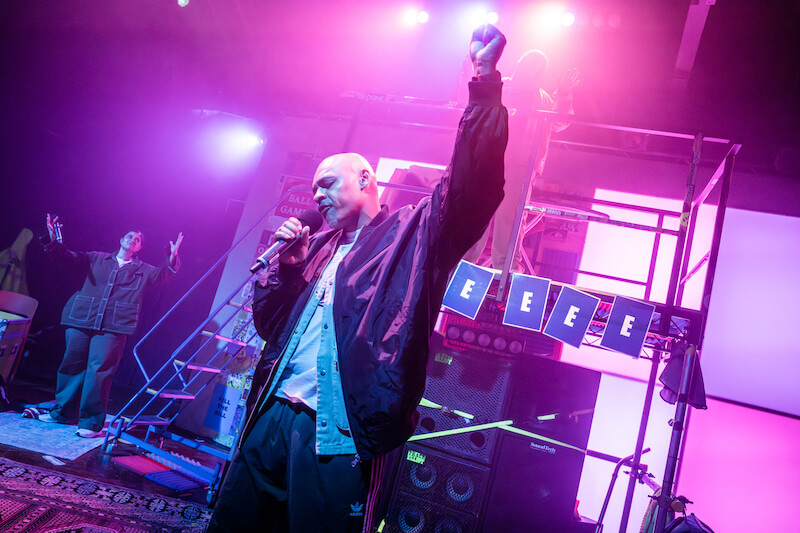
Fortunately, the actors have more stamina than the audience and so just about bring the show home. Among other roles, Jonny Britcher plays DJ JJ who gives shoutouts to the listeners of his pirate radio station. He ‘sees’ the struggles of the everyday person. Zakiyyah Deen plays Ali, who is able to translate the Urdu of the tapes while Zainab Hasan plays Amina, Safia’s daughter eager to find out about her heritage. They are all brilliantly indefatigable in their performances but Hasan, in particular, plays a blinder in the Punk rock song which closes the first half.
Any one of the issues covered in Brassic FM could be the basis of a full-length play. The politics discussed by Ahmed are weakened not strengthened by all the different layers and the various calls to arms. The Gate Theatre is to be commended for its efforts to stage inclusive works, but too many ideas have been invited to this party.
Runs until 30 September 2023
