

Writer: Habacuc Antonio De Rosario, Teodora Ana Mihai
Director: Teodora Ana Mihai
Teodora Ana Mihai’s thriller La Civil is a gripping story set in Mexico. It concerns the fight of one woman, Cielo (Arcelia Ramírez), to find her daughter, who is kidnapped at the start of the film by a nameless gang. La Civil is dedicated to the mother who was the inspiration for Cielo and to others who shared their stories with the film-maker. The context is shocking: the UN Committee of Enforced Disappearances recently gave the number of Mexicans officially registered as disappeared as 95,000.
It is a sober and deeply disturbing account. When her daughter Laura fails to return from a date, Cielo receives a message to meet El Puma (Daniel García), a ruthlessly manipulative young man who makes her order him food while demanding an exorbitant ransom if she wants to see Laura alive. Cielo seeks help from Gustavo (Álvero Guerrero), her unsympathetic ex-husband, currently shacked up with a teenage mistress. They scrape together most of the money, hand over the keys of Gustavo’s car and are told to wait at the cemetery gates at midnight. But Laura isn’t returned, and we realise with a sickening lurch that we are now in the lawless world of narcos – members of rival cartels of drug-traffickers whose modus operandi is extortion, torture and murder.
The scenes which show evidence of violence are shocking, but so too is the realisation that there is no authority to which Cielo can turn. The police don’t want to know and are probably corrupt. There’s a strong military presence – trucks filled with armed soldiers circulate the streets – but they appear aggressive, with no interest in helping ordinary citizens.
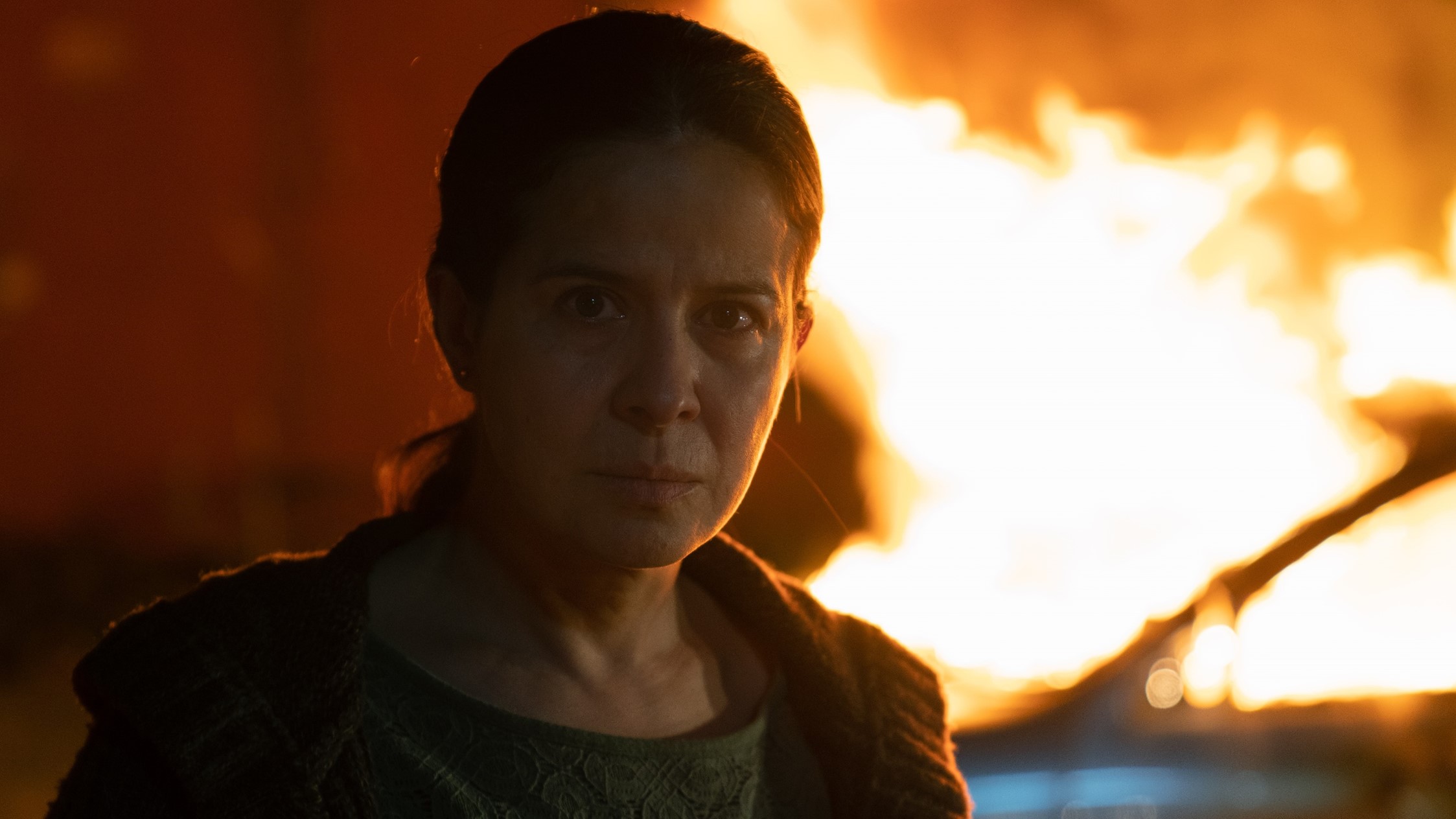
Much of the film is strangely quiet. Often the only sound is the distant barking of a dog in the shabby rural streets and empty country roads along which Cielo drives. She has evidently decided to seek her daughter unaided. The silences and the sparsity of dialogue underline the utter loneliness of her state. The camera focuses for long periods on her watchful, expressive face. It’s a haunting performance by Arcelia Ramírez.
As a bereft mother, Cielo is able to draw confidences from other terrified women. Shopkeepers whisper to her about being forced to pay protection money. A sympathetic woman undertaker admits she has to deal with bodies the narcos bring in. When the corpse is one of their own, they demand the most expensive coffin. This undertaker understands Cielo’s panic – they have just heard that two young women have been found decapitated – and lets her inspect the sheeted bodies in the mortuary. The camera doesn’t linger long – neither body is that of Laura – but we are given a horrifying glimpse of the heads slung in a bucket.
Cielo forms an uneasy alliance with Lieutenant Lamarque (Jorge A. Jiménez). Lamarque appears to be one of the few humane characters, making cheerful small talk as they stake out the gangsters. He is taking a personal risk in helping Cielo find Laura’s location. In a remote warehouse he finds a torture chamber and the clothes of trafficked girls. The fact that Laura is not here offers a glimmer of hope. But it is quickly extinguished when Larmarque shows his own willingness to employ torture to extract confessions from suspects.
At over 130 minutes, the film drags slightly, but throughout Mihai’s directing is impressively restrained. Marius Panduru’s cinematography makes evocative use of darkness and of cropped close-ups that deliberately hide the full picture – used to particular effect in the film’s final frames. In the menacing world of rural Mexico, you can’t trust anyone.
Signature Entertainment present La Civil on Digital Platforms 14th March.
