

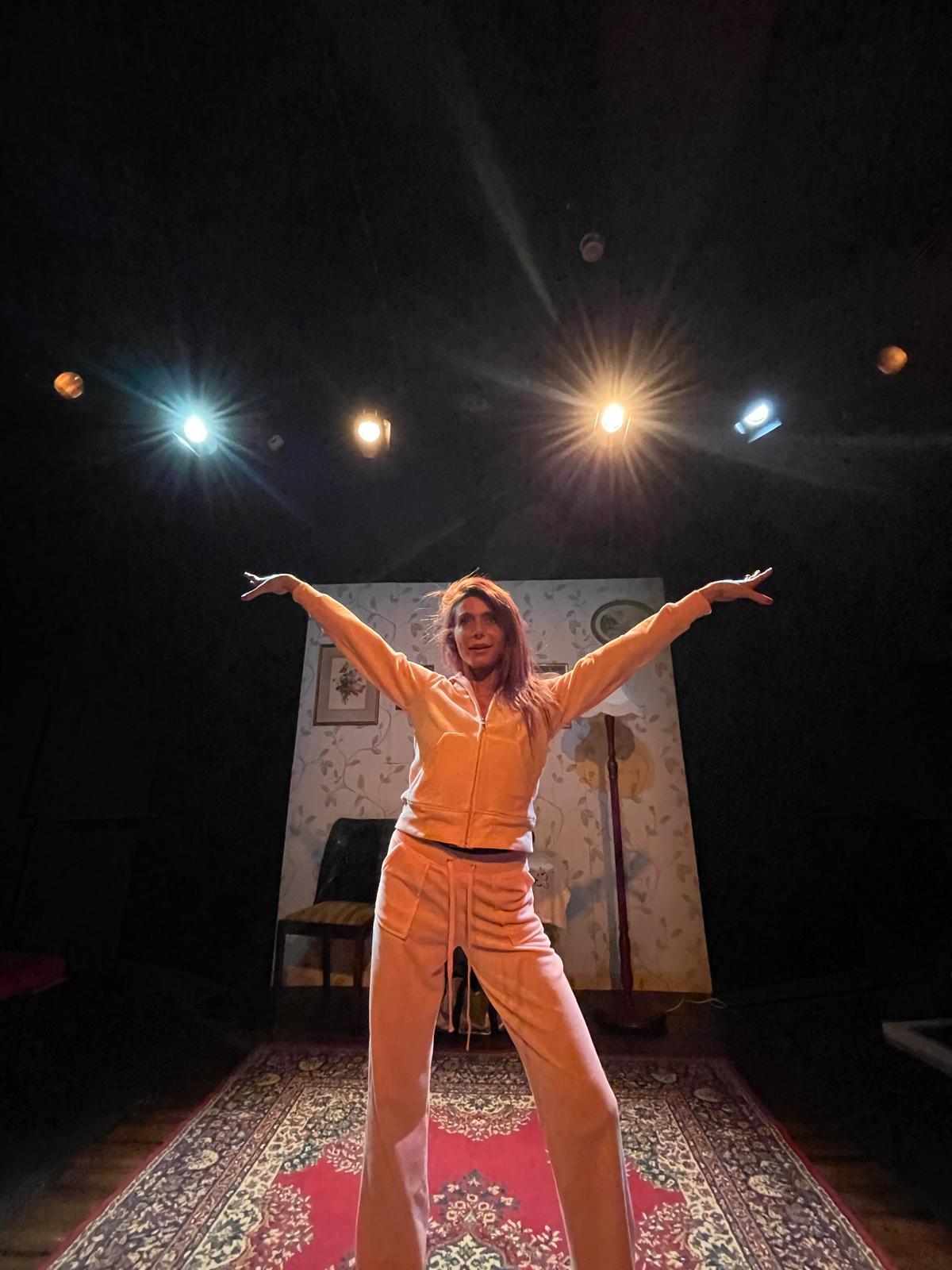
Writer: Karine Bedrossian
Director: Anastasia Bunce
Born in Roehampton to parents from Cyprus, the writer-performer Karine Bedrossian carries Armenia around with her, an Armenia with centuries of repression and attempted genocide in its history, that has faced vigorous threats of cultural extinction, and that, despite all of those efforts, survives.
Karine Bedrossian has been a lot of things. Singer, stripper, serial mistress, reluctant recipient of therapy, regular recipient of rejection and abuse. She chronicles her life from infancy to today in unflinching, wincing detail. It’s been a rough old ride, with perhaps the most devastating moments coming from horrible therapy that she undergoes to sort out the preceding years of physical and emotional turmoil.
If this sounds like a grim 90 minutes, that isn’t altogether wrong, but the evening is leavened with a very active stage picture, lots of wavering lights designed by Abraham Walkling Lea, and a number of significant impressionistic costume changes (on stage, this isn’t a show about hiding stuff) that makes for a visually engaging show.
She also studs her misery monologue with touches of sardonic humour that help an audience to absorb the history, and a delicately touched-on but hugely affecting relationship with a disabled girl who lives, strapped into a rocking chair, in the house next door to her auntie’s in Cyprus. This tenderly drawn, affectionate interlude in an otherwise relentless catalogue of bad stuff shows a delicacy in Bedrossian’s writing that usually defaults to in-your-face truth-telling. A few more incidents like that would be a welcome relief, but perhaps there weren’t any?
The ‘Armo’ part of the story is a touch abstract. Bedrossian tells the story of a young woman’s hard times in contemporary London, and her traumas revolve around being sexually trafficked in a number of showbiz environments (music, film, fashion – theatre comes off quite well by comparison, even if the main performance space is a strip club). It’s noteworthy that the qualities she possesses – good looks, haughty attitude, fashionable skinniness – lead both to her exploitation and also to career opportunities in music and modelling that a huge number of would-be scenesters would kill for, or anyway suffer bulimia and botox for.
This is a dynamic, engaging morality tale about the media scene and life in a big city. There are also echoes of historic and inter-generational traumas that heighten the autobiography, and it would be interesting and illuminating to have those echoes explored and perhaps foregrounded. The history of Armenian oppression is little-known and crucial. Karine Bedrossian has unique insight and abundant narrative skills that would make that history live again.
Runs until 20 December 2025.
