

Writer: Ava Pickett
Director: Lyndsey Turner
One of the great joys of theatre is that sometimes you’re in the room when an extraordinary voice breaks through, when something really quite special happens. And so it was last summer, when 1536, Ava Pickett’s debut play, opened at the Almeida Theatre, when many in the audience had taken a punt on a new writer with no expectations other than Rupert Gould’s eye for new talent. Fast forward exactly a year, and that play has not only earned a clutch of awards and nominations, the backing of Margot Robbie and a forthcoming BBC adaptation, but also a West End transfer, opening at the Ambassadors Theatre with no less ferocity and with a message about the enduring judgements that shape women’s destiny.
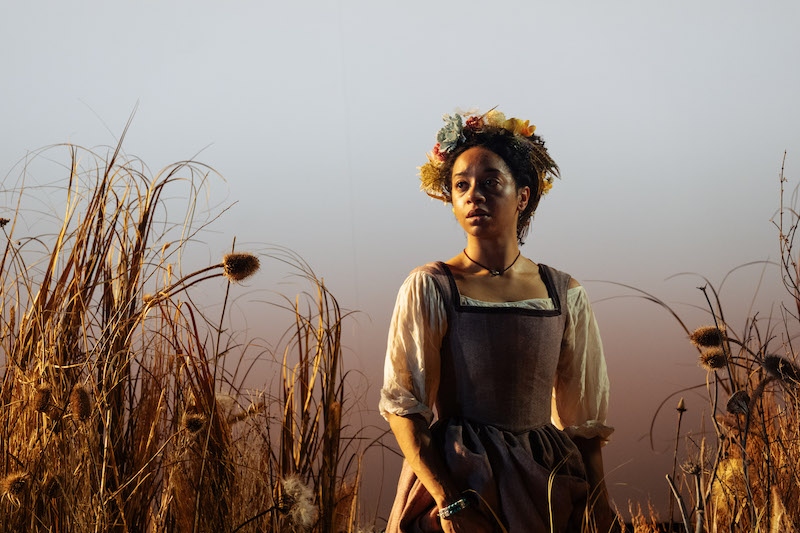
Best friends Anna, Mariella and Jane meet regularly in the field close to their village, where they share stories, gossip, and hide from the men who seek to control them, including fathers, husbands-to-be, lovers and employers. But it is 1536 and rumour has it that the Queen has just been arrested and is being tried for treason. As their belief in English justice breaks down over the weeks that lie ahead, the friends discover that no woman is ever really safe when a man decides.
One of the most successful elements of Pickett’s play is the marriage of a near 500-year-old, overly familiar story about the death of Anne Boleyn with a powerful contemporary impression of women’s true voices and agency. Pickett’s Essex women break down the barriers that language can create by talking like us, casual, colloquial, intimate speech that instantly draws their deep and longstanding friendship but also welcomes the audience into their confederacy with open arms – as Anna notes, “treason’s for nutters.” And while their topics of conversation may be whether the local baker fancies Anna and who they met at the market rather than the latest box set or who Charli xcx is dating, the tone and shape of their friendship is entirely relatable.
But 1536 is also deceptively brilliant, using this informality to make crushing observations about the unshakeable nature of patriarchy as Pickett takes her characters through weeks of dangerous social change. The entire climate shifts in this 1-hour and 50-minute drama from light, carefree fun – with Anna having vigorous sex with her latest beau up against a tree as the play begins – to something far more dangerous as the unfolding fate of Anne Boleyn trickles through society, affecting these women. Anna’s sexual freedom is suddenly loaded with shame while Jane’s innocence is celebrated; adulteresses are burnt in a nearby village, and accusations of witchcraft hang in the air. As the largely absent men exert their own power to shame, manipulate and violently oppress, the local women become cyphers for Henry’s royal power games, also substituting his Anna for a Jane.
And Pickett’s play also has plenty to say about the weakening of female friendships when men come between them, charting the fracturing of this friendship group as different kinds of betrayal draw them apart. And it is fascinating how easily and quickly they turn on one another, leaving them with an uncomfortably credible moral dilemma about sharing a common fate or saving their own skin. Siena Kelly (Anna), Tanya Reynolds (Mariella) and Liv Hill (Jane) all reprise their roles in this West End transfer to the Ambassadors Theatre, with performances as sharp and devastating as ever. Oliver Johnstone joins the cast as Richard, who exercises his power over them to chilling effect, while George Kemp’s William proves that there’s no such thing as a nice guy.
Director Lyndsey Turner’s production never sags, building a growing fear of the harm lurking for these women who discover that, however they are categorised, being flirtatious or being good won’t really save them. Anne Boleyn may have been the Queen, but in the end, she was “still only a woman”, they realise, so what chance do Anna, Mariella and Jane really stand when the men make up their minds?
Runs until 1 August 2026
