

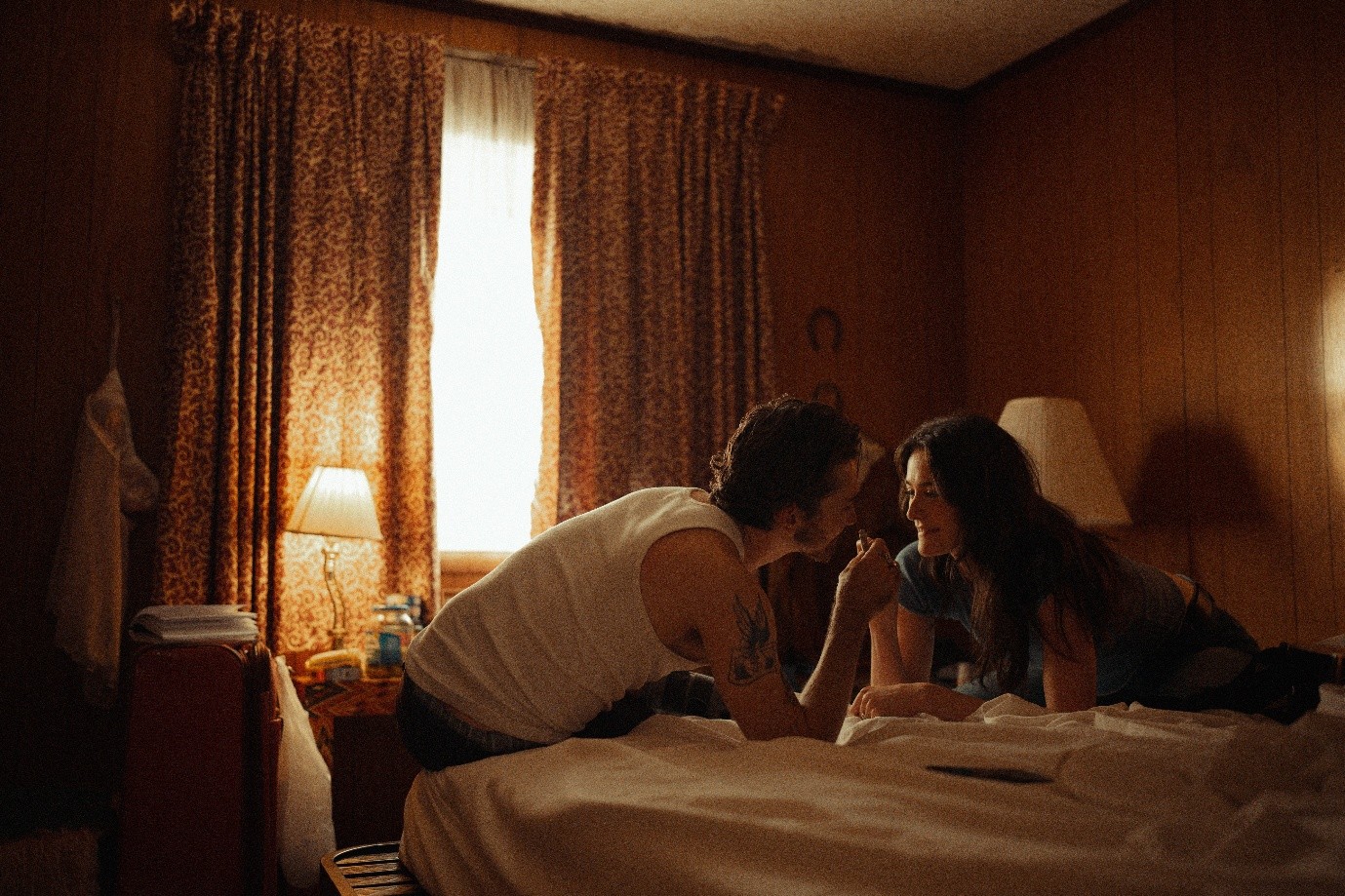
Writers: Pierce Csurgo, Eric J. Kinsey and Joseph Zentil
Director: Joseph Zentil
Joseph Zentil’s intelligent and unfussy feature debut can be viewed in two ways. Born to Lose is not only a classy crime thriller about a young drug dealer in over his head in Western Kentucky, but it’s also an interrogation of what it means to be American today. Many of the characters spout versions of a materialistic American Dream in which money is the be-all and end-all, ignoring the fact that they are trapped by circumstances beyond their control. Some blindly believe in everything America stands for; others begin to doubt its principles.
However, Canadian Zentil is never heavy-handed in his approach, and his metaphors are deftly presented with his story of Andy navigating small town gangsters always taking precedence. Andy deals coke, but he seems to snort most of it himself as he drives his motorbike from isolated bar to isolated bar. He admits business is slow; everyone wants prescription painkillers (presumably fentanyl) rather than good old-fashioned cocaine.
When his father dies unexpectedly, Andy decides to shift these pills instead, perhaps motivated by a hook-up with an older woman living in a soulless mansion with a husband who likes to watch. And also, as his father dealt painkillers, a market has opened up. Indeed, at the funeral, one biker asks the grieving Andy if he’s got any pills to sell. Andy convinces his father’s drug boss – the owner of a strip joint – to take over the business. Andy, of course, experiments with his new product.
Naturally, things don’t go to plan, and Andy soon finds himself homeless with an impossible debt to pay. One of his father’s old friends, Jed, takes pity on him and lets him sleep in his house. Jed quickly becomes the father Andy never had, and never knew he was missing. Unlike his real father, Jed is decent, caring, with a strong sense of what is right. It takes time for Andy to realise, helped by a confession by his estranged sister, what a deceitful man his father really was.
These fathers also act as symbols of America itself, but writers Pierce Csurgo, Eric J. Kinsey and Zentil don’t seek easy answers. Jed is a firm believer in the country and has a go at the driver of a car sporting an upside-down stars and stripes bumper sticker. He thinks that drugs are anti-American but has no issue with cigarettes and alcohol. He believes that young soldiers sent to their death in Iraq are protecting the nation. But his short-sightedness doesn’t mean that he isn’t a good man.
Andy, on the other hand, is more cynical, but when his eyes are opened to who his father really was, his belief in making something of himself (i.e. making a lot of money) wanes. And Dylan Arnold’s performance as Andy is truly first-rate, fully embodying the drifter’s apostasy. Arnold gives Andy a sense of being unmoored and unloved underneath his early swagger, unconsciously aware that his narrative is already written. It’s an impressive turn from the actor known for his role in Netflix’s You.
Zentil gets good performances from all of his actors: James Le Gros is good-natured Jed; Ambyr Childers is Andy’s brittle sister Julie; Sarah Pidgeon is the country singer who believes she can be a star in Nashville. Shane Coffey is memorable in his minor role as Derek, Andy’s best friend, another decent human being caught in a life of crime.
With plenty of bikes, from Harley-Davidson Panheads to Hardtails and with even more wife-beaters, Born to Lose is a compelling study of American dichotomy. This film needs a general release.
Born to Lose is screening at the Raindance Film Festival 2026 from 17-26 June.
