

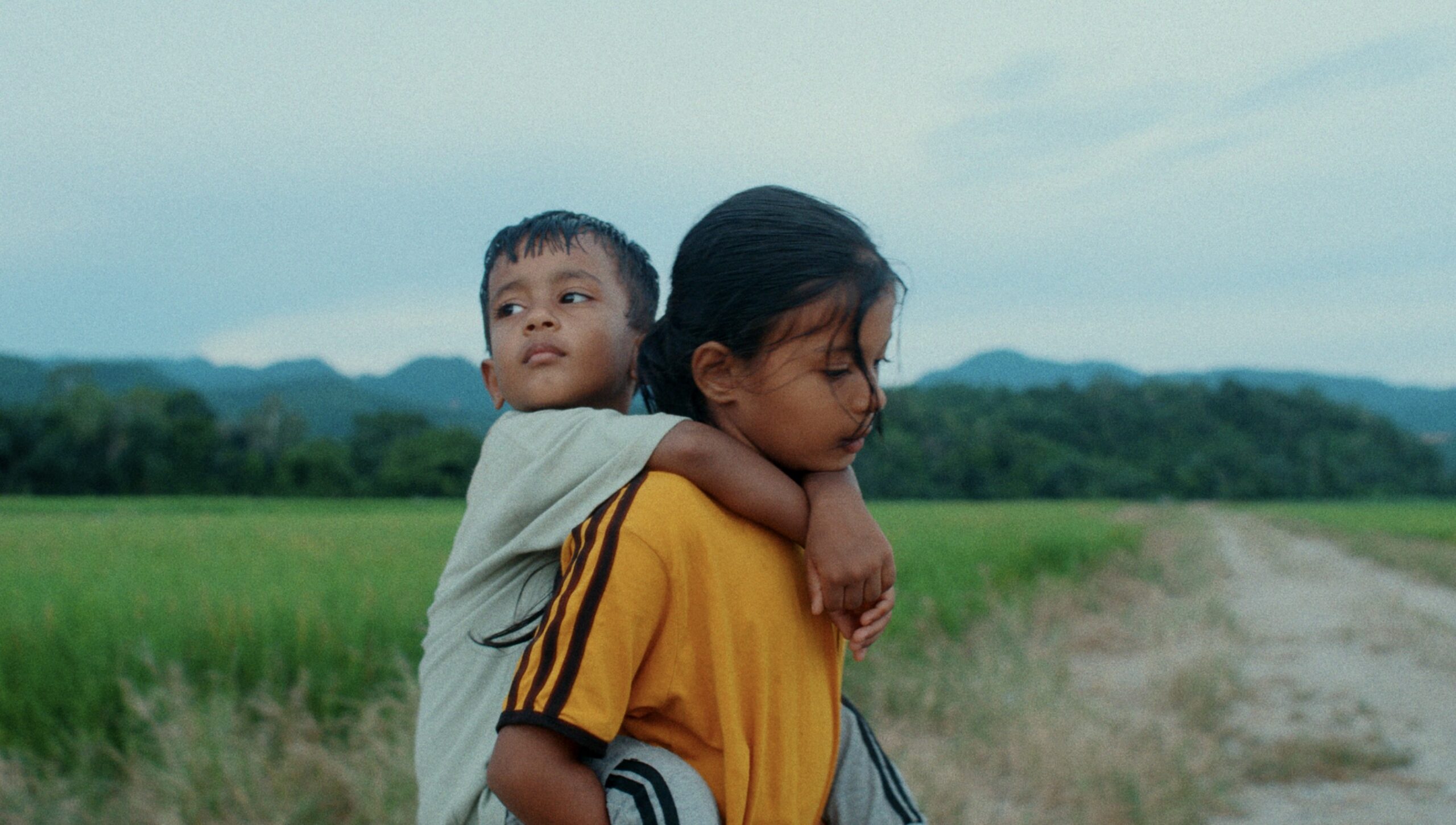
Writer and Director: Akio Fujimoto
Lost Land is not a a sophisticated film and at times you could wish for a bit more sign-posting and closer attention to continuity. But director and writer Akio Fujimoto gradually conveys a story of great power, following a group of Rohingya Muslims making the perilous journey from a refugee camp to hoped-for safety in Malaysia. What is particularly unusual is that the central figures are all Rohingyas, speaking in their native language.
For about half the film, we follow the group from their frightening escape from a refugee camp. We’ve never told where this is, but pubicity material reveals its in Bangladesh. Scenes are often shot at night and are deliberately chaotic, mirroring the experience of the refugees who don’t know where they are or where they are going. Frighteningly, members of the group simply get left behind or disappear. People are bundled into vans, then herded onto a boat. After days at sea, with land in sight, they’re ordered to get off and swim to an unknown shore. Later the remaining members are suddenly abandoned in the rainforest.
We don’t really get to know individuals during this first half. The camera lingers on two children, a 4-year-old boy, Shafi and his 9-year-old sister, Somira, but whom we assume are orphans, although an aunty cares for them. Fujimoto builds up a picture of the scraps of cultural memory that will later sustain them. Muslim prayers are observed and poignant songs sung. One night the aunty sings a lullaby about a mango tree, promising to take them there one day when they’re free.
Once landed somewhere in South Thailand, the remaining group quickly lose sight of one another, driven by urgent commands to hurry up and not turn back. And at every turn people smugglers threaten them, extracting money by menace.
The two little children end up with a group of four young men who may be relatives. We hear these teenage dreams to get to America – “to start a big business. Or a shop” or “to build a school.”
But deep in the rainforest, they are all captured by more people smugglers, once again intent on extortion. At this point the little girl, Somira, sees a way to escape, and taking Shafi with her, they set off alone.
From here on in, the film finds focus, as we watch the two children’s desperate to survive. You can’t call it an adventure – things are just too perilous, too harsh. They’ve no food, nothing to drink, and Shafi demands to be carried on his sister’s back.
Somira is full of initiative, keeping them heading south, hoping to find their way across to Malaysia. But all they know is that ‘Uncle’ lives there somewhere. They have no address, no contact details. “Are we going home?” Shafi asks plaintively one night. Somira instinctively knows she must continue to keep him cheerful. There are scenes of their playing Grandmother’s Footsteps and Hide and Seek, Shafi roaring with delight when he thinks he’s tricked her.
Around Day 25, the two children find their way to a large group of Rohingyas making the same journey. Although there is reluctance to take on more mouths to feed, they are brought along.
If this were a Hollywood film, all would go well from here on in. But Fujimoto’s vision is darker. He wants to show the reality of what refugees like this face. This is not The Incredible Journey. There aren’t going to be improbable reunions. Just some disturbing shocks, all the more powerful for being muted.
The children, Shomira Rias Uddin as Somira and Muhammad Shofik Rias Uddin as Shafi, give stunning performances.
The film is dedicated ‘to those who lost their lives along the journey and to all the Rohingyas who live for the future.’
Lost Land is screening at the Raindance Film Festival 2026 from 17-26 June.
The Reviews Hub Star Rating
-
8
