

Writer: Arthur Miller
Director: John Huston
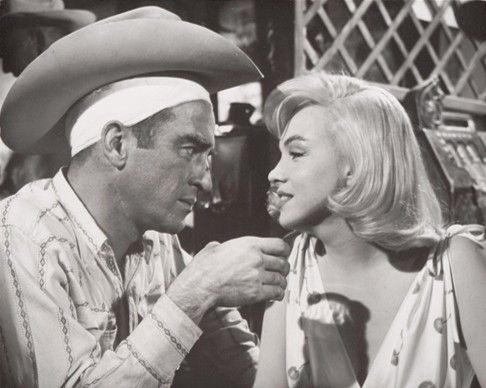
To mark the centenary of Marilyn Monroe’s birth, arts and culture institutions are offering a series of events celebrating the film star’s life, work and, importantly, her iconography. The National Portrait Gallery’s photography exhibition opened this week and at the BFI a two-month retrospective opens with a nationwide re-release of The Misfits, Monroe’s final, and viewed now, uncomfortably autobiographical work written by her then husband Arthur Miller. It serves as a stark reminder that our ongoing fascination with Marilyn sits exactly in this place where her real life and her work intersect.
The Misfits is the story of new divorcee Roslyn who meets what is supposed to be a charming cowboy (a presentation that hasn’t aged particularly well) and his obviously lecherous friend who agree to decamp to the desert together where the city girl seeking peace encounters the brutal masculine activities of shooting fluffy creatures, rodeo and rounding-up wild horses to sell for glue. It’s not always easy in Miller’s script to understand why Roslyn goes from actively resisting them to being the possession of Clark Gable’s Gay who is notably her senior in years, but women in the audience may flinch at how uncomfortable Monroe seems to be as her body rather than her excellent performance become the focus.
There is endless speculation by film historians about Monroe’s private life and her work, and as the Miller marriage notably declined on the set of The Misfits, some of the plot and character points in the film feel uncomfortably exploitative as now famed characteristics of Monroe’s life including her relationship with her mother, continual abandonment, unsuitable men and even problems conceiving also become Roslyn’s personality traits. And then there are the presumably unscripted events as Gabel particularly, but other men too, grab at her, ogle her and caress her when wearing thin silky dresses.
The blending of Monroe / Roslyn’s looks distinctly uncomfortable when this occurs and as Roslyn fends off Gay after a drunken night, the cry of “Help!” into the night says much more than anything in Miller’s script. But read into it what you will, within the story, Miller doesn’t address or resolve this in the conclusion, and having subjected his character to such emotional and physical violation leaves her to make concessions, implying a reconciliation at the end. And rather than the determination to leave these brutes behind that she claimed minutes earlier, Roslyn is betrayed by this story.
The Misfits then is not an entirely successful film because Miller’s themes remain inconclusive, the dynamic between men and women, country and city, peace and violence never go anywhere, while beyond Rosyln the characters barely develop except for some male ego eventually giving way. But what The Misfits has is Monroe who shines on the screen, delivering a complex and fascinating performance that lifts the story beyond the countless other like it; it is her presence, her skill and filmcraft that makes this work seeing, and you get the feeling that all the men involved – Gable, Eli Wallach, Montgomery Clift, Miller and director John Huston who all try to use her fame to bolster theirs – know it as well. So, enjoy this re-release and watch her tower above them.
With everything from All About Eve and Monkey Business to the big musicals like Gentleman Prefer Blondes, this comprehensive BFI season will light up the summer schedules, dedicated to a star whose ultimately unknowable allure remains as powerful as ever.
The Misfits is released in cinemas nationwide from 5 June. The BFI’s Marilyn Monroe season runs across June and July.
