

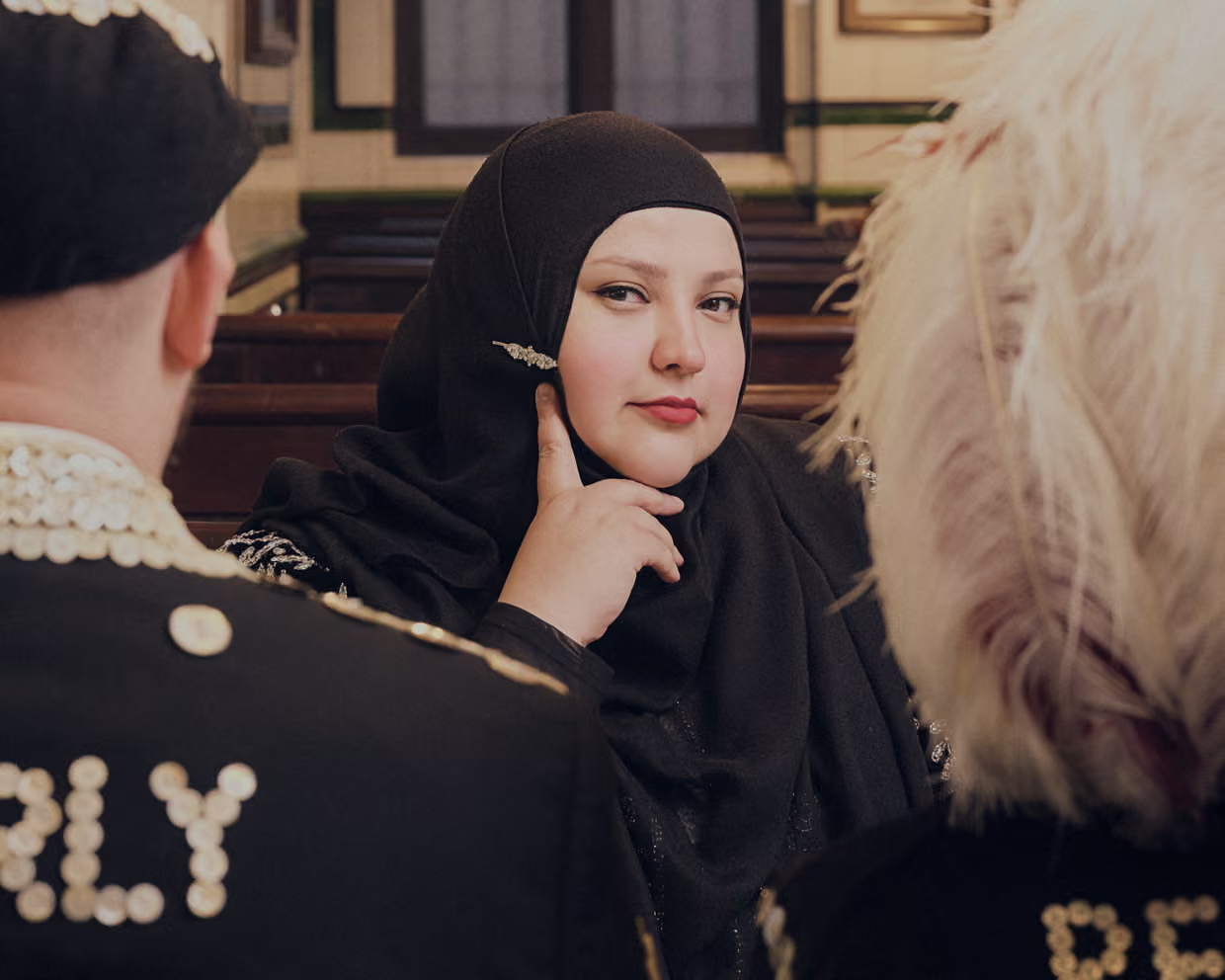
With a show title referencing an unwise observation that, in her hijab, she looks like a Russian Matryoshka doll, Fatiha El-Ghorri belligerently faces down all preconceptions.
Doing Taskmaster last year has greatly raised her profile. But it’s still bracing to hear a comic only semi-jokingly berate the audience when she forgets a word, grasping frustratedly for meaning in what she admits is a menopausal fug.
Smashing stereotypes about quietly passive, traditionally dressed Muslim women, her stage persona is someone who could start a fight in an empty room. And lengthy is the list of those that El-Ghorri has apparently squared up to, from casually judgemental taxi drivers to the health professionals treating her recent cancer, from fellow mosque attendees to the Queen, whom she supposedly threatened at a charity gig.
If this final example seems unlikely and her bullishness has a tongue-in-cheek element of excess, the better to mask her vulnerabilities, well, you still wouldn’t risk calling her on it. Her relationship with Islam and her Moroccan heritage are strong flavours in her identity. But they’re considerably surpassed by her Cockney lairiness. The Hackney estate that she still lives in might have gentrified to a degree, to her absolute, lip curling disdain. But she’s determined to keep herself real, unvarnished and sharp elbowed, unwilling to relinquish the last Flake in the shop if she can scrap for it.
There’s a gangster swagger to El-Ghorri, to a self-parodic degree that occasionally finds her simply espousing violence in lieu of a proper punchline. But she’s rendered slightly softer and more engaging, virtually in spite of herself, thanks to her menopause admissions and other health struggles, not to mention the brook-no-shit, flint-edged lack of sympathy that also defines her large family. When she touches upon her sister’s neurodiversity, it’s with eye-rolling boredom at the sheer faddishness of it.
There’s also tacit understanding that a female Muslim comic will have faced considerable barriers in UK comedy. El-Ghorri would never debase herself to openly seek concessions or special treatment, but her stories reveal she’s not above emotional blackmail. The method by which she bends to her will family friendly, content restrictive gigs, or simply unpaid open mics, is underhand. But it’s a reflection of the exploitative nature of the business for new comics that her behaviour is framed as transgressive.
In her wiliness, she’s not so dissimilar to her mother. The two have an intriguing, loggerheads relationship that suggests that her blunt, intransigent parent will be a long-running staple of her comedy. Equally compelling is El-Ghorri’s account of Muslim dating apps. It might be difficult to extricate her jadedness from her two divorces. But she has sufficient self-knowledge to admit that there’s something she finds something attractive in the toxicity of the Arab men she dates.
She closes with a serious, if rambling expression of gratitude that makes you suspect that you’re being suckered in so she can aggressively flip out once again. But that moment never arrives. So instead, you question if she’s simply padding to stretch out the hour. Either way, it’s confirmation that El-Ghorri does little by halves. Going forward, you might hope that she develops more light and shade and greater nuance to her act. But she’s more than getting by on bulldozing charisma at the moment.
Tours until 17 December 2026 | Image: Matt Stronge
Punchily aggressive punchlines
