

Writer: Caroline Graham
Adapter and Director: Guy Unsworth
Just like Miss Marple’s St Mary Mead and Jessica Fletcher’s Cabot Cove, it’s a wonder why anyone would want to live in the county of Midsomer, what with its per capita murder rate being through the roof. At the time of writing, Midsomer Murders has been presenting grisly homicide in a quaint English setting for nearly forty years, starting with the publication of Caroline Graham’s first of seven Chief Inspector Barnaby books in 1987, followed by the launch of the popular television adaptation in 1997, which currently boast 144 episodes. That’s a lot of dead bodies!
And now we have a stage adaptation of the first book, which also happened to be the first episode of the TV show: The Killings at Badger’s Drift. Here, CI Barnaby and his trusty sidekick DS Troy are compelled to take a second look at the apparently natural death of an elderly lady, leading to a web of infidelity, blackmail, and of course, murder that spans across the tiny village of Badger’s Drift. Everyone is a suspect and nobody seems entirely innocent, and it’s up to our intrepid police officers to untangle the clues to get to the shocking truth.
Reaching its 30th anniversary next year, the TV show Midsomer Murders is perfect Sunday night telly, and this stage production beautifully recreates that cosy feel without skimping on the bloody aftermath of the murderer’s handiwork or the dark undercurrent that runs throughout the show’s run. The are plenty of pots of tea, finger sandwiches, Victoria sponge cakes, and seemingly gentle English village stereotypical characters here, but there are also poisonings, apparent fatal hunting accidents and outright axe murders. It’s Last of the Summer Wine meets Friday the 13th.
What this production brings far more to the table than the show has ever done is humour. The TV series has always had a gentle dark comedy to it, but here Guy Unsworth’s script contains numerous laugh-out-load moments between the deaths and investigations. Brilliantly, none of the jokes are at the expense of the genre, and instead of going for easy parody, Unsworth smartly weaves the gags seamlessly into the foibles of the characters and the requirements of the plot. It’s a delicate balance, but Unsworth pulls it off expertly, creating a faithful yet heightened adaptation of the ITV staple. His direction perfectly complements his prose, with numerous fun bits of business including several fourth-wall-breaks that acknowledge the theatricality of the project without ever belittling it. One such scene embraces the limited number of cast members in a clever joint interrogation sequence involving two characters played by the same person.
Speaking of the small cast, they are all superb. Daniel Casey brings his history with the source material by playing DCI Tom Barnaby (a promotion from his 11-year stint as Sgt Troy in the TV show). Casey has the right blend of stoic professionalism and twinkle-in-the–eye heart to bring this iconic character to life and serve as a solid anchor for the madness that surrounds him. Assisting him is James Bradwell as DS Gavin Troy. Impulsive, somewhat naive and sometimes inappropriate, Bradwell’s Troy is a perfect foil for Casey’s Barnaby, delivering some of the biggest laughs of the show. These are the only two cast members who remain a single character throughout the show.
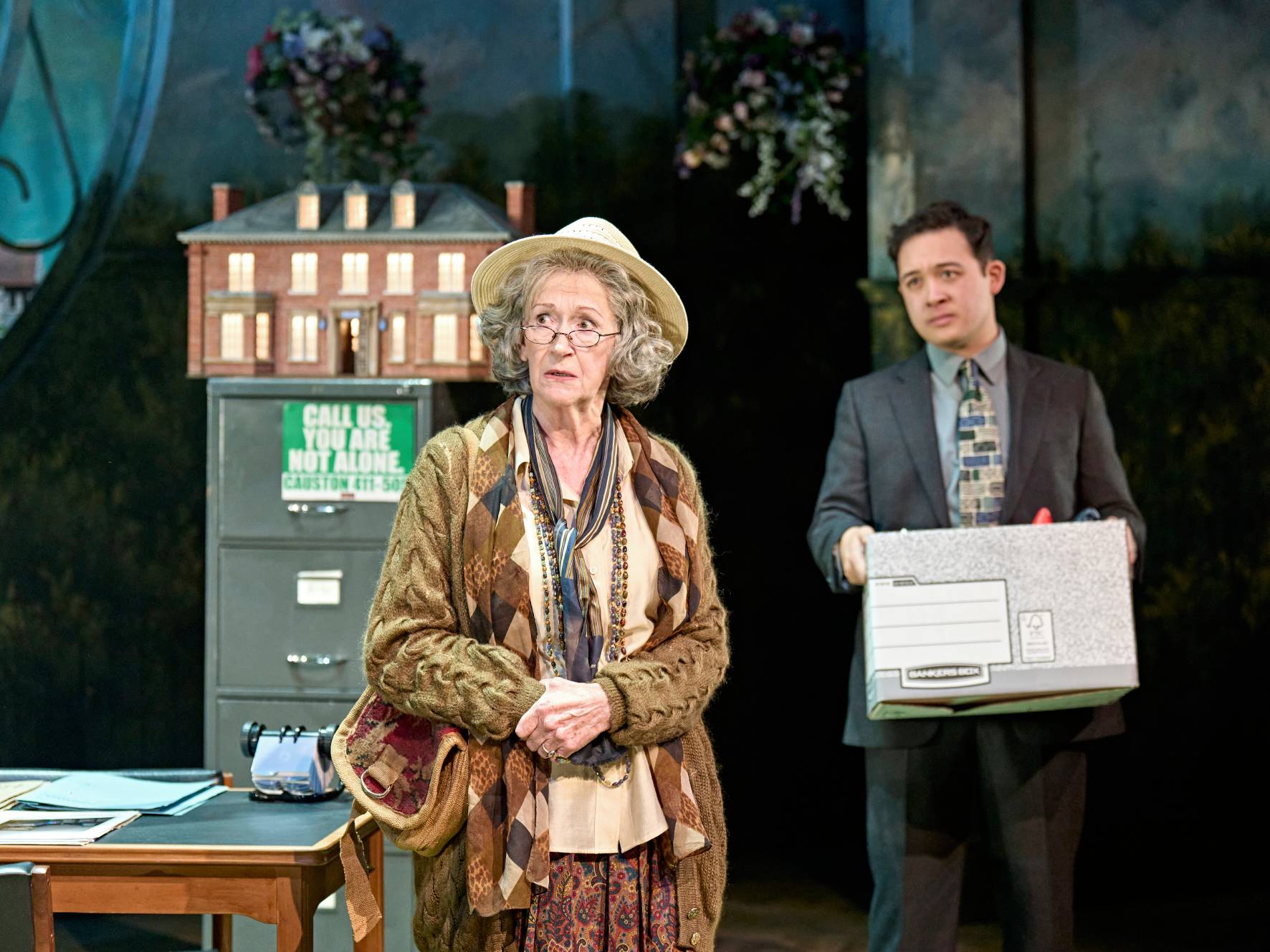
The remaining players take on numerous roles with such success that unless Unsworth’s deft script and direction wants you too, it’s difficult to tell who is portraying which character. All of them show great range and ability, sometimes even playing a different gender. John Dougall plays the lord of the manor, a blustery doctor and a nosy old biddy, while Chandrika Chevli is a spoiled wife, the serious pathologist and the gruff (male) groundskeeper. Julie Legrand seems to specialize in batty old ladies, Nathalie Barclay is a lovely ingenue and Rupert Salder pivots easily between a tortured artist and an extremely creepy undertaker.
David Woodhead’s set design is very impressive, especially for a touring play, and is complimented by Matt Haskins’ slick lighting design, Ella Mahlstrom’s immersive sound design, and Max Pappenheim’s atmospheric score (including good use of the iconic TV show theme). This is a brilliantly presented piece of theatre that looks and sounds great.
On the strength of this initial theatrical foray to Midsomer, it would be very nice to see Unsworth begin adapting the remaining six books in the series – and then perhaps to continue on to the remaining 143 TV episodes! You may need to take out considerable life insurance and be accompanied by an armed guard, but a trip to Midsomer is highly recommended.
Runs until 23rd May 2026
The Reviews Hub Score
-
10
