

Writer: Danny Robins
Director: Matthew Dunster and Gabriel Vega Weissman
Following seven West End seasons, a record-breaking UK and Ireland tour and more than thirty productions worldwide, 2:22 A Ghost Story arrives with a formidable reputation, and this latest incarnation largely justifies the hype. Billed as a “stage phenomenon”, Danny Robins’ supernatural thriller feels both slickly commercial and surprisingly probing, blending traditional ghost-story scares with questions about belief, grief and control.
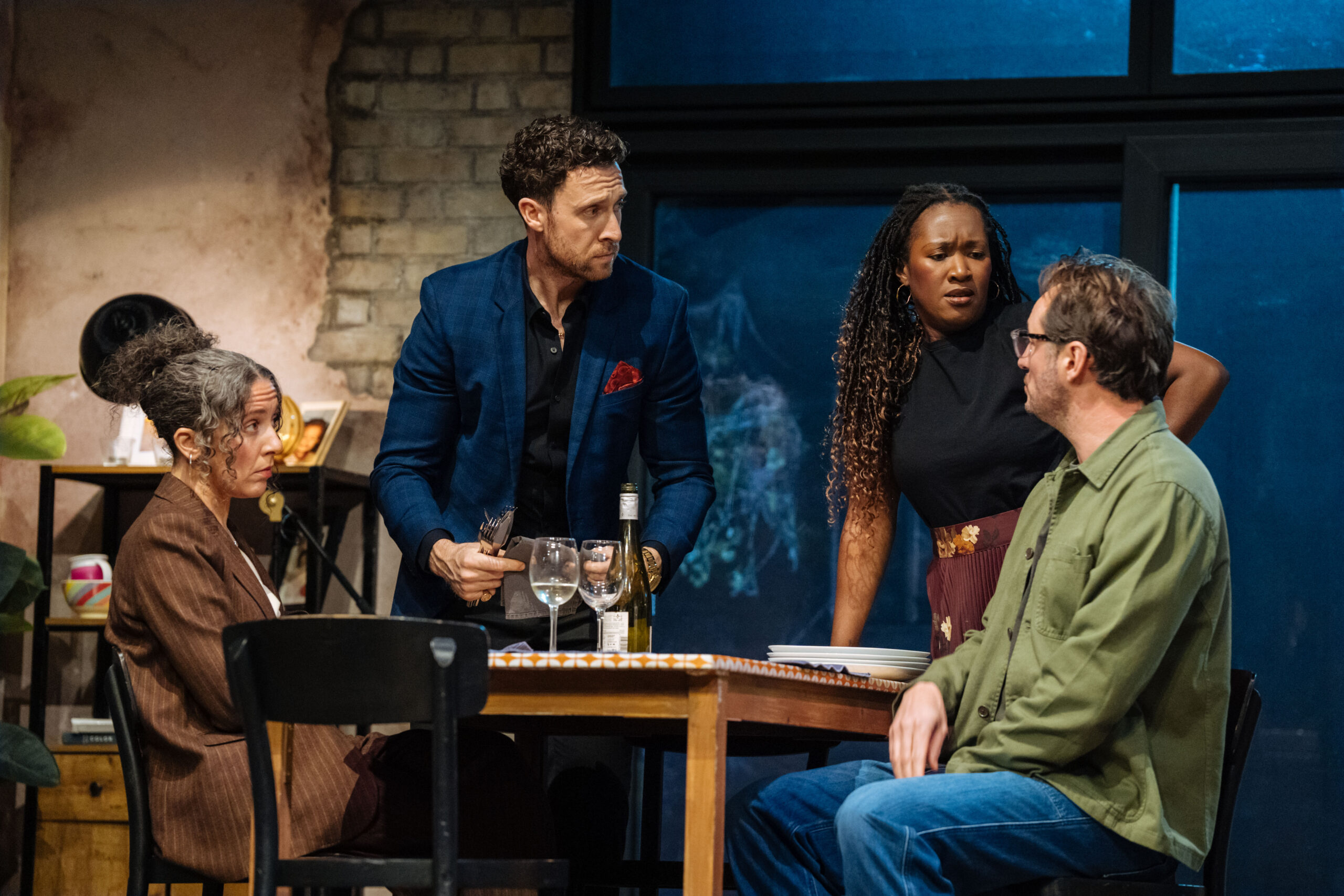
Winner of Best New Play at the WhatsOnStage Awards, the production now touring is fronted by a strong cast: James Bye (EastEnders), Natalie Casey (2 Pints of Lager and a Packet of Crisps), Grant Kilburn (returning to 2:22 A Ghost Story) and Shvorne Marks (Three Little Birds). Together they anchor the play’s deceptively simple set-up: Jenny is convinced their new home is haunted, her husband Sam dismisses the very idea, and their friends Lauren and Ben are dragged into a late-night debate that spirals towards the ominous hour of 2:22. As the clock ticks down, belief and scepticism clash in increasingly fraught ways, and we are invited to ask not only whether ghosts exist, but what drives us to see them.
The performance is assured and steady, making confident use of well-known genre conceits – a séance to contact the “presence” in the house, a shocking plot twist, and a series of jump scares. Some of these devices are more successful than others. The frequent reliance on flashing lights and a piercing scream sound effect for jump scares feels overused; rather than sustaining dread, it often punctures the atmosphere, provoking nervous laughter rather than genuine terror. By contrast, the more subtle stage tricks are far more effective. Carefully timed visual shifts and clever use of the space create moments of unease that linger, suggesting that what we imagine can be far more unsettling than any sudden jolt.
Beneath the surface, there is an intriguing undercurrent of coercive control running through the piece. Jenny’s strained dynamic with Sam hints at a relationship where one partner’s certainty, rationalism and emotional dominance may have long overshadowed the other. The play gestures towards a compelling question: what happens to a woman in a controlling relationship when the man who has shaped her reality is suddenly taken away? Is the “presence” he leaves behind still controlling her, even in apparent absence? These themes, only lightly touched on, could have added a rich psychological layer had they been more fully explored, connecting the supernatural with the very real hauntings of memory, trauma and power imbalance.
Throughout, the play nudges the audience to examine their own beliefs. Do you believe in ghosts? Are they external forces, or are they manifestations of our grief and guilt? Robins, known for his BBC podcasts Uncanny and The Battersea Poltergeist, clearly relishes this ambiguity. 2:22 A Ghost Story works best when it inhabits that liminal space where rational explanations and supernatural possibilities sit side by side, forcing us to consider how far we will go to defend what we think we know.
Visually, the production is anchored by Anna Fleischle’s set design, which provides an ideal backdrop for the unfolding drama. The detailed, lived-in kitchen-diner captures a modern world grafted onto older bones: sleek fixtures and contemporary décor sit uneasily atop something darker and more worn. This contrast subtly evokes memories ripped away and replaced with new life, while the ever-present, unanswered question of what lies beyond the back door becomes a neat metaphor for the unknown that lurks just outside our carefully curated realities.
James Bye delivers a carefully judged performance as Sam; he is at once entirely likeable and deeply frustrating. His breezy charm and confident rationalism make him initially appealing, yet the same traits reveal a stubborn refusal to listen, a casual dismissal of Jenny’s fears that edges towards something more troubling. This duality is well matched by Shvorne Marks, whose portrayal of Jenny combines vulnerability with a steely determination to be heard. Together, they embody the play’s central conflict between belief and scepticism, emotion and logic, the seen and the unseen.
Grant Kilburn as Ben brings just the right energy to the role, holding the audience in the palm of his hand as he guides them through his strange childhood and unsettling memories. His performance makes the nonsensical feel almost uncomfortably real, grounding the supernatural elements in a convincing psychological landscape.
Natalie Casey’s Lauren is the unpredictable loose cannon of the piece; a character fuelled by booze and raw emotion. She vocalises every thought and feeling, injecting the production with exactly the kind of volatility it requires. Her presence keeps the audience on edge, never entirely sure what she will do or say next, and in doing so she delivers the unpredictability that the piece so clearly needs.
There is, however, a sense that 2.22 could be cleverer than it is. Too often, the play resorts to cheap jump-scare tactics when it might have achieved a more enduring impact by building tension through narrative development and the deeper exploration of its characters’ emotional journeys. Moments that could have been genuinely haunting are sometimes undercut by reliance on sudden loud noises and visual shocks rather than carefully cultivated dread.
Nevertheless, the production remains an engaging and enjoyable night at the theatre. Strong performances and a compelling premise ensure that, despite its occasional overreliance on familiar horror devices, 2.22 A Ghost Story holds the audience’s attention and offers an entertaining, if not wholly sophisticated, theatrical experience.
Runs until Saturday 16th May, before continuing on tour
The Reviews Hub Star Rating
-
8
