

Director: Orban Wallace
With extreme and unyielding opinion on both sides of the debate, Orban Wallace’s new documentary Our Land about the right to roam follows the official campaigners as well as a number of landowners over a short period who each make their case as to why what they are asking for is perfectly reasonable. With statistics to hand, the campaigners note that only 8% of British land has total public access which in some senses is a shocking figure but Wallace’s film never puts the parties together to really discuss the core issues, leaving the viewer feeling that both sides rather overstate their case with no one prepared to consider a middle ground.
Wallace’s film follows several different groups advocating for right to roam privileges including Nick Hayes who the cameras follow breeching hedges and fences as he insists on his freedom to walk across the land, sometimes in search of landowners to accost. Matching this extreme approach is Frances Fulford managing the Great Fulford estate who, a known television personality, talks about his family, introducing the film crew to the grand rooms and private walks on his land. In both cases, it’s hard to separate the political and social arguments being made from the notion that both men are playing up to the camera while neither helps their cause.
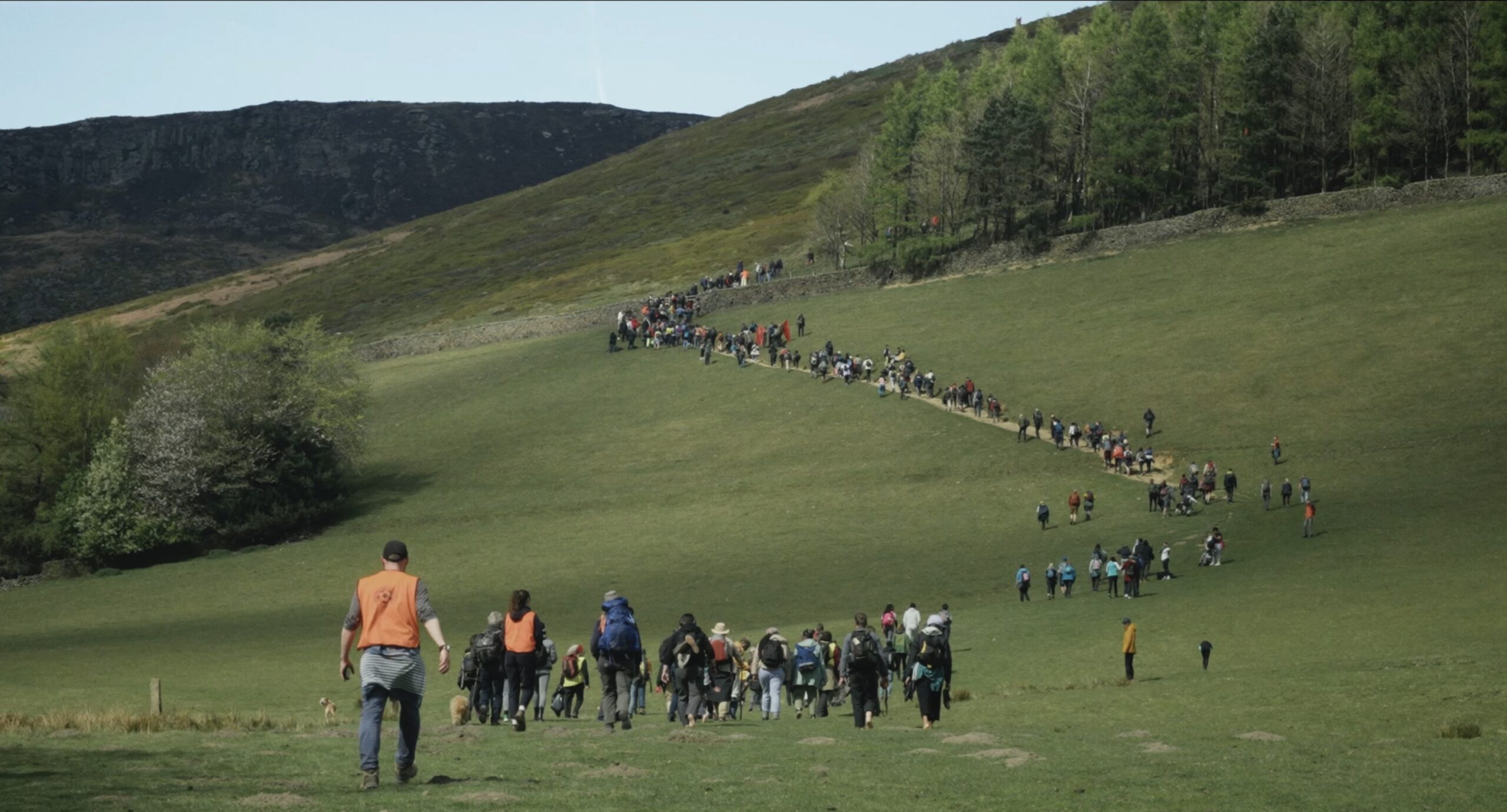
But there are more moderate voices, or at least ones whose arguments are not solely couched in bombast, and one of the most meaningful moments shows a large party who have travelled from the cities to view the countryside, sometimes for the first time. As they walk through the landscape, along beautiful paths and mountainsides, Nadia Sheikh makes a strong argument about the damage being done to the natural world and a need to feel free in it, the financial, cultural and socio-political divisions that prevent people from engaging with the British countryside. Her speech about belonging and its association with mixed identities is more persuasive that most other interviews in the documentary.
Naturally, the landowners are often painted in a more negative light even when they have opened up their estates to greater access and business diversification nor does it explore the complexities and costs of running agricultural businesses or supporting tenants. Generally, Wallace cuts the film so the Right to Roam activists have the last word, answering every objection or suggestion the landowners make. Yet the film never offers any solution to breaking the impasse, no way forward as both sides appear to dig-in, expecting their interlocutors to just completely give in. What’s really in the national interest and how to address the centuries-old problems caused by medieval enclosure is lost in impassioned insistence on both sides.
“Change is coming” Hayes insists at the end of a protest, but nothing in Our Land really suggests it is and the final 30-minutes of the film takes the audience no closer to believing that anything has really changed. As the landowners talk about the responsibilities that go with these rights, Wallace’s film doesn’t point to a way forward and while the film airs the debates, the problems that Our Land identifies just rumble on.
Our Land is released in the UK and Ireland on 8 May.
